

Is Airbnb Profitable in San Antonio?

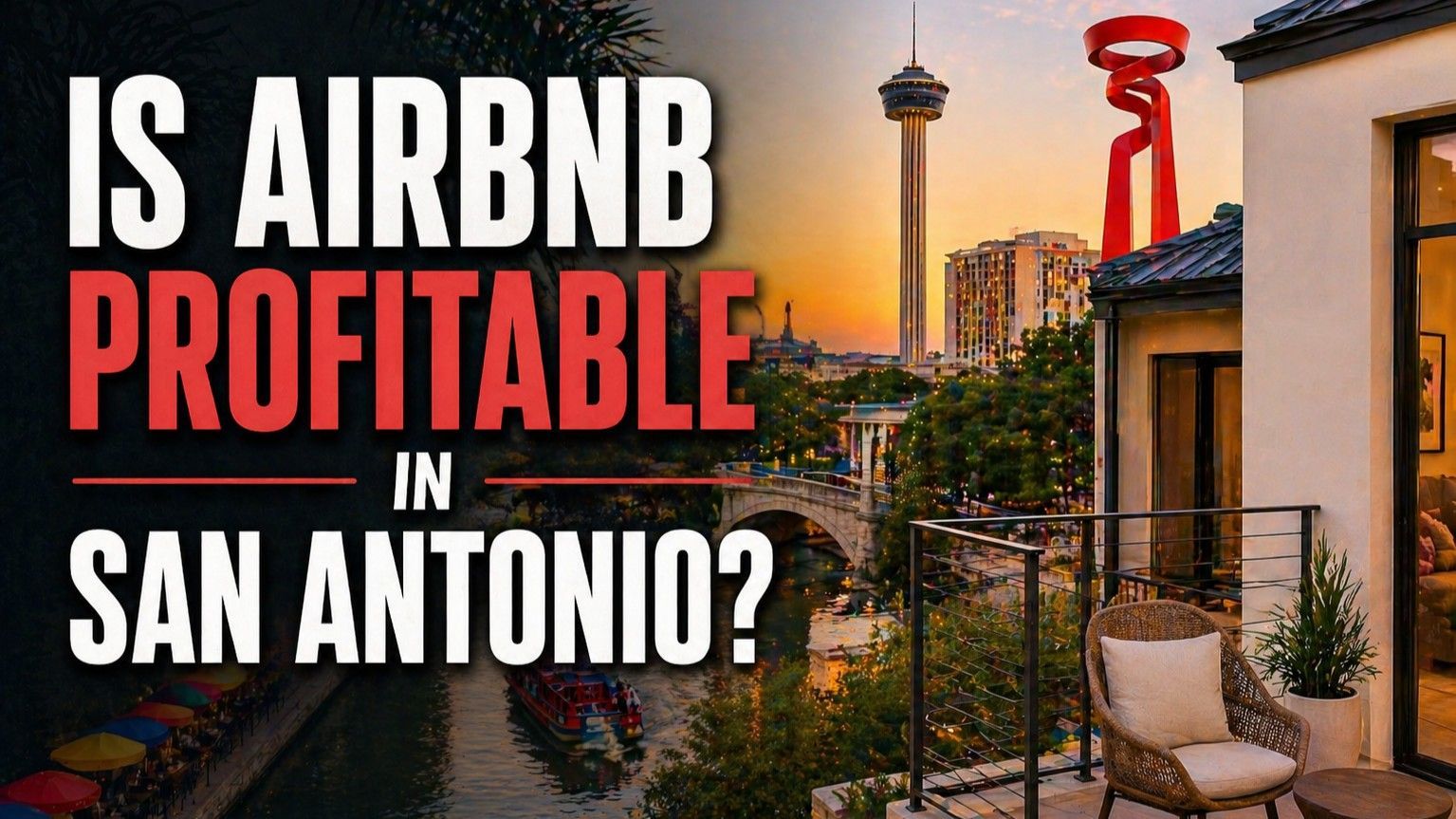
Yes — Airbnb can be profitable in San Antonio, but it is a performance-driven market, not a passive one. Most listings generate moderate returns, while well-optimized properties can significantly outperform the average.
In practical terms, many hosts, according to AirDNA and Airbtics, earn somewhere in the range of $20,000 to $30,000 per year, depending on factors like location, property size, and management quality. However, top-performing properties—especially larger homes with strong amenities and professional execution — can reach $50,000 to $80,000+ annually. That gap is what defines this market.
What this means is simple: San Antonio does not reward basic participation. Owning a property and listing it is not enough. The market is competitive, and profitability comes from how the property is positioned, designed, and managed, not just where it is located.
In plain terms, San Antonio sits in the middle ground. It has:
- Strong and consistent tourism demand
- Relatively affordable home prices compared to major markets
- A steady stream of business, military, and event-driven travel
But it also has:
- Increasing supply
- Moderate occupancy levels
- Regulations that limit where and how you can operate
Because of this, the market favors intentional investors — those who treat their property like a business rather than a side income stream.
The bottom line is that Airbnb in San Antonio is worth it for the right property and strategy. Without those, it tends to produce average results.
Average Airbnb Revenue in San Antonio
On paper, San Antonio appears to be a moderate-performing Airbnb market. Most datasets show typical performance landing in the following ranges:
- Average annual revenue: $20,000–$30,000
- Average daily rate (ADR): $140–$200
- Occupancy rate: 30%–45%
These numbers give a baseline — but they don’t tell the full story.
The key issue with averages is that they blend high-performing and low-performing listings together.
In a market like San Antonio, where execution varies widely, this creates a misleading picture. A basic or poorly optimized listing can fall closer to $10,000–$20,000 annually, while a well-designed, well-managed property can significantly exceed the average.
Another important detail is that occupancy tends to remain relatively stable across the market. Most properties cluster within a similar occupancy range, which means revenue differences are not primarily driven by how often a property is booked.
Instead, performance is driven by:
- Nightly rate (pricing power)
- Property size and capacity
- Amenities and guest experience
- Listing quality and positioning
In other words, two properties in the same city can have similar occupancy but generate completely different income.
For investors, this changes how you evaluate the market. San Antonio is not a place where you rely on averages to project returns. It is a market where:
- Average data provides a floor
- Strategy determines the ceiling
Understanding this distinction is critical before making any investment decisions.
The Performance Gap: Why Some Airbnbs Make 3x More
The most important thing to understand about San Antonio is that not all Airbnbs perform equally. In fact, the gap between average and top-performing listings is often 2–4x, even within the same neighborhood.
Lower-performing properties may generate around $10,000–$20,000 per year, while optimized listings — especially larger homes with strong amenities — can reach $50,000 to $80,000+ annually. This is not due to luck or timing. It comes down to how the property is built and operated.
One of the biggest drivers of this gap is pricing power. Most listings achieve similar occupancy levels, but top performers command significantly higher nightly rates. They do this by offering a more compelling experience—something that stands out in search results and justifies a premium price.
Several factors consistently separate top-performing listings from the rest:
- Property size and layout: Larger homes that accommodate groups (4–6+ bedrooms) tend to generate substantially more revenue than smaller units.
- Amenities and experience: Features like pools, hot tubs, outdoor spaces, and entertainment areas increase both visibility and perceived value.
- Design and presentation: Professionally styled interiors and high-quality photography improve click-through and booking rates.
- Pricing strategy: Dynamic pricing that adjusts for demand, seasonality, and events can significantly increase revenue.
- Operational consistency: Fast response times, strong reviews, and a seamless guest experience compound over time.
What this creates is a market where execution matters more than location alone. Two properties in the same area can perform completely differently depending on how they are positioned.
This is why San Antonio is best understood as an operator-driven market. The city provides steady demand, but it does not automatically translate into strong returns. The investors who succeed are the ones who actively manage their listing as a business—optimizing every part of the experience to capture more value from the same demand.
Why Demand Matters for Airbnb Profitability in San Antonio
San Antonio can be profitable for Airbnb investors because it has consistent, multi-layered demand, not just seasonal tourism. Unlike some Airbnb markets that rely on a single attraction, San Antonio’s demand is spread across tourism, business travel, and events.
This creates a more stable environment for short-term rentals, where occupancy rates remain relatively predictable throughout the year. Instead of relying on peak seasons alone, many Airbnb listings benefit from steady booking activity across multiple months.
Tourism as the Core Demand Driver
Tourism is the foundation of the San Antonio Airbnb market. The city attracts millions of visitors annually, driven by destinations like the River Walk, the Alamo, and the San Antonio Missions.
This type of tourism is:
- Year-round rather than seasonal
- Experience-focused rather than transactional
- Centered around walkable areas and cultural districts
For Airbnb hosts, this translates into:
- Consistent booking demand
- Strong occupancy rates in central locations
- Reliable baseline revenue across the year
Event-Driven Demand and Revenue Spikes
One of the most important drivers of Airbnb occupancy in San Antonio is its event calendar. The city hosts:
- Fiesta San Antonio
- Conferences and conventions
- Holiday events and festivals
These events create short-term spikes in demand, where:
- Airbnb occupancy rates increase
- Nightly rates (ADR) can be adjusted upward
- Revenue per month increases significantly
This is where many hosts make a disproportionate share of their annual revenue.
Business Travel and Year-Round Stability
San Antonio is not just a tourist city—it is also a major hub for:
- Military operations
- Healthcare and bioscience
- Corporate and government travel
This creates a second layer of demand that supports Airbnb occupancy outside of peak tourist seasons.
For investors, this means:
- More consistent occupancy rates
- Less reliance on seasonal tourism
- Greater stability in annual revenue
Family Travel and Group Booking Behavior
A large portion of Airbnb demand in San Antonio comes from families and group travelers. Attractions like:
- Six Flags Fiesta Texas
- SeaWorld San Antonio
- The San Antonio Zoo
drive demand for larger accommodations.
This directly impacts:
- Property selection
- Pricing strategy
- Revenue potential
Group travelers typically:
- Book larger homes
- Stay multiple nights
- Spend more per booking
How Demand Translates Into Revenue Potential
All of these demand drivers combine to create a market where:
- Airbnb occupancy rates remain moderate but stable
- Revenue is influenced more by pricing than availability
- Well-positioned listings outperform average market performance
San Antonio is not a high-occupancy, low-price market. Instead, it is a balanced Airbnb market, where:
👉 Demand exists—but capturing revenue depends on execution
Best Areas for Airbnb in San Antonio (Investor Strategy)
Why Location Strategy Matters in the San Antonio Airbnb Market
Not all areas in San Antonio perform the same for Airbnb. While the city has strong overall demand, performance varies significantly by neighborhood, property type, and guest profile.
This is because the San Antonio Airbnb market is not centralized around one single area. Instead, it is made up of multiple micro-markets, each with different:
- Demand drivers
- Occupancy rates
- Pricing potential
- Guest expectations
For investors, choosing the right area is one of the most important decisions affecting revenue and long-term profitability.
The Pearl & Tobin Hill (High ADR, Premium Listings)
The Pearl and Tobin Hill areas are among the top-performing San Antonio Airbnb locations for pricing power.
These neighborhoods offer:
- Walkability
- Restaurants and nightlife
- Proximity to downtown and the River Walk
Because of this, Airbnb listings here tend to:
- Command higher nightly rates
- Attract experience-focused guests
- Maintain strong occupancy rates
However, competition is higher, and properties often require:
- Strong design
- Premium amenities
- Professional positioning
Southtown (Experience-Driven Demand)
Southtown is one of the most balanced Airbnb markets in San Antonio, combining tourism, culture, and local demand.
This area attracts:
- Weekend travelers
- Couples and small groups
- Guests looking for a more local experience
For Airbnb investors, Southtown offers:
- Solid occupancy rates
- Moderate pricing power
- Consistent demand throughout the year
It performs best with:
- Well-designed properties
- Walkable access to attractions
- Unique or boutique-style listings
La Cantera & Fiesta Texas (Family & Group Travel)
The La Cantera area and the Six Flags corridor serve a different segment of the San Antonio Airbnb market: family and group travel.
Demand here is driven by:
- Theme parks
- Shopping centers
- Vacation-style trips
Airbnb listings in this area perform well when they:
- Accommodate larger groups
- Include family-friendly amenities
- Offer outdoor features like pools
Occupancy rates are often tied to:
- School schedules
- Summer travel patterns
- Holiday periods
River Walk Area (High Demand, Limited Airbnb Opportunity)
The River Walk is one of the most visited areas in San Antonio, but it does not always translate into strong Airbnb performance.
This is due to:
- High hotel concentration
- HOA restrictions
- Limited short-term rental availability
Even though demand is high, many Airbnb listings struggle to compete with:
- Full-service hotels
- Walkable hospitality options
For investors, this means:
👉 High tourism demand does not automatically equal strong Airbnb returns
I-35 Corridor & Outlying Areas (Flexible Investment Strategy)
Areas along the I-35 corridor offer a different type of opportunity within the San Antonio Airbnb market.
These locations typically provide:
- Lower property prices
- More inventory availability
- Flexible rental strategies
Airbnb listings in these areas can perform through:
- Short-term rentals
- Mid-term rentals
- Extended stays
Occupancy rates may be slightly lower, but the strategy shifts toward:
- Cost efficiency
- Broader demand capture
How Location Impacts Airbnb Occupancy and Revenue
Across San Antonio, location affects performance in three primary ways:
1. Walkability Increases Revenue
Areas with walkable access to attractions tend to:
- Achieve higher nightly rates
- Maintain stronger occupancy rates
2. Suburban Areas Rely on Amenities
In less central areas, Airbnb listings must compete through:
- Pools
- space
- entertainment features
3. Demand Type Determines Strategy
Each area attracts different guests:
- Downtown → tourists and short stays
- Theme park areas → families
- Outer areas → longer stays and flexibility
The Best Area Depends on Your Strategy
There is no single “best” area for Airbnb in San Antonio.
Instead, the right location depends on:
- Property type
- Target guest
- Investment strategy
The San Antonio Airbnb market rewards investors who:
- Match location with demand
- Align property features with guest expectations
- Optimize listings based on the specific submarket
Important Note on Permits and Location
Before choosing any property, investors must verify short-term rental eligibility, including:
- Zoning compliance
- Density limits for non-owner-occupied rentals
- Permit availability per blockface
San Antonio regulations require that each Airbnb listing have a valid permit, and availability can vary by street and property type.
Property Type and Its Impact on Profitability
Not all Airbnb properties in San Antonio generate the same revenue. One of the biggest factors affecting profitability is property size and guest capacity.
Larger properties—especially those with 3–5+ bedrooms—tend to generate more annual revenue because they:
- accommodate groups and families
- command higher nightly rates
- produce more revenue per booking
Smaller listings, such as 1–2 bedroom units, can still perform, but they typically:
- Compete more on price
- attract shorter stays
- have a lower revenue ceiling
In most cases, Airbnb profitability in San Antonio is less about occupancy and more about how much each booking is worth.
Conclusion: San Antonio Rewards Strategy — Not Just Ownership
San Antonio is a solid Airbnb market — but it is not a market where average execution produces above-average results. As we’ve seen, most properties generate moderate returns, while top-performing listings can earn 2–4x more by focusing on pricing power, amenities, design, and guest experience.
The difference comes down to one thing: execution.
In a market with steady demand, moderate occupancy, and increasing competition, simply owning a property is not enough. The investors who consistently outperform are the ones who treat their Airbnb like a business — optimizing every part of the listing, from positioning and pricing to operations and guest experience.
For those looking to take a more hands-off approach, this is where professional management becomes valuable.
Luxury Airbnb Management in San Antonio
At Home Team Luxury Rentals, we specialize in luxury Airbnb management in San Antonio, helping investors turn properties into high-performing assets rather than average listings. As part of Rise Collective, we operate within a broader ecosystem designed to support every stage of short-term rental investing.
That includes:
- BNB Lending — helping investors secure financing for acquisition and scaling
- BNB Construction — designing and building high-performing amenities that increase ADR and booking appeal
- Roam Hospitality — a boutique hotel management company supporting investors expanding beyond short-term rentals into hospitality assets
This integrated approach allows investors to move beyond fragmented strategies and instead build a cohesive, performance-driven portfolio.
Whether you’re acquiring your first property or scaling an existing portfolio, the opportunity in San Antonio is real — but the upside depends on how the property is built, positioned, and managed.
Frequently Asked Questions
Is Airbnb profitable in San Antonio?
Yes — Airbnb can be profitable in San Antonio, but it is a performance-driven market. Most listings generate moderate returns, while well-optimized properties can significantly outperform averages.
How much can you make on Airbnb in San Antonio?
Most Airbnb hosts earn around $20,000 to $30,000 annually, while top-performing properties can reach $50,000 to $80,000+ depending on execution, amenities, and pricing strategy.
What separates average listings from top performers comes down to how the property is designed, positioned, and managed. Factors like property size, group-friendly layouts, standout amenities, professional presentation, and dynamic pricing all play a major role in increasing revenue potential.
If you want a deeper breakdown of what actually drives performance, see our guide on what makes a successful Airbnb in San Antonio, where we walk through the specific features, strategies, and positioning that lead to higher returns.
Why do some Airbnbs in San Antonio make more than others?
The difference comes down to execution. Properties with better design, amenities, pricing strategies, and guest experience can generate 2–4x more revenue than average listings — even in the same area.
What type of Airbnb performs best in San Antonio?
Larger homes designed for groups and families tend to perform best. Properties with 3–5+ bedrooms, strong amenities, and high-quality presentation typically generate higher revenue than smaller listings.
Is Airbnb passive income in San Antonio?
Airbnb in San Antonio is not inherently passive, but it can become relatively hands-off with the right systems in place. Most self-managed listings require active involvement in pricing, guest communication, and operations to perform well.
However, many investors choose to work with a professional Airbnb management company to handle these responsibilities. With full-service management, the day-to-day workload can be largely removed, allowing the investment to function more like passive income—while still benefiting from active optimization behind the scenes.
What are the best areas for Airbnb in San Antonio?
The best areas for Airbnb in San Antonio depend on your investment strategy, but several neighborhoods consistently stand out based on demand, pricing potential, and guest type.
Top areas to consider include:
- Downtown San Antonio — High demand from tourists, business travelers, and event-driven stays
- River Walk — Strong booking volume due to its status as a primary tourist destination
- The Pearl District — Premium, experience-driven stays with higher nightly rate potential
- Southtown — Artsy, walkable area attracting couples and weekend travelers
- Alamo Heights — Upscale, residential feel that performs well for families and longer stays
- Stone Oak — Suburban market with strong appeal for groups, professionals, and extended stays
- Northwest Side — Practical option for mid-term stays and value-driven investments
- La Cantera / Theme Park Corridor — Family-focused demand tied to attractions like Six Flags
- Southside San Antonio — Emerging market with lower entry costs and growing demand
Each of these areas performs differently based on guest behavior, property type, and amenities. The key is not choosing a single “best” neighborhood, but aligning your investment with the type of demand that area attracts.
For a deeper breakdown of how each neighborhood performs and which strategy fits best, see our guide to the best areas for Airbnb in San Antonio, where we analyze demand, pricing potential, and investment opportunities by location.
Share to social media
More posts