

Best Blue Ridge Parkway Scenic Drives
By: Adam Jerold Cansino | July 27, 2026

Best Blue Ridge Parkway Scenic Drives
Key Takeaways
Planning a road trip along the Blue Ridge Parkway offers an escape through some of the most striking mountain vistas in North America. This guide highlights the absolute best routes, cultural stops, and practical tips to ensure your journey is seamless, comfortable, and thoroughly enriching.
- Incomparable Scenic Diversity: Experience a range of views, from steep, rocky peaks to rolling highland meadows, over 469 miles.
- Rich Historic Landmarks: Visit carefully preserved sites like Mabry Mill and the elegant Moses Cone Manor.
- Year-Round Appeal: Enjoy vibrant spring rhododendrons, lush summer valleys, and famous autumn leaf-peeping.
- Curated Travel Routes: Break your journey into regional sections to appreciate local hikes, overlooks, and historic detours.
- Premium Lodging Integration: Pair your scenic adventure with nearby upscale accommodations, so you can relax in curated mountain estates after a day on the road.
1. Blue Ridge Parkway: Humpback Rocks and the Northern Blue Ridge Corridor
The northern gateway of the Blue Ridge Parkway begins at Milepost 0, directly bordering the quiet woodlands of Shenandoah National Park. It is here that Skyline Drive ends and the Parkway begins its southward journey, winding gentle roads into the high ridges of Virginia. Visitors are immediately treated to dense forests that give way to dramatic overlooks, offering an immediate sense of seclusion and elevation.
For those who love to combine a scenic drive with some physical activity, the hike at Humpback Rocks at Milepost 5.8 is an essential early stop on any Blue Ridge Parkway road trip. A brief but steep trail leads hikers up to an ancient, jagged rock outcrop. From this natural viewing platform, you can gaze out over the vast, shimmering patchwork fields of the Shenandoah Valley to the west and the rolling hills of the Virginia Piedmont to the east.
Further down the road, the scenic pull-offs continue to impress, each telling a story of the region’s topography. The 20-Minute Cliff Overlook at Milepost 19 offers a striking vista where the light changes dramatically across the rock face as the sun moves. Driving this northern stretch establishes a slower, more intentional pace, setting the perfect tone for a mountain getaway focused on natural beauty and historic exploration.
2. Peaks of Otter: Blue Ridge Views and Iconic Mountain Peaks
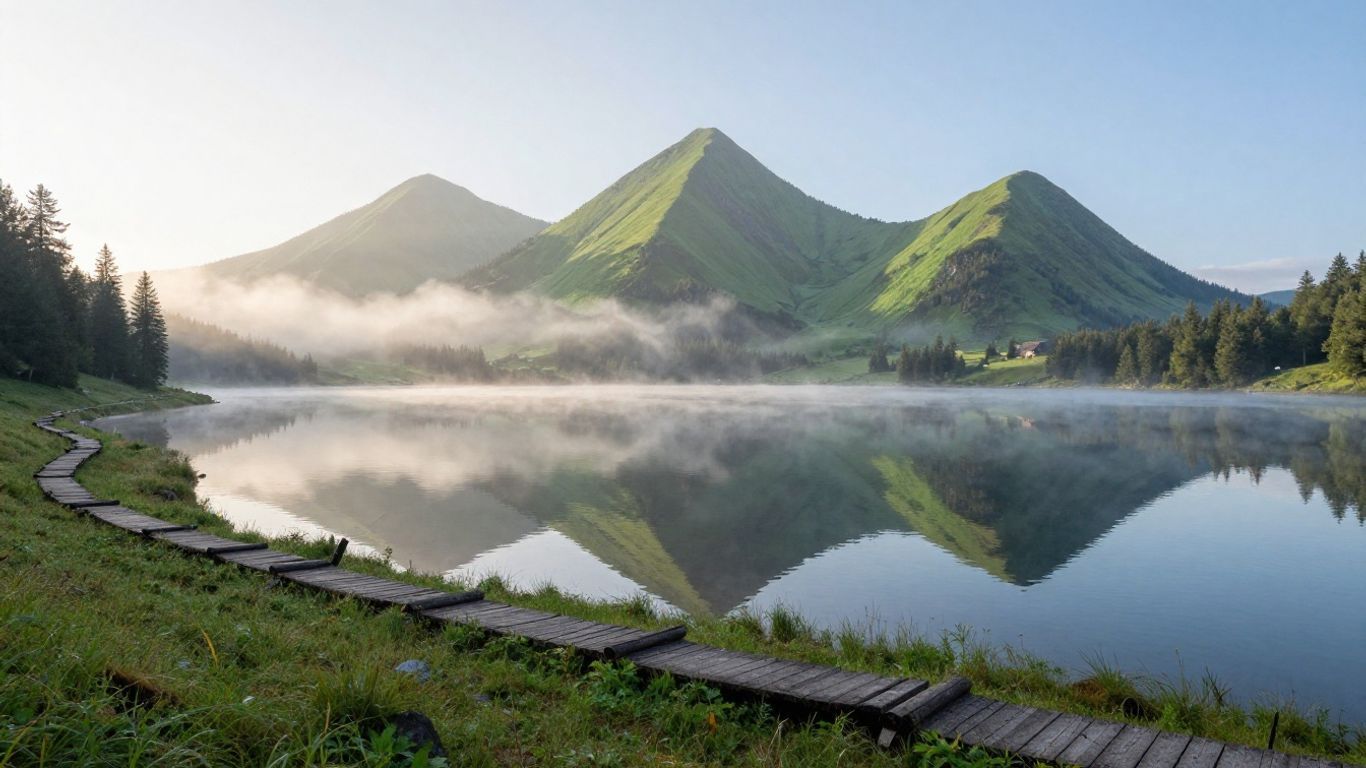
As the Parkway continues south, the elevation rises and falls, eventually guiding travelers into the majestic central Virginia highlands. This region is dominated by the Peaks of Otter, a trio of prominent mountain peaks—Sharp Top, Flat Top, and Harkening Hill—that have drawn writers, artists, and explorers for centuries. The surrounding valleys are rich with wildlife, mature hardwood forests, and deep mountain gaps that capture the morning fog.
At the center of this area is Abbott Lake, a pristine body of water that perfectly mirrors the peaks towering above it. The shoreline features easy walking paths and peaceful picnic spots where you can slow down and enjoy the cool mountain air. For those seeking a challenge, the trail up Sharp Top Mountain rewarded historic visitors with what was once believed to be the most beautiful view in Virginia, a panoramic sweep of pristine wilderness.
After a day of exploring the rugged trails, returning to a luxurious home base makes all the difference. Real estate investors and travelers alike are increasingly realizing that high-end hospitality assets in close proximity to these wilderness corridors can elevate any road trip. Home Team Luxury Rentals provides specialized vacation rental management in premium markets, helping guests find beautifully designed properties with guaranteed comfort and high-end amenities.
3. Roanoke Mountain Loop: A Scenic Stop with Breathtaking Views
The Roanoke Mountain Loop introduces a dramatic change of pace, offering a steep, winding, one-way spur road that hugs the ridgeline just outside the city of Roanoke. This short but exhilarating detour provides exceptional viewing platforms overlooking the Roanoke Valley. It is an ideal spot to stop during the late afternoon, as the city lights below begin to twinkle to life against the darkening silhouette of the surrounding hills.
To help you plan your journey through these distinct sections, it is useful to compare some of the key highland detours along the Virginia stretch of the Parkway:
| Scenic Segment | Milepost Location | Key Visual Attraction | Best Time to Visit |
|---|---|---|---|
| Humpback Rocks | Milepost 5.8 | Shenandoah Valley Views | Early Morning |
| Peaks of Otter | Milepost 86.0 | Abbott Lake Reflection | Sunset |
| Roanoke Mountain Loop | Milepost 120.3 | 360-Degree Ridgeline Overlook | Late Afternoon |
| Rocky Knob | Milepost 167.1 | Rock Castle Gorge | Midday |
Taking the time to pull off at these designated spots ensures you do not miss the subtle transitions in the landscape. The Roanoke area serves as a brilliant bridge between the rugged wilderness of the northern peaks and the flatter, more agricultural plateaus further south.
4. Rocky Knob, Mabry Mill, and Historic Ridge Parkway Attractions
The Rocky Knob region showcases the incredible versatility of the Appalachian landscape, characterized by steep, rugged gorges on one side of the road and rolling, peaceful pastures on the other. This section is home to Rock Castle Gorge, a deep, green cleft in the earth that offers challenging hikes through old-growth forests and alongside tumbling mountain streams. The air here is noticeably crisp, carrying the scent of damp earth and rhododendron leaves.
Just a short drive down the road at Milepost 176.1 sits Mabry Mill, arguably the most photographed site on the entire 469-mile Parkway. The historic wooden gristmill, complete with its functional waterwheel, carries visitors back to the early pioneer days of rural Appalachia. During select summer and autumn weekends, live demonstrations of blacksmithing, spinning, and traditional music bring the historic plaza to life.
This area is perfect for slow driving, where you can admire the rustic split-rail fences that border the asphalt. Whether you are traveling in spring to see wildflowers bloom or in autumn to witness the changing leaves, Rocky Knob remains one of the best Blue Ridge Parkway scenic drives for capturing the true old-world spirit of Southern Virginia.
5. Cumberland Knob: A Historic Blue Ridge Scenic Stop
Crossing the border into North Carolina, motorists arrive at Cumberland Knob at Milepost 217.5. This site holds tremendous historical significance as the exact location where construction of the Blue Ridge Parkway began in September of 1935. Today, it remains a tranquil sanctuary, offering lush picnic areas, gentle walking trails, and a peaceful visitor center tucked beneath a dense canopy of mature trees.
Here, the parkway transitions into a landscape of wide-open plateaus and quiet rural communities. The trails around Cumberland Knob wind through thickets of galax and mountain laurel, leading down to Gully Creek where cool water spills over mossy stones. It is an ideal place to stretch your legs and appreciate how successfully the early parkway engineers integrated the roadway into the natural contours of the land.
Travelers moving through this border corridor will find that the pace of life slows even further. The surrounding agricultural valleys are dotted with historic homesteads and apple orchards. Spending an afternoon here allows one to enjoy the simple pleasures of the road before descending into the dramatic, sweeping meadows that lie just ahead.
6. Doughton Park: Open Meadows and a Stunning Mountain Overlook
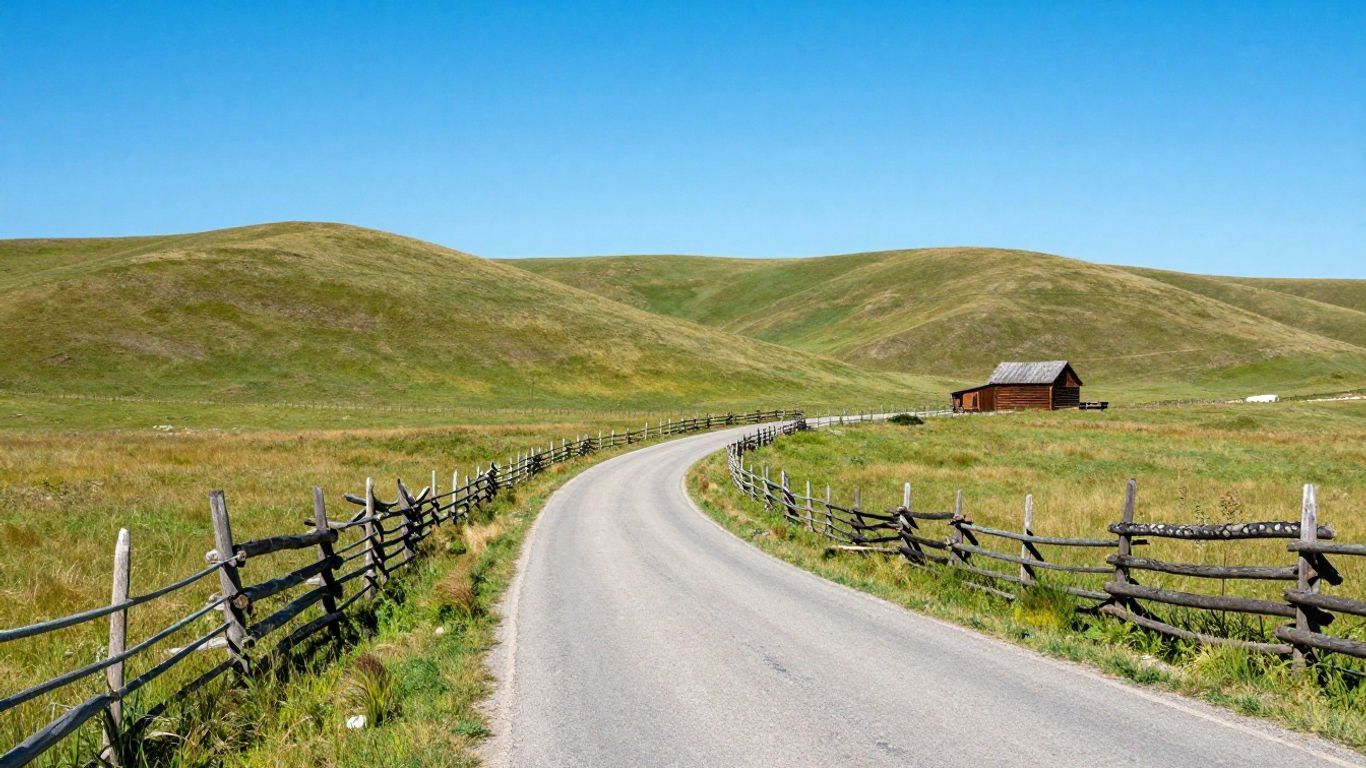
Doughton Park, spanning from Milepost 238 to 246, is one of the largest and most diverse recreation areas along the entire route. Unlike the heavily forested ridges of the northern sections, this high plateau is famous for its vast, rolling pastures and open meadows that seem to stretch indefinitely. Cattle still graze on these hillsides, separated from the roadway by traditional wooden gates and stone walls.
For those exploring the open meadows, a carefully curated itinerary makes it easy to experience the highlights. Be sure to include these notable features of the park:
- The Wild Bluff Trail: A challenging pathway that climbs up to spectacular, uninterrupted views of the surrounding Piedmont.
- The Brinegar Cabin: A preserved 19th-century homestead offering a firsthand look at pioneer life and traditional weaving.
- The Basin Cove Overlook: A quiet pull-off, perfect for watching the early-morning mist rise from the deep valleys below.
- The Fenders Crest Trail: A gentle walk that runs parallel to the Parkway, ideal for birdwatching and photography.
Walking along the bluff mountain paths, you can feel the immense scale of the landscape. After spending hours hiking or driving through these high meadows, lodging comfort becomes a top priority. In mountain regions like nearby Asheville, Home Team Luxury Rentals provides a full-service Airbnb management and luxury vacation rental program to ensure your stay is as memorable and restful as your time on the open road.
7. Moses Cone Manor and Julian Price Park
Continuing into the upscale mountain communities of North Carolina, the carriage trails of Moses H. Cone Memorial Park at Milepost 294 present a completely different aesthetic. The centerpiece of this grand country estate is Flat Top Manor, a stunning, twenty-room Gilded Age mansion built in the Colonial Revival style. The surrounding grounds feature miles of beautifully graded, wide carriage paths that wind through mature forests and apple orchards.
Directly adjacent to the manor grounds is Julian Price Memorial Park, which sits at the foot of Grandfather Mountain. This park surrounds the tranquil waters of Price Lake, where visitors can rent canoes or walk the gentle loop trail around the water's edge. The dense forests of hemlock and white pine provide a cool, shaded environment that feels completely removed from the sunny pastures of Doughton Park.
To make the most of this region, many travelers choose to extend their stay in local high-end mountain chalets. Successfully managing these properties to meet premium traveler expectations requires a dedicated approach. Utilizing data-driven systems to optimize occupancy, nightly rates, and overall revenue, Home Team Luxury Rentals ensures that these high-performing vacation rentals remain beautifully maintained and ready for discerning guests.
8. Grandfather Mountain, Linn Cove Viaduct, and Rough Ridge
As you approach Milepost 304, the landscape rises dramatically to meet the ancient, rugged, and wind-swept slopes of Grandfather Mountain. This is one of the most ecologically diverse destinations in the Southern Appalachians, known for its lofty peaks and rare plant species. Driving along this high-altitude corridor offers some of the most thrilling miles on the entire route.
The undisputed engineering marvel of the Parkway is the Linn Cove Viaduct, a curving, eight-hundred-foot concrete bridge that seems to float effortlessly alongside the rocky slopes of Grandfather Mountain. Designed to protect the fragile environment below, the viaduct is a masterpiece of modern architecture. Savoring this stretch is essential, as the bridge offers an unparalleled perspective of the rugged forest floor dropping away beneath your tires.
Those who want to explore more deeply can consult a comprehensive Blue Ridge Parkway guide to discover hidden trailheads and nearby lookouts. The sheer engineering of the viaduct, combined with the rugged profile of Grandfather Mountain, represents the peak of the highway's unique harmony between human design and the natural world.
9. Craggy Gardens: Breathtaking Views Across the Blue Ridge
Approaching the vibrant mountain city of Asheville, the Parkway climbs to over five thousand feet to reach the spectacular floral displays of Craggy Gardens at Milepost 364.4. This high-elevation gap is world-famous for its massive, dense stands of purple Catawba rhododendrons that erupt into a sea of vibrant color every June. The gnarled, wind-stunted buckeye and beech trees give the landscape a mystical, otherworldly appearance.
When you visit this section, the moist, cool climate often creates thick blankets of clouds that roll across the gap, making you feel as though you are driving through the sky. A short hike up the Craggy Pinnacle trail rewards travelers with a breathtaking 360-degree view of the surrounding crags and valleys. It is a favorite spot for photographers wishing to capture the shifting, colorful mountain light.
This high-elevation wonderland is just a short drive from downtown Asheville, making it a perfect afternoon getaway. Driving this route, you can truly appreciate the dramatic elevation changes that make the Southern Appalachian chain so unique, especially as the road begins its final, long descent toward the southern terminus.
10. Oconaluftee and the Great Smoky Mountains terminus
The final stretch of the Parkway descends into the lush, river-carved valleys of the Oconaluftee area at Milepost 469, marking the southern entrance to the Great Smoky Mountains National Park. Here, the rugged mountain ridges soften into broad valleys rich with history and lush vegetation. The Oconaluftee River flows gently alongside the road, its sparkling waters home to native trout.
This southern terminus is also home to the Mountain Farm Museum, a collection of historic log buildings that showcase life in the late 19th century. Visitors can walk among the historic barns, smokehouses, and apple houses, learning about the rich agricultural heritage of the Cherokee people and early Appalachian settlers. It is a peaceful, grounded ending to an epic mountain road trip.
As you officially complete your journey, the option to explore the Blue Ridge Parkway near Asheville or head deeper into the Great Smoky Mountains awaits. This final valley serves as a powerful reminder of how the Parkway seamlessly connects two of the nation's most treasured national parks through a single, continuous ribbon of scenic asphalt.
Conclusion
From the misty mountain gaps of northern Virginia to the historic river valleys of North Carolina, navigating the Blue Ridge Parkway is a journey through the heart of the Appalachian spirit. By pacing your drive, stopping at historic overlooks, and choosing exceptional lodging along the way, you can turn a classic road trip into a luxurious, lifetime memory.
If your adventure brings you to western North Carolina, be sure to explore Things To Do In Black Mountain, NC to discover local attractions, dining, hiking trails, and hidden gems that perfectly complement your Blue Ridge Parkway itinerary. If you own a vacation rental in the region, Home Team Luxury Rentals also offers Luxury Airbnb Management Services designed to maximize bookings, elevate guest experiences, and help your property reach its full earning potential.
Frequently Asked Questions
Share to social media
More posts