Best Hiking Trails in Palm Springs, CA: Ultimate Desert Trail Guide


By: |

Hiker overlooking Palm Springs mountains with text “Best Hiking Trails in Palm Springs, CA” and “Ultimate Desert Trail Guide”


Best Hiking Trails in Palm Springs, CA for Scenic Desert Adventures


Palm Springs is a top hiking destination in Southern California known for its dramatic palm-filled canyons, rugged mountain paths, and wide-open desert landscapes. This guide highlights the most rewarding hiking experiences across the region, from relaxing canyon walks to challenging elevation climbs near San Jacinto. 


Whether you’re planning a casual outing or a full adventure, each trail offers a unique perspective of the surrounding Palm Springs terrain. Always check AllTrails or a trusted trail guide before starting any route to prepare for weather, distance, and elevation changes.


1. Tahquitz Canyon Loop
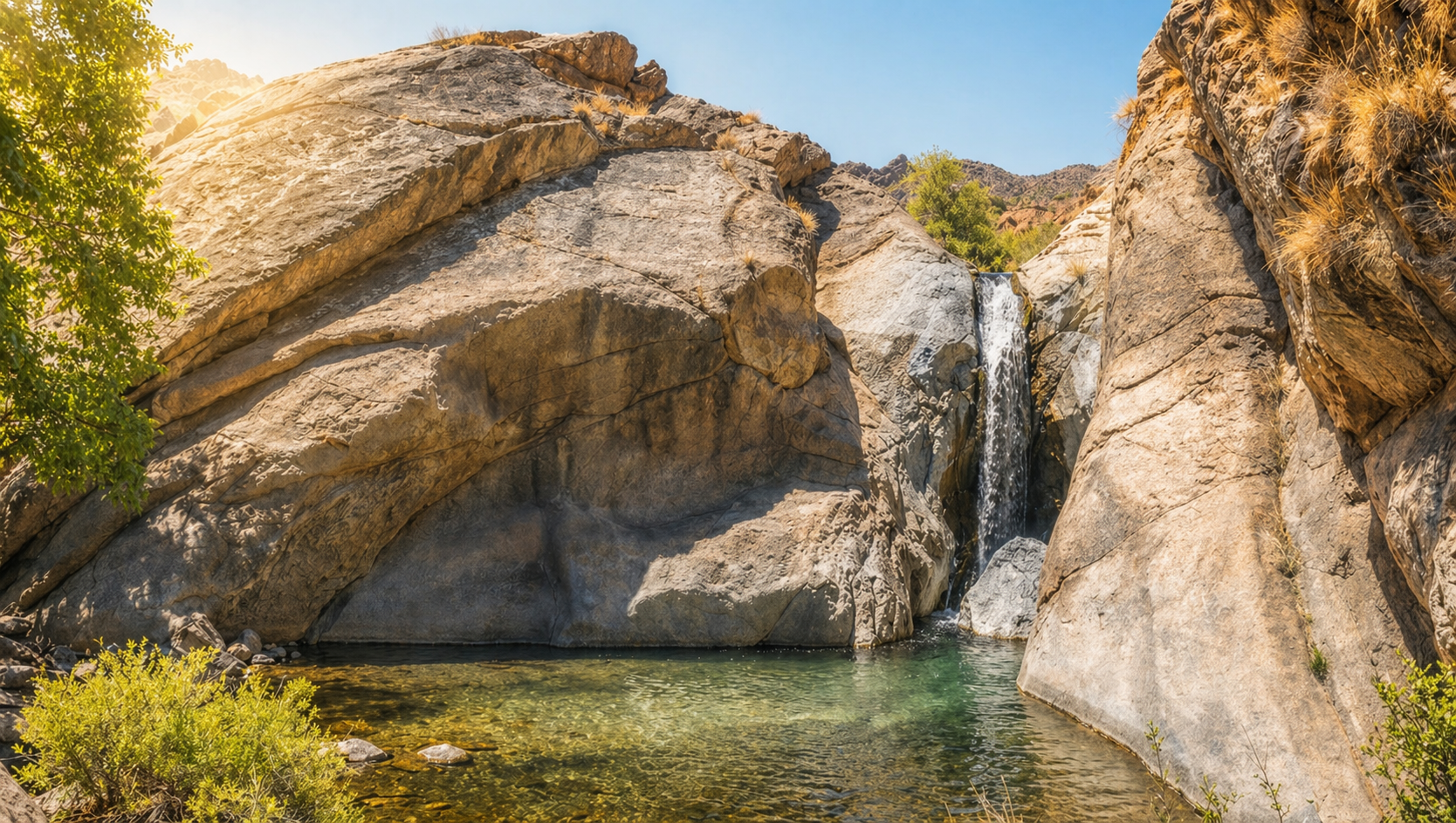
Rocky canyon with a small waterfall flowing into a clear pool under bright sunlight


The Tahquitz Canyon Loop is a short but rewarding hiking experience near Palm Springs. This canyon path climbs through rocky formations and leads to a seasonal waterfall at the end.


  • Short canyon climb with steady elevation gain
  • Scenic rock formations throughout the trail
  • One of the most popular Palm Springs hiking destinations


This Tahquitz Canyon loop is ideal for a quick but memorable outdoor adventure.


2. Indian Canyons – Palm Canyon Trail
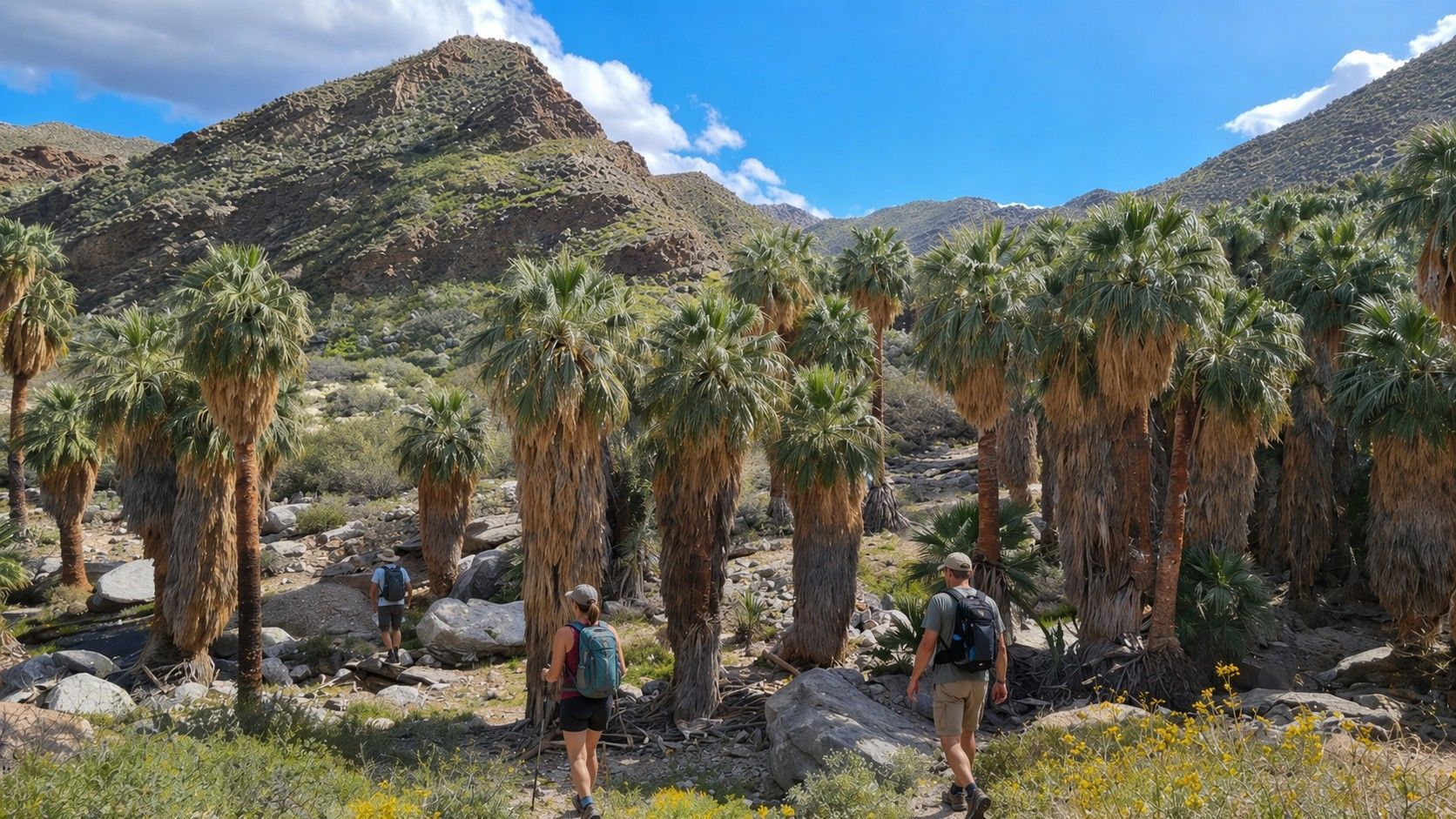
Hikers walking among palm trees in a rocky desert canyon with mountains under a blue sky


Indian Canyons is one of the most iconic hiking areas in Palm Springs. The Palm Canyon Trail winds through a shaded canyon filled with natural palm groves and seasonal water sources. This is a classic moderate hiking experience with steady elevation gain and clearly marked paths.


  • Lush palm canyon scenery surrounded by towering palms
  • Well-maintained trail with accessible hiking conditions
  • One of the most photographed Palm Springs routes


This Palm Canyon Trail delivers a peaceful yet immersive desert experience with natural shade and beauty.


3. Araby Trail – Desert Ridge Hike
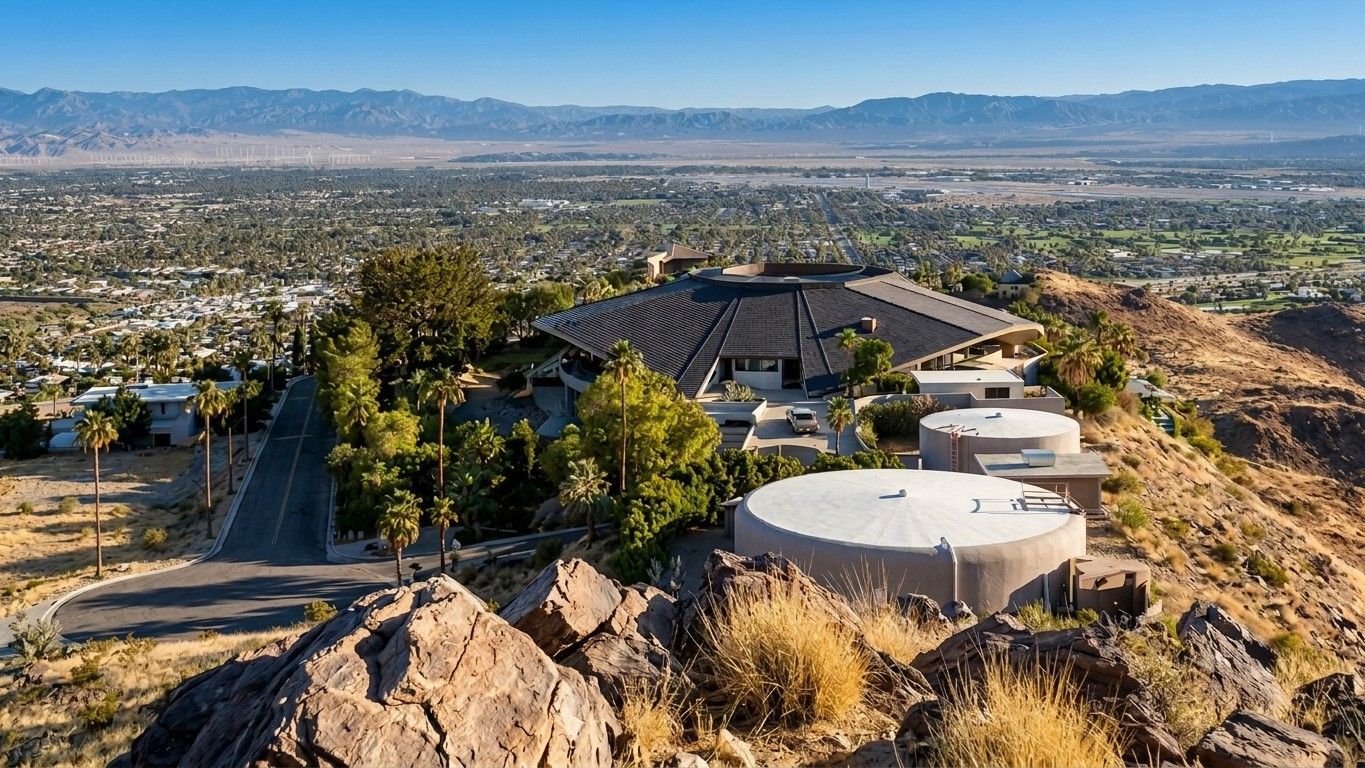
Aerial view of a hillside home with a large pool overlooking a sprawling city and mountains.


The Araby Trail is a steep desert climb above Palm Springs that rewards hikers with panoramic views of the valley below. It’s a more challenging option due to its elevation gain and exposed terrain.


  • Steep ascent with wide desert views
  • Strong elevation changes throughout the trail
  • Best experienced early morning or late afternoon


This araby trail is perfect for hikers seeking a more demanding workout.


4. San Jacinto Access via Tramway


Access to San Jacinto is possible through aerial transport that transitions hikers from the hot valley floor into cooler mountain environments. The elevation change is dramatic, shifting from desert terrain to forested alpine conditions.


  • Aerial access from Palm Springs to the mountain elevations
  • Cooler temperatures above the desert floor
  • Expansive trail systems at higher elevations


This San Jacinto route offers a completely different environment compared to lower valley hiking.


5. Ladder Canyon Slot Experience


The Ladder Canyon area features narrow rock corridors and unique desert formations. This hiking experience includes light scrambling and uneven terrain that adds adventure to the route.


  • Narrow slot canyon formations carved into rock
  • Light scrambling sections along the path
  • Remote and less crowded hiking environment


This ladder canyon experience is ideal for adventurous hikers exploring rugged terrain.


6. Long Valley Hiking Area


Long Valley connects hikers to wider San Jacinto Wilderness regions. The area offers extended hiking opportunities with steady elevation changes and expansive views.


  • Wide-open natural landscapes near Palm Springs
  • Access points to higher mountain regions
  • Longer hiking options for experienced visitors


This long valley area is best suited for extended outdoor exploration.


7. Joshua Tree National Park Trails


Just outside Palm Springs, Joshua Tree National Park offers some of the most iconic hiking environments in California. Its desert landscape features massive rock formations and open scenic views.


  • Unique rock formations and desert scenery
  • Famous museum trails and viewpoints
  • Camping options near hiking areas


This Joshua Tree National Park region is a must-visit for any desert hiking enthusiast.


8. Mirage Trail Aka Hidden Route


The Mirage Trail, aka is a lesser-known hiking option near Palm Springs that provides a quieter outdoor experience with fewer crowds.


  • Secluded hiking environment with open views
  • Light elevation changes along the path
  • Peaceful alternative to popular routes


This mirage trail aka is ideal for hikers looking for solitude.


9. McCallum Trail & Museum Trails


The McCallum Trail offers a simple local hiking option in Palm Springs, while museum trails provide educational and scenic walking experiences nearby.


  • Easy local hiking options around Palm Springs
  • Light walking paths suitable for all levels
  • Informational museum trails with desert context


These trails are perfect for relaxed outdoor exploration.


Final Thoughts


Palm Springs offers one of the most diverse hiking landscapes in California, blending palm-filled canyons, rugged mountain climbs, and expansive desert views. From relaxed canyon walks to challenging elevation routes near San Jacinto, every hike brings a different experience.


Beyond the trails, there are plenty of things to do in Palm Springs that make the destination even more rewarding. Visitors can explore downtown Palm Springs for shopping, art galleries, and local dining, ride the Palm Springs Aerial Tramway for breathtaking views, or unwind at world-class spas and golf courses. The area also offers cultural attractions like the Palm Springs Art Museum and nearby desert parks that highlight the region’s natural beauty.


Palm Springs is also known for luxury vacation rentals that make it easy to stay close to top outdoor destinations. Whether you're planning short weekend hikes or longer adventures across the region, the area combines comfort, scenery, and a wide range of activities for an unforgettable desert escape.


FAQ

  • What is the best time to hike in Palm Springs?

    Early morning offers cooler conditions and better comfort for hiking.

  • Are hiking routes difficult?

    Some hiking options are moderate, while others require elevation gain and endurance.

  • Do I need planning tools?

    AllTrails and a trail guide help navigation and route planning.

  • How do I reach San Jacinto?

    You can use aerial access from Palm Springs to reach higher elevations.

  • What is a tough hike like?

    Some hikers enjoy a steep grind on higher elevation routes.

Share to social media

More posts

By Elliott Caldwell April 21, 2026
What Are the Best Areas for Airbnb in Bradenton, Florida?
By Elliott Caldwell April 21, 2026
Is Airbnb profitable in Bradenton, Florida? Learn average revenue, occupancy rates, seasonality, and how investors maximize returns.
By Elliott Caldwell April 17, 2026
Airbnb Management vs Self-Managing: Which Is More Profitable? Airbnb management vs self-managing is ultimately a decision about performance, not just cost. Most comparisons focus on management fees, control, or convenience. But for property owners and investors, the real question is simpler: Which approach produces more revenue—and better long-term returns? Because in short-term rentals, profitability is not determined by who does the work. It’s determined by how well the work is executed across pricing, occupancy, and guest experience. Why This Comparison Matters More Than Most Owners Realize At a glance, self-managing appears more profitable because it avoids management fees. But this assumption ignores how revenue is actually generated in the short-term rental market. Performance is driven by a small set of variables that compound over time: Nightly pricing strategy (ADR) Occupancy rate across seasons Listing conversion rate Guest experience and reviews Market positioning against competing listings What’s often overlooked is how sensitive these variables are to execution. According to the academic study Research on the Impact of Dynamic Pricing on Revenue Based on Airbnb Data , dynamic pricing strategies can increase annual income by approximately 30% compared to static pricing models . This reinforces a core principle: execution—especially pricing—directly impacts revenue outcomes . Real-world operator data shows that dynamic pricing systems typically increase revenue by 10% to 40% annually , along with measurable improvements in RevPAR and booking performance. At the individual booking level, pricing strategy becomes even more impactful. Data from PriceLabs shows that peak demand pricing adjustments can increase nightly rates by 50% to 200% , capturing value that static pricing models miss entirely. In other words, two nearly identical properties can produce very different results depending on how they are managed. What Is Self-Managing an Airbnb? Self-managing an Airbnb means the property owner is responsible for every aspect of the operation—from pricing to guest communication to maintenance. This is not just hosting. It is running a full hospitality business. Core responsibilities of self-managing include: Setting and adjusting nightly pricing Managing calendars and booking settings Communicating with guests before, during, and after stays Coordinating cleaning and maintenance Optimizing the listing (photos, amenities, descriptions) Monitoring reviews and responding to feedback Self-managing gives full control over decisions and operations. However, it also requires consistent time, attention, and market awareness. What matters most is not whether these tasks are completed, but how consistently and effectively they are executed over time. In practice, many self-managed properties rely on static or infrequently updated pricing. Pricing strategies that actively adjust based on demand, booking pace, and occupancy trends can significantly improve both nightly rates and booking volume, but require consistent monitoring and adjustment. What Is Airbnb Property Management? Airbnb property management involves hiring a professional company to handle the day-to-day operation and optimization of a short-term rental. This typically includes both operational execution and revenue strategy. Core responsibilities of Airbnb management include: Dynamic pricing based on demand, seasonality, and booking pace Listing optimization across platforms (Airbnb, Vrbo, Booking.com) Guest communication and support Cleaning coordination and quality control Performance tracking and reporting Ongoing adjustments based on market data Professional managers operate within a fundamentally different framework. Dynamic pricing systems continuously adjust rates based on supply and demand conditions , allowing operators to increase prices when demand is high and lower them strategically when demand softens. This allows operators to increase prices when demand is high and lower them strategically when demand softens—maximizing both occupancy and revenue. More advanced systems go even further. Operators like AvantStay identify dozens of micro-season demand windows throughout the year—short periods where pricing can be adjusted to capture incremental revenue that traditional seasonal pricing models overlook. The goal is not just to maintain the property, but to continuously optimize performance. Airbnb Management vs Self-Managing: The Real Difference At a surface level, both approaches involve the same core activities: Pricing the property Managing bookings Maintaining the guest experience Optimizing the listing But the real difference is not the tasks—it is the consistency, speed, and quality of execution. Self-managing relies on the owner’s time, experience, and ability to adapt Airbnb management relies on systems, automation, and continuous optimization This distinction matters because short-term rental performance is highly sensitive to small changes. For example, pricing strategies that actively balance demand have been shown to increase occupancy while also increasing revenue. Data from PriceLabs indicates that optimized pricing can produce ~11% higher occupancy alongside revenue gains , highlighting how these variables work together—not independently. Over time, these incremental improvements compound into significantly higher annual returns. Why Most Comparisons Get This Wrong Airbnb management vs self-managing is often framed as a simple cost decision: Self-managing = no management fees Management = 10–30% of revenue But this overlooks the most important factor: Revenue is not fixed—it is variable based on performance. What many owners fail to consider: How pricing strategy affects nightly rates How listing optimization impacts conversion How demand timing influences occupancy How their property compares to top-performing listings nearby From a foundational standpoint, dynamic pricing exists to align supply and demand in real time. As outlined by Harvard Business School, businesses that adjust pricing dynamically can optimize both utilization and profitability simultaneously. In short-term rentals, this means: Lower prices strategically to maintain occupancy during slow periods Increase prices aggressively when demand spikes Capture revenue across dozens of micro-demand windows throughout the year A property that executes this well can generate significantly more revenue—even after accounting for management fees. What This Article Will Help You Understand This guide breaks down Airbnb management vs self-managing from a performance perspective—not just a cost comparison. In the sections that follow, we’ll cover: The pros and cons of each approach How Airbnb revenue is actually generated Real-world revenue scenarios and comparisons Where self-managing tends to fall short When professional management becomes more profitable The goal is to give you a clear framework for making a decision based on outcomes—not assumptions. Bottom Line Airbnb management vs self-managing is not simply about who does the work—it is about how effectively the work is done. The same property, in the same market, can produce very different results depending on how it is managed. The difference is not the model—it is the execution behind it. Frequently Asked Questions
By Elliott Caldwell April 14, 2026
Airbnb management costs vary based on location, property type, amenities, and service level. Learn what drives pricing and how to evaluate fees based on performance.
A dinner table with seafood dishes and wine overlooking a sunset beach in Belleair Beach, Florida.
By John Ishmael Acuyado April 14, 2026
Discover where to dine in Belleair Beach FL with top nearby restaurants, beach dining spots, seafood grills, and local cafés just minutes from the shore.
Airbnb management typically costs 15%–35% of revenue. Learn what affects fees, what services are inc
By Elliott Caldwell April 13, 2026
Airbnb management typically costs 15%–35% of revenue. Learn what affects fees, what services are included, and whether Airbnb management is worth it for your property.