

How Coastal Tourism Shapes Vacation Rental Demand, Travel Behavior, and Coastal Economies


Coastal Tourism Is Much Bigger Than Beaches Alone
When most people think about coastal tourism, they immediately picture beaches, oceanfront hotels, and summer vacations. While beaches remain one of the largest components of the sector, coastal tourism extends far beyond shoreline recreation alone.
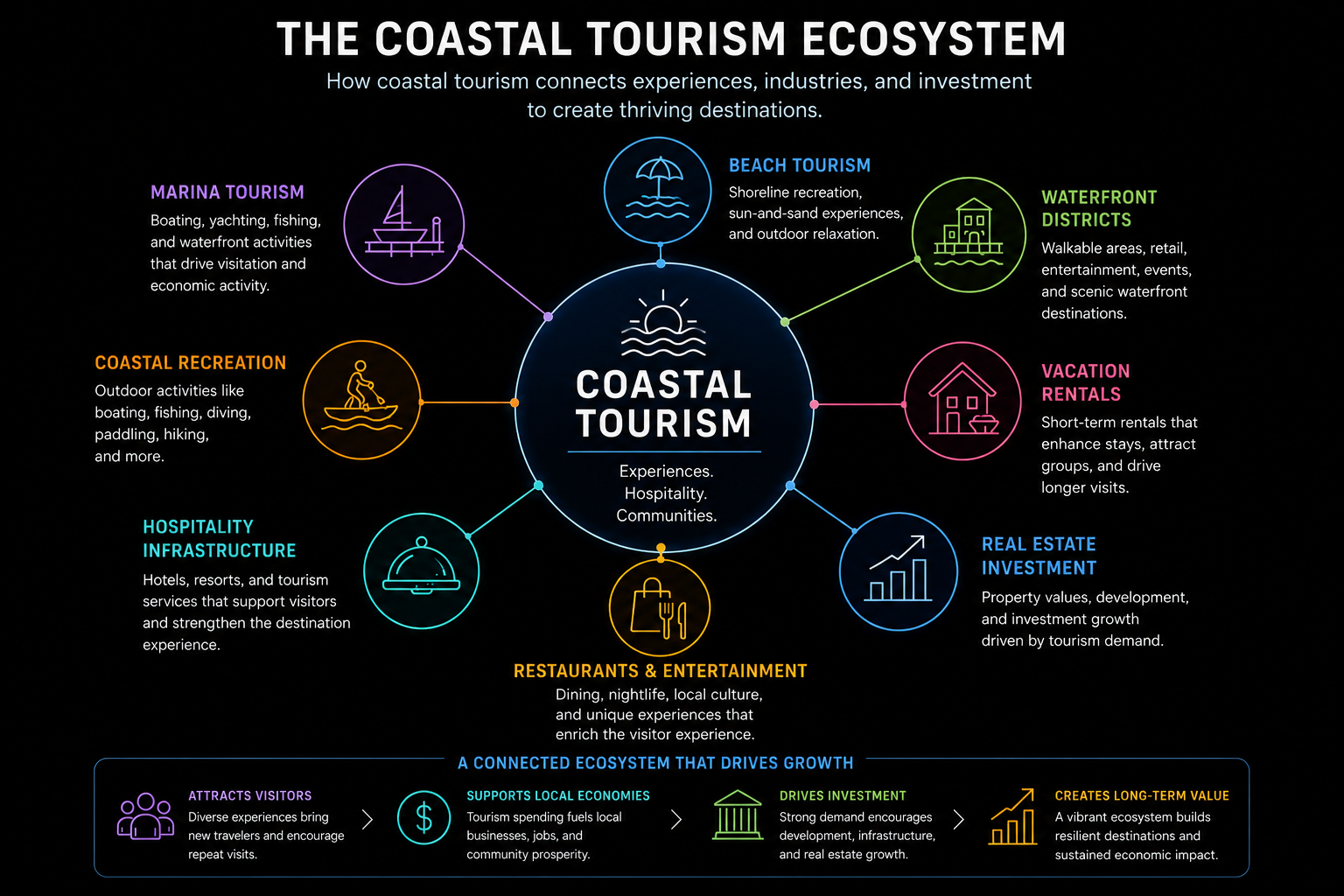
Coastal tourism refers to tourism activity connected to coastal environments, waterfront destinations, ocean-adjacent recreation, and the hospitality ecosystems that develop around them. In practice, that includes everything from beach tourism and marina districts to waterfront entertainment corridors, recreational coastal activities, and tourism-driven coastal communities.
More importantly, coastal tourism has evolved into one of the most economically significant segments of the broader U.S. travel industry.
Coastal Tourism Has Become a Massive Economic Engine
According to NOAA’s 2024 Open Economics: National Ocean Watch dataset, coastal tourism and recreation directly employ more than 2.5 million people in the United States and contribute roughly $207 billion annually to U.S. gross domestic product. When indirect and induced economic effects are included, the sector supports more than 4 million jobs and contributes approximately $426 billion to the U.S. economy.
NOAA coastal tourism and recreation statistics help illustrate just how large the sector has become and why coastal destinations continue attracting:
- hospitality investment
- tourism infrastructure
- mixed-use development
- luxury travel demand
- short-term rental growth
- destination-driven real estate investment
In many coastal markets, tourism does not simply support the local economy. It helps shape the local economy itself.
Coastal Tourism Shapes Entire Destination Ecosystems
Destinations such as Myrtle Beach, Charleston, Destin, Hilton Head Island, Clearwater, and Outer Banks have all developed tourism ecosystems heavily influenced by recurring coastal visitation patterns.
Those ecosystems often expand far beyond hotels and beaches alone.
Tourism Growth Influences Surrounding Industries
As coastal tourism expands, surrounding industries often grow alongside it, including:
- restaurants
- marinas
- waterfront retail
- recreation providers
- nightlife
- tourism services
- entertainment districts
- vacation rentals
Over time, entire coastal communities often organize themselves economically around hospitality and visitor activity.
That relationship becomes especially evident in markets with strong luxury vacation rental management services and well-developed hospitality infrastructure.
Strong Coastal Markets Usually Have Multiple Tourism Drivers
Many of America’s highest-performing vacation rental markets are not supported by a single attraction alone. Instead, they operate as layered tourism ecosystems where multiple forms of coastal tourism reinforce one another simultaneously.
Coastal Destinations Often Blend Multiple Experiences
A destination may attract visitors because of:
- beaches
- boating culture
- waterfront entertainment
- fishing
- outdoor recreation
- walkable coastal districts
- luxury hospitality experiences
The more diversified the tourism ecosystem becomes, the stronger the surrounding hospitality economy often becomes as well.
That relationship is one of the reasons coastal tourism remains deeply connected to vacation rental demand and broader experience-driven travel trends.
Coastal Tourism Naturally Supports Vacation Rental Markets
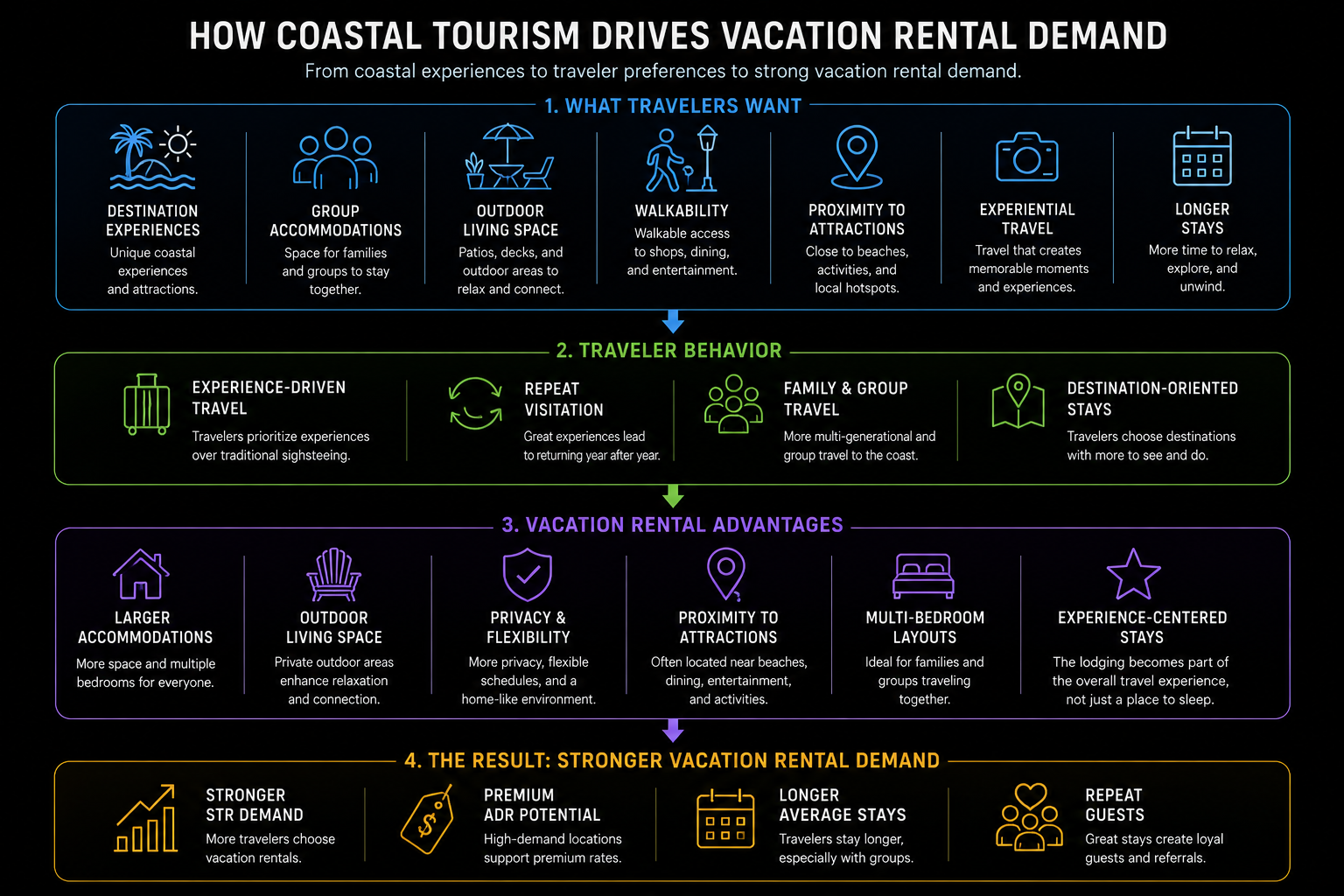
Travelers visiting coastal destinations frequently prioritize:
- destination experiences
- group accommodations
- outdoor living space
- walkability
- proximity to attractions
- experiential travel
- longer stays
Those preferences naturally align with many of the characteristics vacation rentals provide, particularly in destination-oriented coastal markets where travelers are seeking more than a standard hotel stay.
In many coastal destinations, the lodging itself becomes part of the broader travel experience rather than simply a place to sleep.
That is one reason many investors continue focusing on beachfront vacation rental management opportunities in high-demand coastal destinations.
Coastal Tourism Reflects a Larger Shift in Travel Behavior
Modern travelers increasingly select destinations based less on generic sightseeing and more on:
- atmosphere
- recreation
- lifestyle experiences
- hospitality quality
- memorable environments
Coastal destinations naturally fit that trend because they combine multiple travel motivations into a single market experience.
A traveler visiting Santa Monica or Key West is rarely traveling for only one reason.
Coastal Destinations Blend Multiple Travel Motivations
The appeal often comes from the combination of:
- waterfront scenery
- recreation
- dining
- nightlife
- climate
- hospitality
- entertainment
- social experiences
That overlap is part of what makes coastal tourism so economically resilient over time and aligns closely with broader modern travel behavior trends.
Coastal Tourism Has Demonstrated Long-Term Resilience
During the COVID recovery period, many coastal destinations rebounded faster than numerous inland tourism markets as travelers increasingly prioritized open-air destinations, outdoor recreation, and experience-driven travel.
Research surrounding COVID recovery trends in coastal tourism reinforced something coastal operators and hospitality investors have understood for decades: coastal tourism is not simply seasonal recreation.
In many destinations, it functions as a long-term travel behavior deeply embedded in how people vacation, gather, and experience leisure travel.
Several Forms of Coastal Tourism Shape Hospitality Demand Differently
Within the broader coastal tourism ecosystem, several distinct forms of tourism play especially important roles in shaping:
- hospitality demand
- destination identity
- tourism infrastructure
- vacation rental performance
- local economic development
Some forms of coastal tourism revolve around beaches and shoreline recreation. Others center around marinas, waterfront districts, outdoor recreation, or tourism-driven coastal communities.
Together, these overlapping tourism systems help explain why many coastal destinations continue functioning as some of the strongest hospitality and vacation rental markets in the United States.
Beach Tourism Is One of the Largest Drivers of Coastal Travel Demand
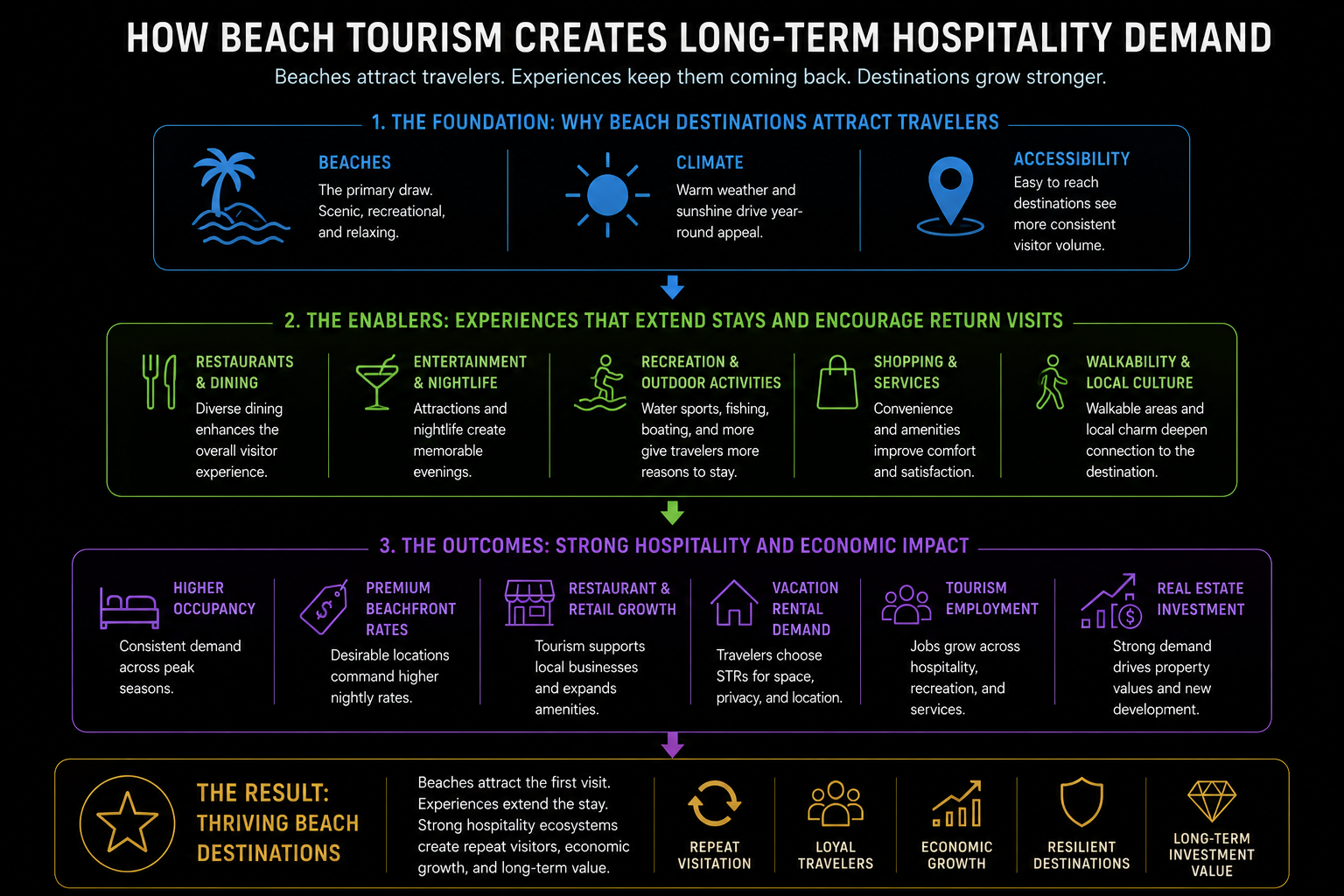
Beach tourism refers to tourism activity centered around beaches, shoreline recreation, ocean access, and waterfront leisure experiences. While that definition sounds relatively straightforward, beach tourism has evolved into one of the most influential forces shaping coastal hospitality markets throughout the United States.
In many destinations, the beach is not simply an attraction. It becomes the foundation for the broader tourism economy surrounding it.
Markets such as Myrtle Beach, Destin, Clearwater, and Gulf Shores have developed substantial portions of their hospitality infrastructure around recurring beach visitation patterns and seasonal coastal travel demand.
Research from NOAA and related coastal tourism studies consistently shows that beaches remain among the most visited tourism environments in the United States.
That level of recurring visitation helps explain why beach tourism remains deeply connected to:
- vacation rental demand
- hospitality investment
- tourism-centered real estate growth
- coastal infrastructure development
- destination branding
Beach Tourism Shapes How Travelers Choose Destinations
One of the reasons beach tourism remains so economically powerful is that it strongly influences travel behavior itself.
Unlike some tourism categories that revolve around short-duration attractions or isolated activities, beach travel often supports:
- multi-day stays
- family vacations
- group travel
- repeat visitation
- seasonal migration patterns
- destination-centered itineraries
For many travelers, the beach becomes the anchor around which the broader trip is organized.
That distinction matters because travelers are often selecting not only the destination itself, but also the type of experience they want surrounding the destination.
Travelers Increasingly Prioritize Experience-Based Accommodations
In many beach-driven markets, travelers prioritize:
- walkability to the shoreline
- ocean views
- outdoor gathering space
- larger accommodations
- proximity to restaurants and attractions
- family-oriented lodging layouts
This helps explain why vacation rental demand in beach destinations often remains exceptionally strong in highly recognizable coastal markets.
The lodging itself becomes part of the coastal experience rather than simply functioning as overnight accommodations.
Beach Tourism Creates Strong Seasonal Demand Patterns
Another defining characteristic of beach tourism is the way it concentrates travel demand into highly valuable seasonal windows.
Summer vacations, holiday weekends, school breaks, and warm-weather migration patterns can rapidly increase demand throughout coastal hospitality markets.
Seasonal Tourism Often Creates Pricing Power
For investors and hospitality operators, concentrated travel demand can create:
- elevated occupancy
- stronger nightly rates
- compressed booking windows
- premium pricing for beachfront inventory
- increased demand for larger properties
Importantly, this demand rarely impacts lodging alone.
As visitation increases, surrounding coastal economies often expand alongside it through:
- waterfront restaurants
- entertainment districts
- recreation providers
- tourism-centered retail
- local service industries
- hospitality employment
This is one reason many successful beach destinations eventually evolve into broader tourism ecosystems rather than isolated vacation areas.
Coastal Destinations Often Develop Around Recurring Travel Behavior
Over time, recurring beach visitation patterns can influence:
- local infrastructure
- hospitality development
- tourism-centered zoning
- entertainment investment
- mixed-use coastal growth
That long-term tourism consistency is part of what continues to strengthen many coastal hospitality markets across the United States.
In many ways, beach tourism acts as a stabilizing force that encourages ongoing tourism investment and broader coastal tourism economic development.
Beach Tourism Reinforces Long-Term Destination Loyalty
One of the more interesting aspects of beach tourism is the consistency of repeat visitation behavior.
For many travelers, coastal vacations become tied to:
- annual family traditions
- seasonal routines
- recreation habits
- lifestyle preferences
- destination familiarity
Once travelers establish emotional connections to a destination, repeat trips often follow.
This repeat visitation becomes extremely valuable for coastal hospitality economies because it creates recurring travel demand across multiple years rather than one-time tourism spikes.
Repeat Visitation Strengthens Hospitality Ecosystems
Over time, recurring beach travel can help support:
- stable tourism demand
- long-term hospitality investment
- destination branding
- restaurant expansion
- entertainment growth
- vacation rental development
That consistency is part of what continues to make beach tourism one of the most economically influential segments of the broader coastal tourism sector.
It also helps explain why many investors continue targeting highly recognizable coastal destinations with established short-term rental demand trends (AirDNA).
Beach Tourism Continues To Benefit From Experience-Driven Travel Trends
Modern travelers increasingly prioritize experiences tied to:
- recreation
- atmosphere
- social connection
- outdoor environments
- memorable destinations
Beach destinations naturally align with many of those preferences because they combine:
- scenery
- recreation
- hospitality
- entertainment
- relaxation
- group travel experiences
into a single tourism environment.
This overlap is part of the reason beach tourism continues influencing not only tourism activity itself, but also the broader hospitality and vacation rental markets surrounding many coastal destinations.
In many ways, beach tourism now functions as more than a leisure category alone. It has become part of a much larger experience-driven travel economy, shaping how travelers choose destinations, accommodations, and coastal hospitality experiences.
Marina Tourism Expands Coastal Tourism Beyond the Beach
Marina tourism refers to tourism activity connected to marinas, harbors, boating infrastructure, yacht culture, and waterfront docking districts. While beaches often dominate conversations around coastal travel, marina tourism plays a major role in shaping many upscale and experience-driven coastal destinations.
In many markets, the marina becomes more than a place for boats. It evolves into a central hospitality and tourism environment that influences:
- dining
- entertainment
- nightlife
- recreation
- luxury travel
- waterfront real estate
- destination branding
Destinations such as Newport Beach, Hilton Head Island, Key West, and Marina del Rey demonstrate how marina infrastructure can shape the broader identity of a coastal market.
In many of these destinations, the harbor itself becomes part of the experience travelers are actively seeking.
Marina Tourism Often Attracts Experience-Driven and Higher-Spending Travelers
One reason marina tourism matters economically is that it frequently attracts travelers seeking more than simple beach recreation alone.
Marina-oriented visitors are often drawn to:
- boating culture
- waterfront dining
- harbor entertainment
- yacht-centered recreation
- walkable marina districts
- luxury hospitality experiences
This tends to create a different tourism profile than purely beach-driven destinations.
In many marina-centered markets, travelers prioritize:
- waterfront accommodations
- harbor views
- proximity to marina districts
- upscale dining environments
- experiential hospitality
That demand can create strong conditions for premium waterfront vacation rental markets, particularly in destinations where marina districts function as tourism anchors.
Marina Districts Blend Hospitality and Lifestyle Experiences
Many marina-centered destinations naturally combine:
- restaurants
- nightlife
- boating access
- outdoor recreation
- luxury accommodations
- mixed-use entertainment districts
That layered environment often supports:
- longer guest stays
- higher visitor spending
- broader hospitality demand
- stronger tourism infrastructure
This is one reason marina tourism frequently overlaps with broader luxury coastal travel trends.
Marina Tourism Helps Diversify Coastal Economies
One of the more important characteristics of marina tourism is that it broadens tourism activity beyond the shoreline itself.
In many destinations, beach recreation tends to concentrate heavily during daytime hours. Marina districts, however, frequently remain active into the evening through:
- waterfront restaurants
- harbor nightlife
- marina events
- entertainment districts
- boat excursions
- social gathering spaces
That diversification can strengthen the broader tourism economy because activity becomes spread across multiple experiences rather than concentrated around a single attraction.
Layered Tourism Activity Often Supports More Stable Hospitality Markets
As marina districts mature, they often help support:
- shoulder-season visitation
- broader traveler demographics
- extended guest stays
- year-round tourism activity
- more stable hospitality demand
Over time, marina tourism can become deeply integrated into the economic structure of a destination itself.
In many coastal markets, marinas evolve into long-term hospitality anchors, influencing:
- surrounding development
- waterfront investment
- tourism branding
- real estate demand
- luxury travel positioning
That relationship becomes increasingly visible in destinations with highly developed coastal hospitality ecosystems.
Waterfront Tourism Shapes the Social and Commercial Core of Coastal Destinations
Waterfront tourism refers to tourism activity centered around waterfront districts, piers, promenades, harbors, boardwalks, and ocean-adjacent entertainment environments.
Unlike beach tourism, which is often tied directly to shoreline recreation, waterfront tourism is more closely connected to the broader hospitality and commercial environments that develop around coastal access.
Cities such as Charleston, San Diego, Santa Monica, and Savannah illustrate how waterfront districts frequently evolve into major tourism and economic hubs.
In many destinations, the waterfront becomes the social center of the market itself.
Walkable Waterfront Districts Influence Tourism Demand
One defining characteristic of waterfront tourism is its relationship with walkability and concentrated activity.
Modern travelers increasingly prioritize destinations where accommodations, dining, entertainment, nightlife, and waterfront access exist within the same connected environment.
That preference influences how tourism demand is distributed throughout coastal markets.
Travelers Increasingly Prioritize Connected Destination Experiences
In many waterfront destinations, visitors are drawn to:
- walkable entertainment districts
- harbor-centered dining
- public gathering spaces
- scenic waterfront access
- nightlife
- shopping corridors
- mixed-use tourism environments
This helps explain why some coastal destinations develop stronger tourism economies than others even when both possess similar shoreline access.
The surrounding hospitality ecosystem matters.
A beach alone may attract visitors. But layered waterfront environments often encourage travelers to stay longer, spend more, and engage more deeply with the destination itself.
That dynamic closely aligns with broader experiential tourism and destination immersion trends.
Waterfront Tourism Strengthens the Broader Hospitality Economy
Waterfront districts frequently support tourism activity throughout both the day and evening, allowing coastal destinations to maintain broader hospitality demand beyond peak beach hours alone.
This can strengthen:
- restaurant economies
- nightlife districts
- entertainment sectors
- lodging demand
- mixed-use development
- tourism infrastructure
Over time, waterfront tourism helps shape how coastal communities organize themselves economically around hospitality and visitor activity.
In many coastal destinations, the waterfront becomes more than scenery. It becomes the functional center of the broader tourism economy itself.
This is one reason highly developed waterfront districts often correlate with stronger destination-driven vacation rental demand.
Coastal Recreation Continues To Shape Experience-Driven Travel
Coastal recreation refers to recreational activities taking place within coastal environments and shoreline ecosystems. This includes everything from paddleboarding and kayaking to recreational fishing, shoreline hiking, wildlife viewing, surfing, and nature-based coastal tourism.
While recreation has always played a role in coastal travel, it has become increasingly important as travelers shift toward experience-driven tourism centered around participation rather than passive sightseeing alone.
Destinations such as Outer Banks, Cannon Beach, Malibu, and Cape Cod demonstrate how recreational ecosystems can become major tourism drivers within coastal markets.
In many cases, travelers are not simply visiting these destinations because they are coastal. They are visiting because of the experiences the coastal environment makes possible.
Experience-Driven Travel Continues To Influence Coastal Markets
Modern travelers increasingly select destinations based on:
- recreation access
- outdoor experiences
- scenic environments
- adventure opportunities
- social experiences
- lifestyle-oriented travel
This shift has important implications for hospitality and vacation rental markets because travelers often seek accommodations that support those experiences rather than separate themselves from them.
Recreation-Oriented Travelers Often Prioritize:
- proximity to recreation access points
- outdoor gathering space
- equipment-friendly accommodations
- larger group lodging
- extended stays
- experiential destination environments
That alignment helps explain why many recreation-oriented coastal destinations continue seeing strong vacation rental demand tied to outdoor tourism.
In many markets, the surrounding recreation ecosystem becomes part of the broader value proposition, influencing where travelers stay and how long they remain in the destination.
Coastal Recreation Often Supports Longer Stays and Repeat Visitation
One of the more important economic characteristics of coastal recreation is its ability to support repeat tourism behavior.
Unlike destinations built around a single attraction or event, recreation-oriented coastal markets often encourage visitors to return multiple times over multiple years.
That repeat visitation is frequently tied to:
- fishing traditions
- seasonal recreation
- surfing culture
- boating lifestyles
- family travel patterns
- outdoor recreation routines
As a result, recreation becomes deeply integrated into the long-term identity of many coastal destinations.
Recreation Ecosystems Can Strengthen Tourism Resilience
Destinations with strong recreational ecosystems often benefit from:
- broader traveler demographics
- longer average stays
- repeat visitation
- shoulder-season travel
- diversified tourism activity
This diversification can strengthen the broader hospitality economy because tourism demand becomes less dependent on a single attraction or travel season alone.
That relationship is one reason recreation continues playing such an important role within the broader experience-driven travel economy.
Coastal Communities Often Evolve Around Tourism Economies
Coastal communities refer to communities and local economies geographically and culturally connected to coastal environments and tourism activity.
Over time, many coastal communities evolve around recurring tourism demand patterns that influence:
- hospitality infrastructure
- local business development
- real estate markets
- transportation systems
- entertainment districts
- tourism-centered employment
In many destinations, tourism becomes deeply intertwined with the broader economic structure of the community itself.
Markets such as Hilton Head Island, 30A, Anna Maria Island, and Cape May illustrate how tourism can shape not only visitor activity, but also the long-term identity and development patterns of coastal destinations.
Tourism Demand Influences How Coastal Communities Develop
As coastal tourism expands, communities often experience increased demand for:
- hospitality services
- restaurants
- mixed-use development
- entertainment infrastructure
- vacation rentals
- recreation providers
- waterfront redevelopment
This growth can create substantial economic opportunity, particularly in markets with strong and recurring visitation patterns.
Coastal Tourism Creates Economic Ripple Effects
According to NOAA data, coastal tourism supports millions of jobs and contributes hundreds of billions of dollars to the broader U.S. economy when indirect and induced economic effects are included.
That economic activity often extends well beyond tourism businesses themselves through:
- local supplier networks
- service industries
- transportation
- retail spending
- hospitality employment
- real estate investment
This broader economic impact of coastal tourism helps explain why many coastal communities continue investing heavily in tourism infrastructure and hospitality development.
Sustainable Coastal Management Has Become Increasingly Important
As coastal tourism continues expanding, long-term destination sustainability becomes increasingly important to the health of coastal hospitality economies.
In many destinations, the natural coastal environment is part of the tourism product itself.
Travelers are often drawn to:
- clean beaches
- waterfront scenery
- coastal ecosystems
- outdoor recreation access
- marine environments
- nature-oriented experiences
That means environmental quality can directly influence tourism appeal, visitor satisfaction, and long-term destination competitiveness.
Coastal Ecosystems Help Support Tourism Activity
Features such as:
- coral reefs
- mangroves
- marine habitats
- shoreline ecosystems
- waterfront conservation areas
often support recreation, ecotourism, sightseeing, and broader tourism activity throughout coastal regions.
Research surrounding sustainable coastal tourism management increasingly highlights the relationship between environmental stewardship and long-term tourism performance.
Coastal Tourism Continues To Shape the Future of Hospitality Markets
Coastal tourism has evolved into far more than seasonal leisure travel alone.
Today, it functions as a large-scale tourism ecosystem influencing:
- travel behavior
- hospitality demand
- destination branding
- recreation economies
- waterfront development
- vacation rental performance
- coastal real estate markets
The strongest coastal destinations are rarely built around a single attraction. They are supported by layered tourism ecosystems where beaches, marinas, recreation, waterfront districts, hospitality infrastructure, and coastal communities reinforce one another over time.
That interconnected structure is one reason coastal destinations continue functioning as some of the most resilient and economically influential hospitality markets in the United States.
And as travelers continue prioritizing experience-driven destinations centered around recreation, atmosphere, and memorable environments, coastal tourism will likely remain deeply connected to the future of both hospitality investment and vacation rental demand.
So, Should You Invest in Coastal Markets?
Coastal tourism remains one of the most influential forces shaping hospitality demand throughout the United States, but not all coastal markets perform equally from a vacation rental investment perspective.
Some destinations benefit from highly diversified tourism ecosystems that combine beaches, recreation, marina districts, dining, entertainment, and year-round visitor activity. Others rely more heavily on seasonal travel windows or a single tourism driver.
In many of the strongest-performing coastal vacation rental markets, long-term demand is often supported by multiple overlapping factors, including:
- repeat visitation patterns
- outdoor recreation demand
- waterfront entertainment districts
- destination branding
- limited beachfront inventory
- group and family travel trends
- experience-driven tourism behavior
That layered demand structure can help support:
- stronger nightly rates
- repeat guest behavior
- longer stays
- shoulder-season tourism activity
- broader hospitality resilience
However, coastal investing also comes with important considerations, including seasonality, insurance costs, weather exposure, local regulations, and increasing competition in some highly saturated markets.
As a result, many successful coastal vacation rental strategies depend less on simply owning property near the water and more on understanding how the surrounding tourism ecosystem influences traveler behavior, hospitality demand, and long-term destination appeal.
Share to social media
More posts