

Corporate Retreats in Corvallis, Oregon: Venues, Lodging & Things to Do
By: Adam Jerold Cansino | September 16, 2026
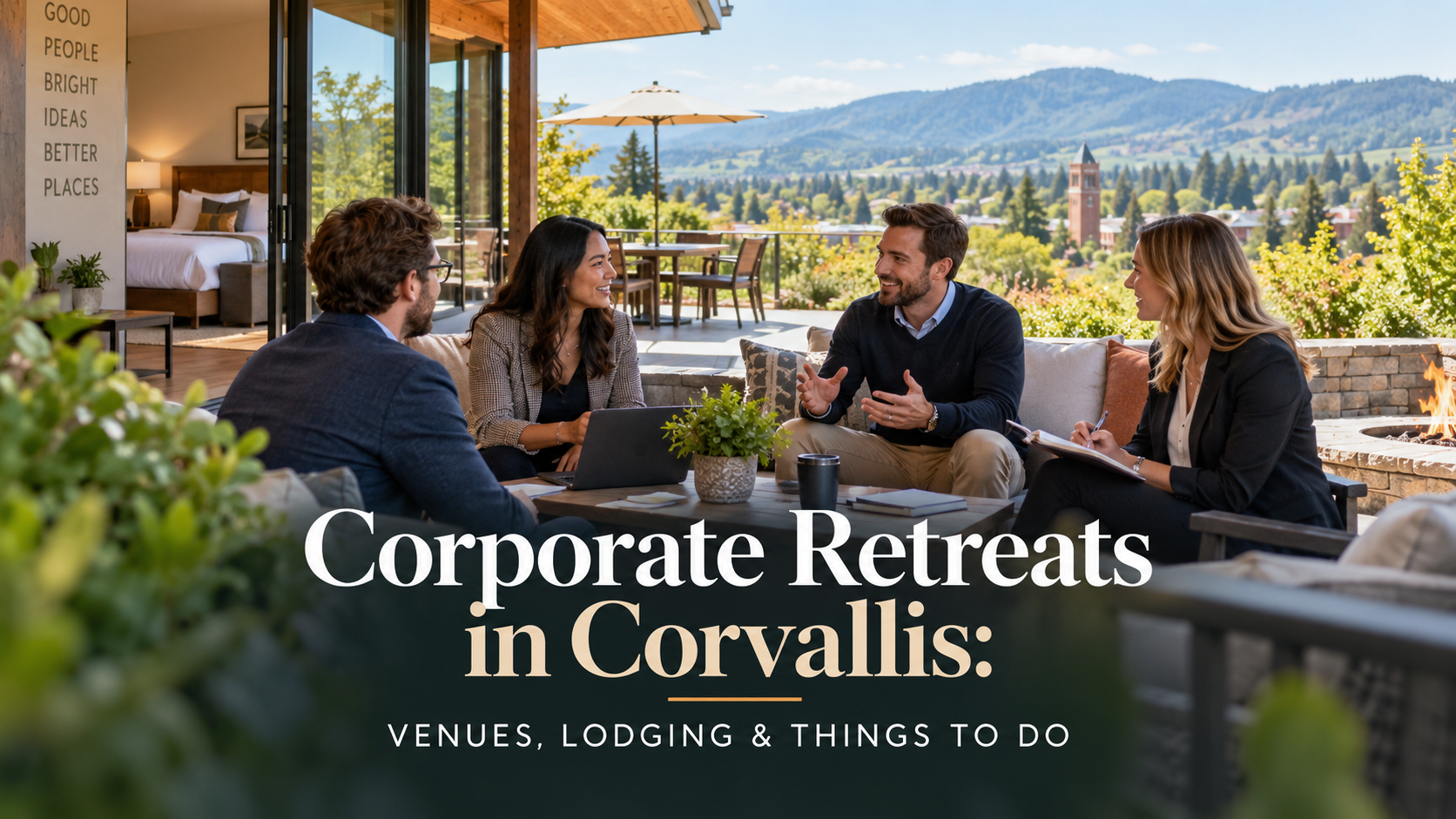
A company getaway works best when people can focus during structured sessions, relax between conversations, and reconnect somewhere that feels different from the office. The area offers that balance in a compact setting, with university facilities, hotel spaces, arts venues, local food, nearby trails, and easygoing neighborhoods that make a multi-day agenda feel manageable rather than overpacked.
For leaders organizing corporate retreats, the destination also makes it possible to mix formal work blocks with outdoor recreation and casual social time. The local tourism office currently organizes meeting venues by both type and group size, with options ranging from hotels and conference facilities to theaters, wineries, breweries, and fairgrounds.
Why Corvallis Works for Corporate Groups

The biggest advantage is variety without the feel of a large convention district. A smaller leadership group can book a private setting and keep the schedule flexible, while a larger organization can use university facilities with breakout rooms, presentation technology, and space for meals or networking.
The destination also has a useful geographic mix. OSU anchors many of the larger facilities, while downtown dining, riverfront walks, tasting rooms, and natural areas create natural transitions after a meeting. For groups that want a perfect blend of productivity and low-pressure connection, that compact layout can make it easier to move from focused work to shared experiences.
The destination marketing organization also supports qualifying group bookings with rate requests, activity recommendations, marketing materials, welcome information, and certain guest amenities. Those services are listed for groups using 10 or more rooms.
Choose the Right Meeting Space
Start with the gathering format, not the building. A strategic off-site for 10 executives needs a different setup than a 150-person training day, and both differ from an all-hands program with speakers, meals, and multiple breakouts.
For larger programs, LaSells Stewart Center at OSU is one of the most flexible choices. The facility has more than 40,000 square feet of dedicated conference and performing-arts space, a 1,200-person auditorium, a 200-person lecture auditorium, breakout rooms, an executive boardroom, and gallery space.
CH2M HILL Alumni Center is another strong campus option. Its current information notes spaces for groups ranging from about 10 people to more than 350, along with audiovisual support, setup services, approved catering partners, and multiple rooms that can support conferences, receptions, and business gatherings.
PRAx can work well when the program benefits from a more creative atmosphere. Its rentable facilities include performance, lecture, reception, indoor, and open-air spaces; its main concert hall seats 490, and the Edward J. Ray Theater can be configured for roughly 80 to 200 guests.
Compare Meeting Venues by Group Size
Before requesting proposals, estimate attendance, room configuration, audiovisual needs, meals, accessibility requirements, and whether the group needs one main room or multiple breakouts. That prevents a beautiful venue from becoming impractical once the agenda is finalized.
The local venue directory separates choices into four broad attendance bands: 50 or fewer, 50–100, 100–200, and 200+. The directory currently includes hotels, university facilities, cultural properties, tasting rooms, and other options.
For an intimate workshop, prioritize a quiet meeting room, strong Wi-Fi, natural light, and space for conversation. For mid-sized events, look for flexible seating and nearby food service. For a larger event venue, confirm total capacity, stage or presentation needs, parking, accessibility, and the amount of time required for setup and breakdown.
A useful rule is to select the smallest venue that comfortably supports the agenda. Extra square footage can look impressive, but a right-sized room often produces better discussion and keeps participants engaged.
Add Group Activities That Keep the Team Engaged
The best retreat schedules do not fill every hour with presentations. Build in group activities that give people a chance to talk without a slide deck in front of them. In this part of the Willamette Valley, that can mean a walk, a tasting experience, a campus visit, an arts stop, or a short hike.
Bald Hill Natural Area is a practical option for an active break. The 284-acre park has about five miles of dirt and gravel trails through prairie, oak savanna, mixed forest, and wetland habitat. Its trail mix ranges from easier paths to more demanding routes, so organizers can choose an outing that fits the group.
For a lower-effort option, Riverfront Commemorative Park provides a scenic place to walk, bike, or decompress near downtown, with access to the river, public art, picnic areas, and nearby shops and restaurants.
You can also turn free time into self-selected team activities. One small group might explore local galleries, another might visit a winery or brewery, and another might stay close to lodging for coffee and conversation. Giving people a few choices can feel more restorative than requiring everyone to follow the same itinerary.
For additional ideas, use Best Things To Do in Corvallis, Oregon to build optional blocks around food, nature, arts, and local attractions.
Where to Stay for Multi-Day Events
Lodging affects the flow of the entire trip. If participants are spread across several properties far from the main program, transportation and arrival times can become a daily distraction. When possible, keep accommodations close to the primary event space or within an easy route to downtown and campus.
Traditional hotels may suit larger groups that want front-desk service, individual rooms, and standard amenities. Current tourism listings include hotel-based event options such as Comfort Suites, Courtyard by Marriott, Hilton Garden Inn, and Hotel Corvallis.
Smaller executive groups may prefer a private home where people can share common areas, prepare breakfast, hold informal conversations, and unwind without returning to separate hotel rooms. A luxury vacation rental in Corvallis, Oregon can be especially useful when the goal is privacy, shared downtime, and a more residential rhythm.
For hosts and property owners considering how premium homes fit into this kind of group travel, Luxury Airbnb Management Services provides additional context on professional vacation-rental operations and guest experience.
Food, Catering, and Social Time
Meals are part of the working rhythm, not just a break between sessions. A good food plan protects the schedule, keeps energy steady, and creates natural moments for conversation among people who may not normally work together.
For structured programs, ask facilities about approved catering options, dietary accommodations, service windows, and whether outside vendors are allowed. University spaces and larger facilities may have specific vendor rules, so confirming those details early can prevent last-minute changes.
For evening events, consider moving away from the formal function room. A group dinner, tasting room, casual brewery stop, or walkable downtown restaurant can shift the tone from presentation mode to relationship-building. If the agenda has been intense, leave at least one evening lightly scheduled so participants can dine in smaller groups or take personal time.
A Sample Two-Day Retreat Schedule
A two-day format is often enough for meaningful work without exhausting participants. The first day can focus on alignment and priorities, while the second moves toward decisions, ownership, and next steps.
Day 1: Begin with breakfast and introductions, then run a focused morning strategy session. Break for lunch, then move into smaller workshops or department discussions. In the late afternoon, move outside for a short walk or guided local experience. Close with dinner and informal conversation rather than another presentation.
Day 2: Start with a recap, then move into decision-making, action items, and cross-functional problem-solving. After lunch, use a final session to assign ownership and establish follow-up checkpoints. End early enough for participants to travel without turning the final hours into a rushed exit.
This format works particularly well for team off-sites because it leaves space for both structured work and genuine interaction. The schedule feels purposeful without making every minute mandatory.
Practical Planning Tips
Successful planning starts with the outcome. Decide whether the goal is strategic alignment, leadership development, project kickoff, creative problem-solving, training, or relationship-building. Once the objective is clear, choosing the right meeting space, schedule, lodging style, and social activities becomes easier.
Confirm transportation before signing contracts. If the group is using campus facilities, review parking rules and walking distances. OSU notes that parking permits are required in many campus areas during weekday daytime hours, so organizers should communicate parking or shuttle instructions in advance.
Also build weather flexibility into any nature-based component. A hike or riverfront walk can be a highlight, but every open-air plan should have an indoor backup. Finally, avoid overloading the agenda. The purpose of an off-site is not simply to relocate the office; it is to create enough separation from normal routines for better discussion, clearer decisions, and stronger working relationships.
Frequently Asked Questions
How far in advance should a company book a retreat venue?
For a small weekday gathering, a few months may be enough, but larger programs should start earlier—especially when they require multiple rooms, guest lodging, food service, or specific dates. University calendars, football weekends, graduation periods, and major local events can affect availability.
What types of companies are a good fit for a Corvallis retreat?
Leadership teams, startups, remote organizations, university-adjacent groups, creative teams, professional-services firms, and regional companies can all use the area effectively. The destination works especially well when a group wants productive work sessions paired with nature, food, arts, or casual social time.
Are there options for groups larger than 200 people?
Yes. The current local directory lists several facilities in its 200+ attendee category, including LaSells, the CH2M HILL facility, PRAx, the Majestic Theatre, the Whiteside Theatre, and the Benton County fairgrounds.
What should be included in a corporate retreat budget?
Account for lodging, facility rental, food, audiovisual equipment, transportation, facilitator or speaker costs, activity fees, parking, taxes, gratuities, and a contingency amount. If participants are flying or driving from multiple locations, include arrival and departure logistics in the budget rather than treating them as an afterthought.
How much free time should a company retreat include?
For a two-day program, at least one meaningful block of unscheduled or lightly structured time is usually helpful. People need time to process discussions, catch up one-on-one, rest, or explore independently. That breathing room often makes the formal sessions more productive.
Share to social media
More posts