

Do Voice-Controlled Devices Improve Guest Satisfaction?
By: Menandro Bacalangco Jr. | July 02, 2026
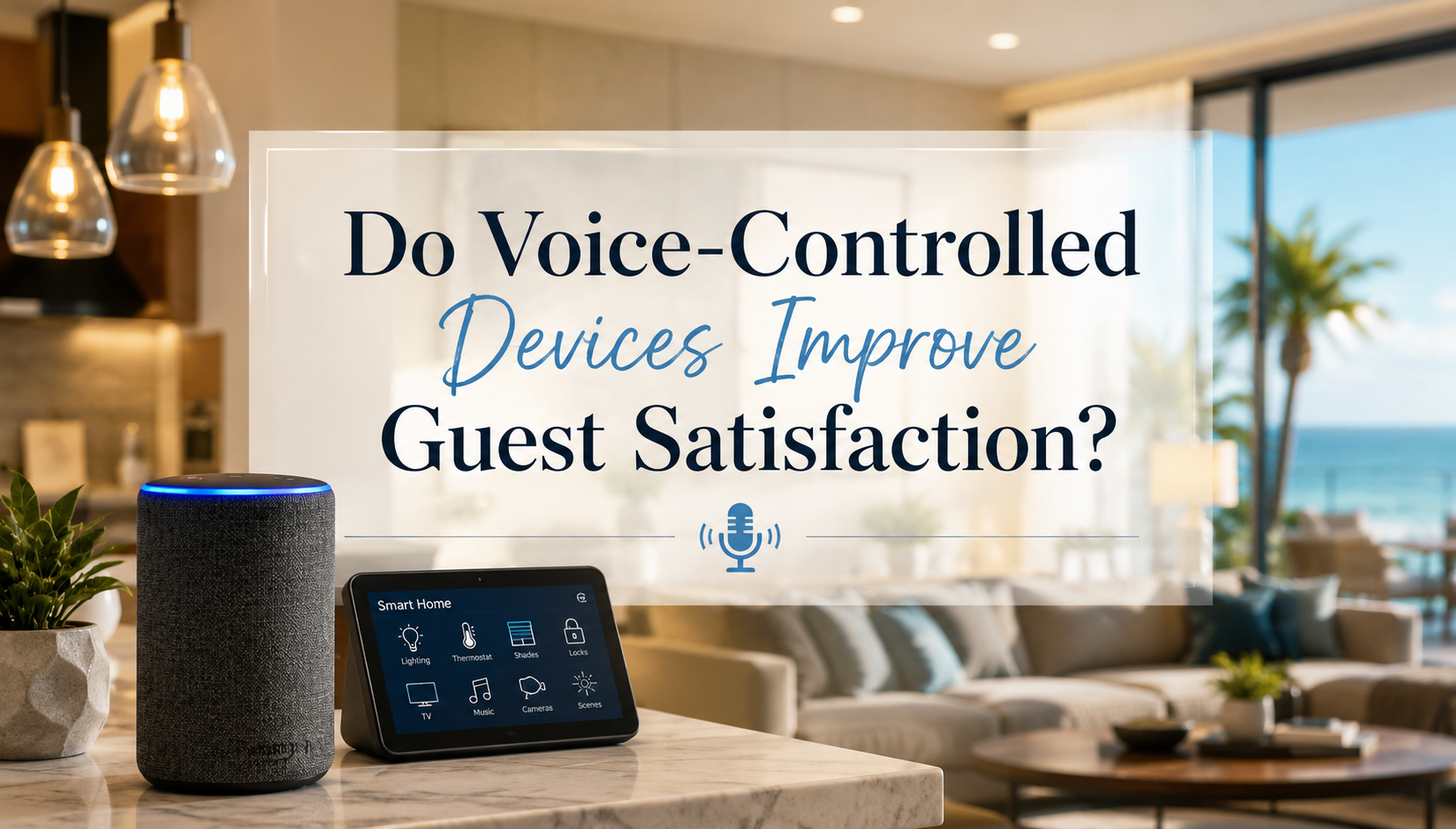
In the rapidly evolving landscape of modern hospitality, the demand for frictionless, personalized guest experiences has never been higher. Today’s travelers expect their accommodation to feel like an extension of their smart home environments, prompting hotels to innovate beyond traditional service models.
By integrating advanced, voice-activated amenities, properties can bridge the gap between high-tech automation and high-touch hospitality, empowering guests with intuitive control over their space while setting a new standard for effortless, on-demand comfort.
Key Takeaways
Voice technology is transforming the guest experience while providing hotel operators with valuable tools for automation and efficiency. Understanding the strategic integration of these systems is vital for modern hospitality businesses.
- Voice-controlled devices serve as central hubs for intuitive room management.
- Guests increasingly prefer hands-free, personalized environmental control.
- Operational tasks are simplified through automated request handling and system maintenance.
- Robust data privacy and transparency are non-negotiable for building guest trust.
- Integrating voice systems provides a distinct edge in attracting wellness-focused travelers.
The Role of Voice-Controlled Devices and Voice Assistants in Modern Hospitality
The landscape of the hospitality industry is shifting as guests demand higher levels of convenience and technological seamlessness. Providing a modern, connected experience is no longer a luxury but a fundamental expectation. The rise of smart home voice control devices signifies that visitors want to interact with their environment in the same instinctive manner they do at home.
Evolving guest expectations for smart rooms
Today's travelers spend a significant portion of their trips in search of comfort and efficiency. They expect the rooms they occupy to respond to their presence, anticipating their needs before they have to ask a staff member for assistance.
Transitioning from manual controls to ambient interfaces
The movement away from cluttered physical buttons to voice user interfaces marks a shift toward ambient technology. This transition allows for a cleaner room aesthetic while offering greater accessibility for a diverse range of guests.
The impact of voice technology on brand perception
A hotel's ability to remain current with digital trends significantly shapes its prestige. Incorporating advanced interaction methods signals a commitment to modern management standards and a focus on maximizing customer service quality.
How Google Assistant and Amazon Alexa Elevate the Guest Experience
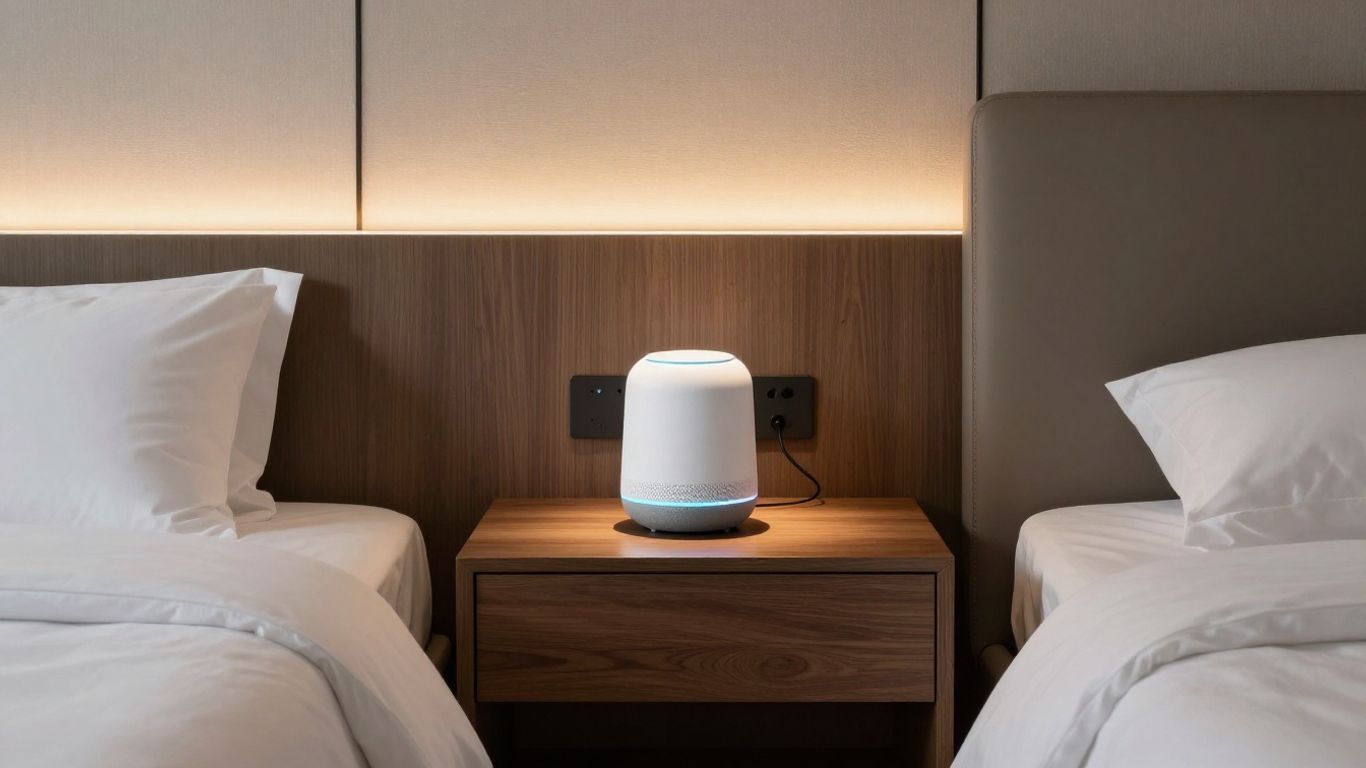
Integrating advanced communication systems allows hotels to provide a level of service that was previously difficult to scale. By placing control directly in the hands—or the voice—of the guest, hotels ensure that every stay feels bespoke and highly responsive to individual needs.
Seamless room control and automation
Automation serves as the backbone of the contemporary smart room. Guests can use voice activation or voice control to adjust lighting, temperature, curtains, and entertainment systems without navigating complex wall-mounted panels. These voice assistants interpret each command accurately, making room control effortless while reducing the need for manual interaction.
Instant access to concierge and hotel services
Digital concierge services provide an immediate path for requesting fresh towels, ordering room service, or asking about local attractions. By using intuitive voice control setups, properties can ensure that service requests are logged and routed to the correct staff member without delay.
Deep personalization of in-room environment settings
Today's smart home devices offer incredible customization, allowing the system to remember preferred lighting scenes, room temperatures, entertainment settings, and wellness routines. Whether a guest uses Alexa or another assistant, personalized commands help create a familiar environment throughout every stay.
Multi-language support for international travelers
Global travel requires flexible communication tools that accommodate non-native speakers. Sophisticated voice systems act as a bridge, ensuring that every guest can make requests in their preferred language despite any potential regional barriers.
Operational efficiency and staff workload benefits
Managing a hotel is a constant exercise in balancing service delivery with resource allocation. When systems handle routine guest needs, human employees can dedicate more time to high-value interactions that genuinely require a personal touch.
Streamlining guest requests and maintenance tickets
| Process Category | Efficiency Gain | Implementation Impact |
|---|---|---|
| Maintenance Alert | Automated Dispatch | Reduced Response Time |
| Housekeeping Request | Direct Log Entry | Streamlined Scheduling |
| General Information | Instant Retrieval | Lower Staff Load |
By automating the initial triage of maintenance tickets, the facility management team can categorize and prioritize repairs with precision. This ensures that a guest’s plumbing or electrical issue is not lost in a manual filing system, speeding up the resolution process significantly while maintaining property standards.
Reducing routine inquiries through automated responses
Staff members at the front desk frequently answer the same questions about breakfast hours, Wi-Fi passwords, or check-out times. Automating these responses allows the desk staff to focus on arrivals and complex guest issues.
Real-time feedback loops for hotel operations
Real-time monitoring of room utility data provides managers with a clear view of how facilities are performing. Operations teams can use this info to make data-driven decisions regarding renovations or staff training.
Optimizing energy consumption via voice-activated climate control
Temperature management is a large expense for major hotels. Voice-activated climate systems ensure that energy is not wasted in empty rooms, allowing for significant sustainability improvements without sacrificing guest comfort.
Addressing privacy, security, and trust

Technology adoption must be balanced with a rigorous approach to data protection. Guests are increasingly wary of how their interactions are recorded and how their personal information is stored within the hotel ecosystem.
Managing microphone recording and secure data storage
Protecting the privacy of the guest is a core responsibility. Ensuring that all audio data is encrypted and purged according to a strict policy helps demonstrate a firm commitment to cybersecurity.
Providing clear opt-in and opt-out procedures for guests
Transparency is essential in fostering a trusting relationship with visitors. To ensure guests remain comfortable, management should prioritize these practices:
- Provide clear physical information cards regarding device capabilities.
- Ensure a hardware-based mute button is visible and accessible.
- Enable a simple digital opt-out for automated data collection.
- Guarantee that opt-out actions result in no loss of core room functionality.
Following these steps helps the property protect its reputation by showing respect for the personal space of its patrons.
Implementing enterprise-level cybersecurity standards
Deploying institutional-grade security protocols keeps the network isolated from outside threats. This protects both the hotel's proprietary data and the sensitive personal information entered by guests during their stays.
Building brand trust through transparent technology policies
When a hotel openly communicates how it manages its technological infrastructure, it bridges the trust gap. Guests who understand the safeguards in place are more likely to engage with the available smart features.
Integration challenges for hotel management systems
Integrating new technology is rarely a plug-and-play experience. Sophisticated backend connectivity requires careful planning to avoid disruptions to the day-to-day guest experience.
Hardware compatibility with existing room infrastructure
Legacy systems often struggle to communicate with modern smart devices. Retrofitting a building requires a thorough assessment of existing electrical and network cabling to determine if upgrades are necessary.
API connectivity with proprietary property management software
The true power of a smart system lies in its ability to integrate with existing property management software. Through secure APIs, Google and Amazon ecosystem integrations allow an Echo device to synchronize guest preferences, service requests, and room settings in real time while maintaining reliable control across connected platforms.
Ensuring robust functionality during network or cloud outages
Dependence on internet connectivity presents an obvious challenge for cloud-reliant devices. A well-designed system includes offline local processing to ensure that basic toggles remain functional even when the external connection is severed.
Training staff to troubleshoot common guest technical issues
Technical support should be a foundational skill for all guest-facing staff. Providing clear, concise troubleshooting scripts allows employees to solve minor issues quickly, maintaining the flow of the guest experience.
Leveraging voice technology for the growing wellness economy
The wellness travel sector is ballooning into a multi-trillion-dollar market. Because modern health-conscious guests seek preventative care and recovery assistance, hotels are positioning their rooms as personal wellness pods.
Integrating guided meditation and sleep assistance programs
Rooms outfitted with voice-activated guided meditation and sleep programs offer immediate value to stressed business travelers. These tools directly support the physical and mental recovery goals that define modern travel habits.
Scheduling in-room fitness and recovery appointments
Voice prompts act as an efficient booking agent for spa services and personal training sessions. This reduces friction in the booking process and encourages higher utilization of revenue-generating wellness amenities.
Accessing personalized health and wellness concierge advice
A digital health assistant provides custom advice based on guest profiles. From local hiking recommendations to hydration reminders, these prompts reinforce the property's role as a partner in the guest's health journey.
Using voice prompts to encourage sustainable amenity use
Encouraging sustainable behavior through soft reminders helps guests feel like part of a larger purpose. Voice prompts can suggest alternatives to daily laundry or remind guests to power down units, directly aligning the guest stay with eco-friendly objectives.
Conclusion
Investing in voice-controlled systems is a strategic necessity for brands—from boutique hotels to those utilizing professional Luxury Airbnb Management services—aiming to capture the modern, convenience-oriented traveler. By carefully balancing sophisticated automation with a firm commitment to privacy and data security, hospitality providers can create environments that are both efficient and deeply personal, ensuring they remain relevant in an increasingly tech-driven wellness economy.
Frequently Asked Questions
Can guests use their own devices alongside hotel voice tech?
Yes, most guest-facing voice systems are designed to operate independently or as a compliment to the guest's personal technology. Many travelers choose to switch between their own voice-enabled devices and the systems pre-installed in the room for a customized experience.
Does voice technology save hotels money on utility bills?
Yes, these systems offer significant energy savings by centralizing control over climate and lighting. By defaulting to eco-friendly states when a guest is not in the room, hotels can markedly reduce their monthly electricity and heating costs.
What happens to the audio data recorded by the room device?
Professional hospitality systems are configured to prioritize guest privacy by processing voice commands locally whenever possible. Any data that is transmitted to the cloud should be strictly encrypted, anonymized, and deleted based on a clear and transparent retention policy.
Is it difficult to install voice technology in older hotels?
While retrofitting older properties presents unique infrastructure challenges, current wireless solutions have made integration much more accessible. A thorough technical audit of the building's current network capacity is usually the first step to successful installation.
Can voice systems assist guests with physical limitations?
Voice-controlled interfaces provide a vital accessibility layer by removing the need for physical interaction with switches or screens. This creates a superior experience for travelers who may have difficulty moving around the room or manipulating standard guest room hardware.
Will guests still find it easy to contact a human staff member?
Voice technology is intended to augment rather than replace human labor. Most systems allow for an 'operator' command or a direct trigger that ensures a human staff member is alerted immediately, keeping the human connection at the heart of the service model.
Do international travelers have trouble with voice settings?
Modern systems are increasingly speaker-independent and support a broad variety of languages and accents. By selecting a system with robust multi-language support, properties can ensure that international visitors enjoy the same frictionless experience as domestic guests.
Share to social media
More posts