
Stay-Type Psychology for Airbnb Guests: Understanding the Emotional Drivers Behind Vacation Rental Bookings

Guests Are Increasingly Booking Emotional Outcomes Instead of Simple Accommodations
Modern Airbnb guests are often searching for far more than a place to sleep. In many cases, travelers choose vacation rentals based on how they expect the stay to feel emotionally rather than purely on practical considerations like location or price.
Instead of viewing accommodations as transactional lodging, many guests increasingly evaluate vacation rentals as environments that shape:
- relaxation
- connection
- restoration
- privacy
- immersion
- memory creation
This evolution is one reason experiential vacation rentals continue gaining popularity across luxury and lifestyle travel markets. Properties that create emotional resonance through atmosphere, design, amenities, hospitality, and environmental immersion often leave significantly stronger impressions on guests.
Researchers studying Airbnb memorability found that spatial design, social interaction, and experiential elements collectively shape how guests perceive and remember their stays. The research emphasized that atmosphere, aesthetics, amenities, and hospitality interactions all contribute to stronger emotional attachment and memorability.
The Rise of Experiential Hospitality in Vacation Rentals
The growing importance of emotional experience is closely connected to the broader rise of experiential hospitality, where accommodations are intentionally designed to create immersion, emotional connection, and memorable guest experiences rather than functioning solely as places to stay.
Unlike standardized hotel rooms, vacation rentals often create emotionally distinct environments through:
- architecture
- atmosphere
- amenities
- surroundings
- sensory experience
A mountain cabin with a fire pit and hot tub creates a fundamentally different psychological expectation than a downtown condo designed around nightlife access or a wellness-oriented desert retreat designed around restoration and sensory calm.
Vacation Rentals Frequently Function as Emotional Environments
For many travelers, the property itself becomes part of the experience rather than simply supporting the destination.
In experiential hospitality markets, guests are often selecting:
- a feeling
- an atmosphere
- a pace of travel
- a type of memory
- an emotional outcome
rather than simply selecting a bedroom count or nightly rate.
The Main Psychological Stay Types in Airbnb Travel
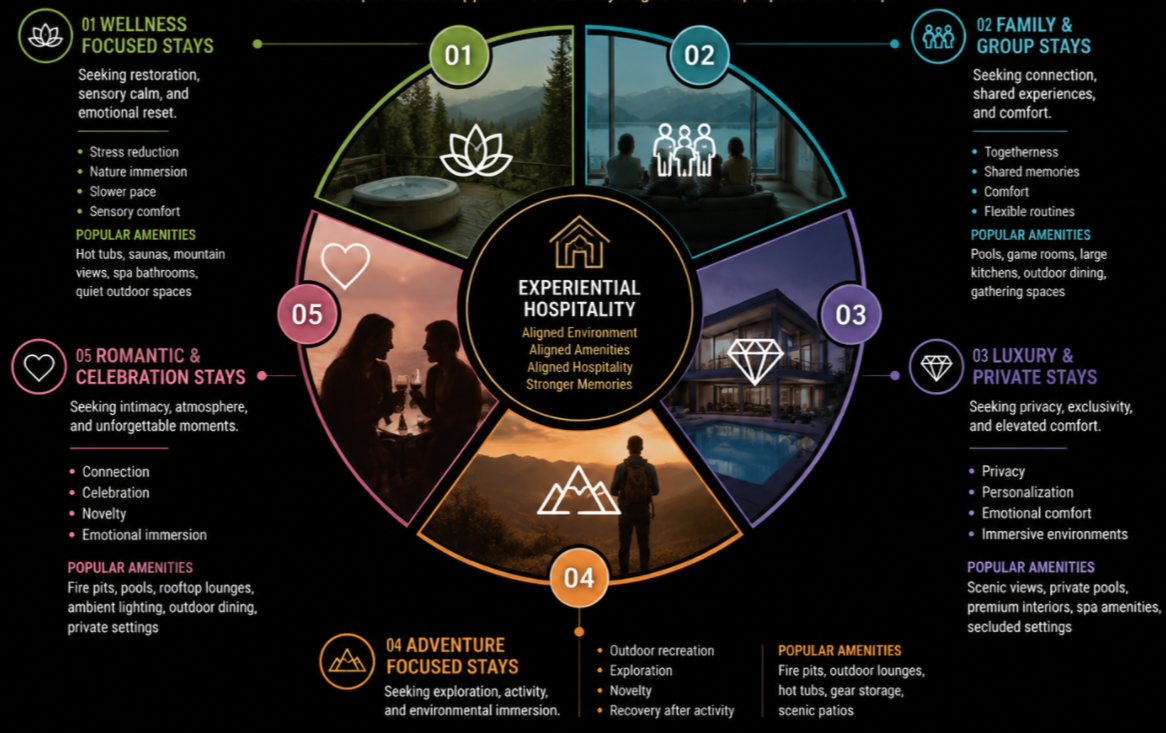
While every traveler is different, many Airbnb guests tend to pursue several broad emotional goals during travel. These psychological motivations often shape how travelers evaluate:
- accommodations
- amenities
- atmosphere
- hospitality
- environmental surroundings
The most successful experiential properties often create alignment between:
- traveler psychology
- property design
- environmental atmosphere
- hospitality experience
When those elements align successfully, the stay often feels emotionally coherent to the guest. That emotional coherence frequently influences memorability, satisfaction, and emotional attachment to the experience.
Wellness-Oriented Travelers
Wellness-oriented travelers often pursue emotional restoration during travel. Instead of prioritizing nonstop activity or dense itineraries, these guests frequently seek environments that help them mentally decompress and emotionally reset.
Wellness Travelers Often Prioritize Sensory Calm and Restoration
This type of traveler is often drawn toward:
- quiet environments
- nature immersion
- restorative amenities
- slower-paced experiences
- sensory comfort
Properties designed around wellness-oriented hospitality frequently emphasize hot tubs, saunas, outdoor gathering spaces, natural scenery, calming interiors, and restorative environments that support emotional decompression.
The continued growth of wellness tourism reflects a broader shift toward restorative and emotionally intentional travel experiences.
Restorative Hospitality Is Closely Connected to Environmental Atmosphere
For wellness-oriented travelers, environmental atmosphere frequently shapes perceived comfort just as strongly as the accommodations themselves.
Mountain settings, waterfront environments, desert retreats, and nature-oriented stays often create psychological associations tied to:
- calmness
- restoration
- escape
- emotional reset
- sensory quietness
Family and Group Travelers
Family and group travelers often prioritize connection and shared experiences during travel. In many cases, these guests are less focused on transactional accommodations and more focused on creating environments that encourage gathering, bonding, and memory creation.
Entire-Home Vacation Rentals Often Support Stronger Family Connection
This is one reason larger vacation homes often outperform traditional hospitality environments for:
- multi-generational travel
- reunion trips
- group-oriented experiences
- experiential family vacations
Researchers studying Airbnb memory formation found that guests frequently associate memorable stays with comfort, familiarity, belonging, and “home away from home” experiences.
The research also emphasized the importance of family connection and emotional comfort in shaping how guests remember a stay.
Gathering Spaces Frequently Influence Emotional Memory Formation
Many family-oriented travelers are naturally drawn toward properties that support:
- shared meals
- entertainment spaces
- group activities
- experiential amenities
- emotional comfort
These emotional dynamics help explain why many travelers increasingly prefer vacation homes over standardized hotel environments for experiential family travel.
Luxury and Privacy-Oriented Airbnb Guests
Luxury hospitality itself is evolving.
Many modern luxury travelers increasingly prioritize privacy, personalization, emotional comfort, and immersive environments over traditional luxury signals alone.
Emotional Luxury Is Increasingly Replacing Traditional Luxury Signals
In experiential travel markets, emotional resonance often influences perceived luxury just as strongly as material amenities.
This shift is particularly important within luxury vacation rentals because private homes naturally provide many of the emotional qualities affluent travelers increasingly value:
- exclusivity
- atmosphere
- environmental immersion
- personalization
- sensory comfort
Modern luxury travel increasingly revolves around emotionally immersive experiences rather than material luxury alone.
Privacy Frequently Functions as an Emotional Luxury Amenity
For many luxury travelers, privacy creates:
- emotional comfort
- psychological ease
- environmental control
- sensory separation
- exclusivity
This helps explain why many affluent travelers increasingly gravitate toward private vacation homes that feel emotionally restorative and personally meaningful rather than simply visually expensive.
Adventure and Experience-Driven Travelers
Adventure-oriented travelers often view vacation rentals as experience base-camps rather than simple accommodations.
Outdoor Recreation Frequently Shapes Stay Expectations
For these travelers, the surrounding environment frequently becomes part of the hospitality experience itself.
Mountain destinations, waterfront communities, ski markets, hiking regions, and outdoor recreation hubs often attract travelers seeking immersive experiences tied to:
- exploration
- activity
- movement
- novelty
- environmental immersion
Functional Comfort Often Becomes More Important After Activity-Based Travel
This type of traveler may prioritize:
- outdoor access
- post-activity recovery
- gathering spaces
- practical comfort
- restorative amenities
In many experiential travel markets, the vacation rental becomes part of the overall adventure experience rather than simply a place to return at night.
Romantic and Celebration Travelers
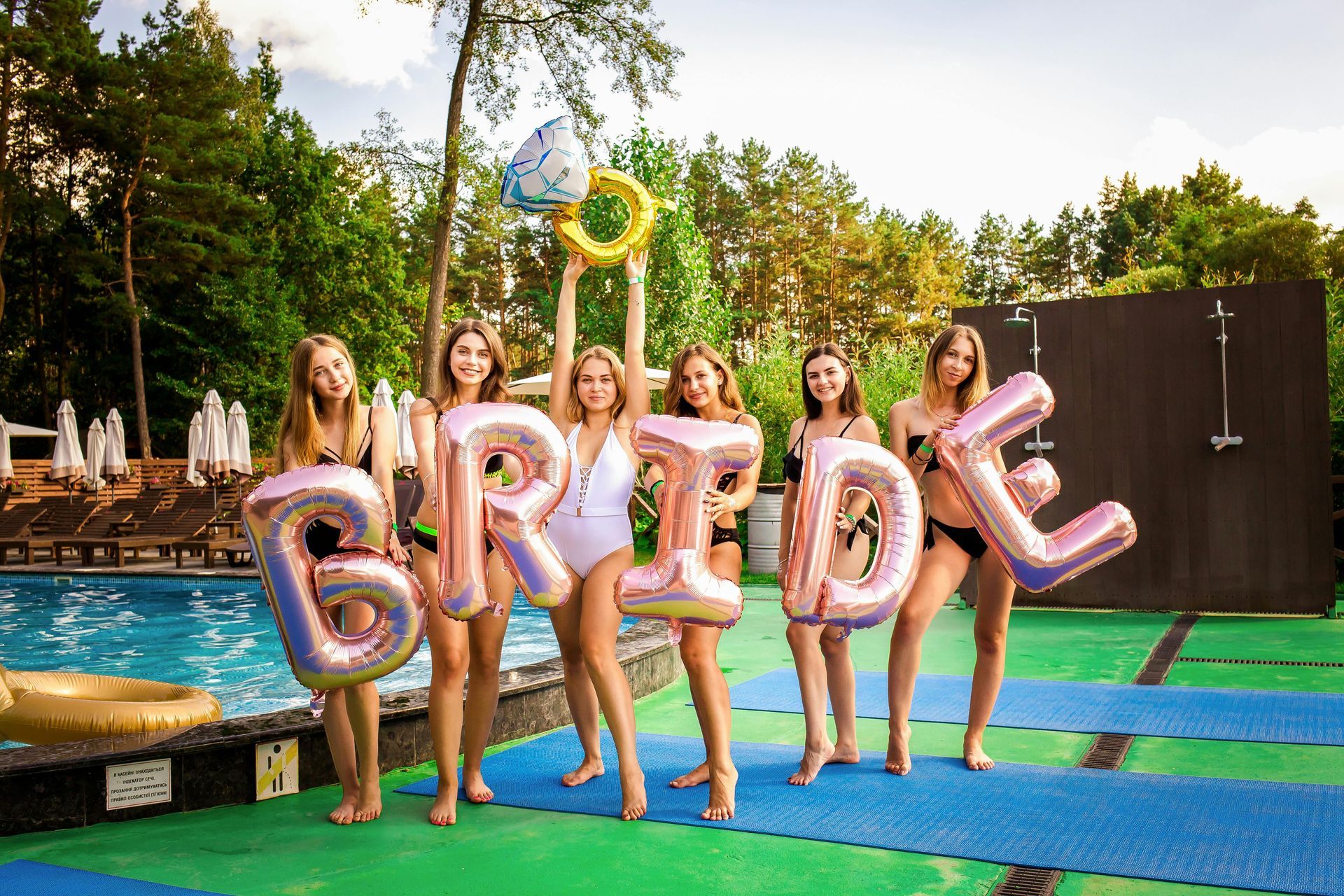
Some travelers pursue emotional immersion through celebration, intimacy, novelty, and shared social experiences.
Atmosphere Frequently Shapes Emotional Immersion for Romantic Travelers
Romantic travelers and celebration-oriented groups are often highly influenced by:
- scenic views
- lighting
- ambiance
- entertainment spaces
- sensory atmosphere
These travelers are often less focused on purely functional accommodations and more focused on creating emotionally distinct experiences that feel memorable and immersive.
Experiential Amenities Frequently Influence Celebration-Oriented Travel
This emotional emphasis helps explain why experiential amenities often outperform purely practical amenities within luxury and lifestyle-oriented short-term rentals.
Many of the most memorable experiential stays successfully combine:
- atmosphere
- environmental immersion
- hospitality
- design
- emotional intention
into a cohesive guest experience that feels intentionally curated around the traveler’s emotional goals.
Why Emotional Appeal Influences Airbnb Booking Decisions
Travelers often begin emotionally evaluating a vacation rental long before they arrive at the property itself.
In many cases, guests mentally simulate the experience while browsing listings. They imagine how the environment will feel, how the stay may unfold, and what type of emotional memory the trip could ultimately create.
This emotional anticipation plays a significant role in modern Airbnb booking behavior.
Travelers Frequently Mentally Experience the Stay Before Arrival
Vacation rental browsing is often highly visual and emotionally interpretive.
Guests frequently evaluate:
- lighting
- scenery
- atmosphere
- layout
- openness
- amenities
- environmental surroundings
through an emotional lens rather than a purely practical one.
A traveler searching for a restorative weekend may emotionally respond to:
- mountain views
- warm interior lighting
- natural materials
- spa-like bathrooms
- slower-paced environments
Meanwhile, a group-oriented traveler may respond more strongly to:
- gathering spaces
- entertainment areas
- pools
- large kitchens
- social amenities
These emotional interpretations often begin forming before the booking decision itself.
Emotional Anticipation Frequently Shapes Perceived Value
Two vacation rentals with similar pricing and square footage can create completely different emotional expectations depending on:
- atmosphere
- environmental immersion
- design style
- sensory comfort
- experiential identity
This helps explain why some experiential properties consistently outperform nearby competitors despite operating within similar markets.
In many cases, guests are not simply evaluating accommodations. They are evaluating how closely the property aligns with the emotional outcome they hope to experience during the trip.
Hedonic Travel Behavior vs Utilitarian Travel Behavior
One of the clearest distinctions in Airbnb psychology involves the difference between hedonic travel motivations and utilitarian travel motivations.
Utilitarian Travel Behavior Prioritizes Practical Functionality
Utilitarian travel decisions are often driven by:
- affordability
- transportation access
- efficiency
- flexibility
- practical convenience
Travelers operating from a primarily utilitarian mindset may prioritize accommodations that support logistical needs rather than emotional immersion.
This type of booking behavior is frequently associated with:
- short stays
- business-oriented travel
- budget-conscious travel
- transportation-oriented stays
- convenience-driven travel
Hedonic Travel Behavior Prioritizes Emotional and Experiential Value
Hedonic travel behavior is much more closely tied to:
- enjoyment
- atmosphere
- novelty
- emotional comfort
- immersive experiences
- sensory pleasure
Researchers analyzing Airbnb guest preferences found that travelers staying in entire-home accommodations often prioritized:
- scenic views
- pools
- gathering spaces
- experiential amenities
- environmental atmosphere
Meanwhile, guests staying in shared accommodations tended to focus more heavily on affordability, transportation convenience, and practical functionality. The study concluded that entire-home guests frequently pursue more experiential and emotionally immersive forms of travel.
Entire-Home Vacation Rentals Often Support Stronger Emotional Immersion
This distinction is especially important within luxury vacation rentals because private homes naturally support:
- environmental control
- sensory privacy
- emotional comfort
- personalized pacing
- experiential immersion
For many travelers, these emotional qualities significantly influence perceived satisfaction and memorability throughout the stay.
The Psychology of Airbnb Design and Environmental Comfort Every Host Should Know
The physical environment of a vacation rental frequently shapes guest psychology in subtle but important ways.
Lighting, layout, openness, textures, scenery, and environmental atmosphere can all influence how emotionally comfortable or restorative a stay ultimately feels.
This is one reason hospitality design increasingly overlaps with environmental psychology.
Atmosphere Frequently Shapes Emotional Perception
Hospitality environments often influence emotional state before guests consciously evaluate the accommodations themselves.
Researchers and hospitality designers increasingly recognize that environmental atmosphere can shape:
- calmness
- stress levels
- emotional comfort
- sensory relaxation
- perceived luxury
- psychological ease
This influence is especially important within experiential vacation rentals because guests spend extended periods actively inhabiting the environment rather than simply sleeping within it.
Sensory Comfort Often Influences Perceived Hospitality Quality
Many guests emotionally respond to:
- warm lighting
- natural textures
- spatial openness
- visual softness
- quiet surroundings
- calming color palettes
These environmental details can subtly shape whether a property feels:
- restorative
- cozy
- immersive
- emotionally calming
- luxurious
- socially inviting
The growing role of environmental psychology in hospitality reflects increasing recognition that hospitality environments influence emotional well-being as much as functional comfort.
Nature-Oriented Environments Often Feel More Emotionally Restorative
Natural environments frequently create stronger feelings of restoration and emotional decompression for travelers.
This helps explain why mountain cabins, waterfront stays, desert retreats, forest-oriented accommodations, and wellness-focused vacation rentals continue gaining popularity across experiential travel markets.
Nature Exposure Frequently Supports Cognitive and Emotional Recovery
Researchers studying biophilic and restorative environments have consistently found that natural settings can help support:
- stress reduction
- cognitive recovery
- emotional calmness
- sensory quietness
- psychological restoration
This emotional response often influences how travelers perceive:
- comfort
- relaxation
- memorability
- overall hospitality quality
Scenic Environments Frequently Increase Emotional Immersion
Mountain scenery, waterfront views, forests, desert landscapes, and slower-paced environments often create stronger feelings of:
- escape
- immersion
- emotional separation from routine
- restorative distance
This is one reason many experiential hospitality markets naturally overlap with:
- mountain tourism
- wellness tourism
- coastal travel
- nature immersion stays
Properties that successfully integrate environmental atmosphere with emotional intention often create stronger experiential differentiation within competitive short-term rental markets.
Visual Atmosphere Frequently Influences Memorability
Visual atmosphere frequently shapes how guests emotionally remember a stay long after the trip itself ends.
Researchers studying memorable Airbnb experiences found that aesthetics, spatial organization, atmosphere, and experiential elements all contribute to how emotionally memorable a property ultimately becomes.
Memorable Hospitality Experiences Often Combine Multiple Emotional Signals
Many highly memorable vacation rentals successfully combine:
- environmental immersion
- sensory comfort
- experiential amenities
- emotional atmosphere
- thoughtful hospitality
into a cohesive guest experience.
When those elements align successfully, the property often feels emotionally intentional rather than simply functional.
Emotional Coherence Frequently Shapes Guest Recall
The most memorable experiential stays often feel psychologically cohesive to the traveler.
Instead of isolated amenities or disconnected design choices, the environment, atmosphere, hospitality, and emotional intention all reinforce the same overall feeling.
That emotional coherence frequently shapes:
- guest satisfaction
- emotional attachment
- repeat visitation
- word-of-mouth sharing
- long-term memory recall
Why Certain Amenities Create Stronger Emotional Connections
Amenities often influence guests emotionally rather than simply functionally.
A hot tub may technically be an amenity, but for many travelers, it represents recovery, intimacy, restoration, or emotional decompression. A fire pit may function as outdoor seating, but psychologically, it often creates social bonding, nostalgia, and shared memory formation.
This distinction is important because many of the highest-performing experiential vacation rentals succeed by creating emotional utility rather than purely practical utility.
Amenities Frequently Function as Emotional Signals
Travelers often interpret amenities symbolically.
Certain features communicate:
- relaxation
- exclusivity
- social connection
- adventure
- restoration
- celebration
- privacy
before the guest ever arrives at the property itself.
This helps explain why experiential amenities frequently outperform purely practical amenities within luxury and lifestyle-oriented short-term rentals.
Emotional Utility Often Shapes Perceived Value
Experiential amenities can increase perceived value because they influence:\
- anticipation
- emotional immersion
- memory creation
- environmental atmosphere
- experiential identity
For many travelers, amenities become part of the emotional narrative of the trip itself.
A scenic hot tub overlooking mountains creates a very different psychological expectation than a standard apartment balcony, even if both technically provide outdoor space.
Amenity Psychology in Luxury Vacation Rentals
Different amenities often support different emotional outcomes depending on the type of traveler.
| Amenity | Common Emotional Association |
|---|---|
| Hot tub | Restoration and intimacy |
| Fire pit | Connection and nostalgia |
| Sauna | Wellness and sensory calm |
| Pool | Escape and exclusivity |
| Scenic views | Emotional immersion |
| Chef kitchen | Gathering and shared rituals |
| Pickleball court | Social bonding and activity |
Researchers studying memorable Airbnb experiences found that atmosphere, aesthetics, spatial organization, amenities, and hospitality interactions collectively shape memorability and emotional attachment.
Experiential Amenities Often Increase Emotional Immersion
Experiential amenities frequently influence how immersive a stay feels emotionally.
A wellness-oriented traveler may emotionally connect with:
- spa-like bathrooms
- outdoor saunas
- slower-paced environments
- natural scenery
Meanwhile, family-oriented travelers may respond more strongly to:
- game rooms
- pools
- gathering spaces
- outdoor entertainment areas
These emotional associations frequently shape how travelers evaluate the quality of the overall experience.
Amenity Alignment Frequently Influences Guest Satisfaction
The most effective experiential properties often align amenities with the emotional goals of the traveler.
For example:
- a mountain wellness retreat may emphasize restoration and sensory calm
- a luxury family property may emphasize connection and shared experiences
- an adventure-oriented stay may emphasize recovery and outdoor immersion
- a romantic stay may emphasize atmosphere and emotional intimacy
When the amenity mix aligns naturally with the traveler’s psychological expectations, the property often feels more emotionally coherent and memorable.
Host Hospitality and Emotional Trust Still Shape the Guest Experience
Even within highly design-oriented and experiential properties, hospitality interactions still play a major role in how guests emotionally remember a stay.
Atmosphere and amenities may initially attract guests, but hospitality often shapes how emotionally cared for the traveler ultimately feels during the experience itself.
Emotional Hospitality Frequently Influences Guest Comfort
Travelers often evaluate hospitality emotionally rather than purely operationally.
Guests frequently remember:
- responsiveness
- warmth
- attentiveness
- reassurance
- personalization
- emotional ease
far longer than logistical details alone.
Researchers studying Airbnb memory formation found that positive host interactions and emotional comfort significantly influenced how guests remembered their stays. The research emphasized the importance of belonging, familiarity, and emotional ease within memorable Airbnb experiences.
Hospitality Frequently Reinforces Emotional Atmosphere
Hospitality interactions often reinforce the emotional identity of the property itself.
For example:
- a wellness-oriented property may emphasize calm communication and emotional ease
- a luxury property may emphasize personalization and attentiveness
- a family-oriented property may emphasize reassurance and convenience
- an experiential stay may emphasize immersion and local guidance
When hospitality aligns with the emotional tone of the environment, the guest experience often feels more cohesive.
Emotional Trust Frequently Shapes Overall Stay Satisfaction
Trust plays a major role within short-term rental hospitality because guests temporarily inhabit unfamiliar environments.
Responsive communication, thoughtful preparation, and emotional reassurance can all influence:
- perceived comfort
- emotional safety
- satisfaction
- repeat visitation
- overall memorability
This is one reason emotionally intelligent hospitality increasingly functions as a competitive advantage within experiential vacation rental markets.
Why Some Airbnb Properties Become “Story-Worthy” Stays
Some vacation rentals become emotionally memorable because the experience feels psychologically distinct from everyday life.
These properties often create stronger emotional recall not simply because they are luxurious, but because the stay itself feels immersive, intentional, and emotionally resonant.
Memorable Hospitality Experiences Often Create Emotional Peaks
Travelers frequently remember:
- novelty
- emotional immersion
- atmosphere
- shared rituals
- sensory moments
- environmental beauty
more vividly than purely functional accommodations.
This helps explain why experiential stays often generate stronger:
- word-of-mouth sharing
- social sharing
- emotional attachment
- repeat visitation
than purely transactional lodging environments.
Emotional Memory Frequently Forms Around Shared Experiences
Many memorable travel experiences revolve around emotionally meaningful moments such as:
- late-night conversations around a fire pit
- mountain sunsets viewed from a hot tub
- family meals in gathering kitchens
- quiet mornings overlooking nature
- celebration-oriented group experiences
These moments frequently become part of how travelers emotionally remember both the property and the trip itself.
Memory-Driven Hospitality Frequently Combines Multiple Experiential Layers
The most memorable experiential properties often combine:
- atmosphere
- environmental immersion
- amenities
- hospitality
- emotional intention
into a cohesive experience that feels psychologically aligned from beginning to end.
This broader concept closely aligns with memory-driven hospitality, where hospitality environments are intentionally designed around emotional resonance and long-term guest recall rather than simple transactional accommodations alone.
Wellness-Focused Airbnb Stays
Wellness-focused Airbnb stays are designed around relaxation, restoration, and emotional decompression.
Many travelers booking these types of stays are not necessarily looking for nonstop activity or dense itineraries. Instead, they are often looking for environments that feel quieter, slower, and mentally restorative.
This growing preference for restorative travel has contributed to the continued rise of wellness tourism, where travelers increasingly prioritize emotional well-being, sensory comfort, and slower-paced experiences during their trips.
Why Wellness Travelers Often Want Slower, More Relaxing Stays
Many wellness-oriented travelers are attempting to temporarily disconnect from:
- overstimulation
- crowded environments
- rigid schedules
- digital fatigue
- everyday stress
As a result, these travelers are often highly responsive to environments that feel:
- calm
- spacious
- quiet
- immersive
- restorative
Properties designed around wellness-oriented hospitality frequently emphasize hot tubs, saunas, outdoor lounges, mountain scenery, spa-like bathrooms, and slower-paced environments that encourage emotional decompression.
Quiet Environments and Nature Often Make These Stays Feel More Restorative
Natural environments frequently create stronger feelings of:
- escape
- calmness
- emotional reset
- psychological distance from routine
This helps explain why wellness-oriented stays often overlap with:
- mountain cabins
- desert retreats
- waterfront homes
- forest-oriented properties
- nature immersion stays
Researchers studying environmental psychology and hospitality design have increasingly recognized that physical environments can significantly influence emotional comfort and perceived relaxation.
Family and Group Airbnb Stays
Family and group-oriented vacation rentals are often designed around connection and shared experiences.
For many travelers, these stays are less about transactional lodging and more about creating environments that encourage:
- gathering
- memory creation
- shared routines
- emotional comfort
- togetherness
This is one reason larger vacation homes frequently outperform traditional hospitality environments for multi-generational travel and group-oriented trips.
Why Families Often Prefer Vacation Homes Over Hotels
Vacation homes naturally support many of the experiences families tend to value most during travel.
Entire-home rentals frequently provide:
- gathering spaces
- kitchens
- flexible schedules
- entertainment areas
- private amenities
- shared living environments
These features often make the trip itself feel more personal and emotionally comfortable.
Researchers studying Airbnb memory formation found that guests frequently associated memorable stays with comfort, familiarity, belonging, and “home away from home” experiences. The research also emphasized the importance of family connection and emotional comfort in shaping how travelers remember a stay.
Shared Spaces Often Become the Most Memorable Parts of the Stay
For many families and groups, the most memorable parts of a trip are often the moments that happen inside the property itself.
Shared meals, late-night conversations, pool days, outdoor gatherings, movie nights, and slower mornings together frequently become central parts of the overall experience.
This helps explain why:
- open-concept layouts
- outdoor seating areas
- pools
- game rooms
- large kitchens
- entertainment spaces
often perform so well within family-oriented vacation rentals.
Luxury and Private Airbnb Stays
Luxury Airbnb stays increasingly revolve around privacy, atmosphere, and emotionally comfortable environments rather than traditional luxury signals alone.
Many modern luxury travelers are not simply searching for expensive accommodations. They are often searching for environments that feel:
- exclusive
- immersive
- calming
- personalized
- emotionally comfortable
This shift has helped reshape how many travelers evaluate luxury hospitality altogether.
Why Privacy Has Become One of the Biggest Luxury Features
For many travelers, privacy itself now functions as a luxury amenity.
Private vacation homes naturally create:
- environmental control
- sensory quietness
- emotional ease
- reduced social friction
- personalized pacing
This helps explain why many affluent travelers increasingly gravitate toward private villas, secluded cabins, waterfront estates, and boutique-style vacation homes over more crowded hospitality environments.
Modern luxury travel increasingly revolves around emotionally immersive experiences rather than material luxury alone.
Luxury Travelers Often Want Comfort That Feels Personal and Relaxing
Luxury-oriented travelers are often highly responsive to:
- lighting
- atmosphere
- spaciousness
- environmental immersion
- sensory detail
- aesthetic cohesion
In many experiential hospitality markets, properties that feel emotionally intentional often leave stronger impressions than environments that simply look visually expensive.
This is one reason many luxury-oriented Airbnb stays increasingly emphasize:
- restorative environments
- personalized hospitality
- experiential amenities
- scenic surroundings
- emotionally immersive design
rather than purely status-oriented luxury.
Adventure and Experience-Focused Airbnb Stays
Adventure-oriented Airbnb stays are often designed around exploration, activity, and environmental immersion.
For many travelers, the destination itself becomes part of the hospitality experience. Mountain towns, ski markets, lake destinations, hiking regions, and outdoor recreation hubs frequently attract travelers looking for accommodations that support experience-driven travel.
Why Adventure Travelers Often Use Vacation Rentals as Home Base
Adventure travelers often view vacation rentals as:
- recovery spaces
- gathering points
- experience hubs
- launch points for exploration
rather than simple accommodations.
These travelers frequently prioritize:
- outdoor access
- post-activity comfort
- gathering spaces
- practical layouts
- restorative amenities
This helps explain why features like:
- hot tubs
- outdoor lounges
- fire pits
- scenic patios
- gear storage
- large gathering areas
often perform especially well in mountain and outdoor-oriented vacation rental markets.
The Environment Often Becomes Part of the Experience
Adventure-oriented travelers are often highly responsive to environments that reinforce the feeling of immersion.
A mountain cabin overlooking forests and trails frequently feels emotionally aligned with outdoor exploration in ways a purely functional accommodation may not.
This emotional alignment often influences:
- satisfaction
- memorability
- emotional attachment
- repeat visitation
within experiential tourism markets.
Researchers studying Airbnb guest behavior found that travelers staying in entire-home accommodations frequently prioritized experiential amenities, scenic views, and environmental atmosphere more heavily than guests focused primarily on convenience and functionality.
Romantic and Celebration Airbnb Stays
Romantic and celebration-oriented Airbnb stays are often shaped heavily by atmosphere and emotional immersion.
These stays are frequently designed around:
- intimacy
- novelty
- social bonding
- celebration
- memorable shared experiences
For many travelers, the emotional atmosphere of the property becomes central to the experience itself.
Why Atmosphere Matters So Much for Romantic and Celebration Trips
Travelers booking romantic or celebration-oriented stays are often highly responsive to:
- lighting
- ambiance
- scenic views
- environmental immersion
- entertainment-oriented amenities
These travelers are often less focused on purely practical accommodations and more focused on creating experiences that feel emotionally distinct from everyday life.
Features Like Fire Pits and Hot Tubs Often Shape the Entire Experience
Experiential amenities frequently become focal points for:
- connection
- conversation
- relaxation
- celebration
- emotional memory formation
This helps explain why:
- hot tubs
- pools
- fire pits
- rooftop lounges
- outdoor dining spaces
- entertainment areas
often play such an important role in romantic and celebration-oriented vacation rentals.
Many of the most memorable experiential stays successfully combine:
- atmosphere
- amenities
- hospitality
- environmental immersion
- emotional intention
into a cohesive experience that feels intentionally designed around the purpose of the trip itself.
What Stay-Type Psychology Means for Airbnb Hosts and Property Owners
Understanding stay-type psychology can help Airbnb hosts create properties that feel more emotionally aligned with the travelers they want to attract.
The highest-performing experiential properties are often not the properties with the most amenities or the largest square footage. Instead, they are usually the properties where the environment, design, amenities, and hospitality experience all support the same overall purpose of the trip.
For example:
- a wellness-focused property may prioritize restoration and sensory calm
- a family-oriented property may prioritize gathering and emotional comfort
- an adventure-oriented property may prioritize recovery and environmental immersion
- a luxury-focused property may prioritize privacy and personalized comfort
When each stay is intentionally designed around the emotional expectations of the guest, the overall experience often feels more cohesive and memorable.
Why Emotional Alignment Often Improves Guest Satisfaction
Many Airbnb guests evaluate accommodations emotionally, even when they initially believe they are making purely practical booking decisions.
The emotional appeal of a property can influence:
- perceived comfort
- perceived quality
- trust
- satisfaction
- memorability
- repeat visitation
This is one reason thoughtful hospitality design often performs so well within experiential vacation rental markets.
Researchers studying Airbnb guest behavior found that environmental atmosphere, amenities, experiential immersion, and hospitality interactions all influence how travelers emotionally remember a stay.
The Most Successful Properties Often Feel Intentionally Designed
In many high-performing vacation rentals, the environment does not feel random.
Instead, the property often feels intentionally aligned around a specific type of experience:
- wellness
- family connection
- celebration
- luxury relaxation
- outdoor adventure
- romantic immersion
This emotional coherence frequently shapes how guests perceive the overall value of the accommodation itself.
Why Hospitality Still Matters in Experiential Vacation Rentals
Even highly design-oriented properties still depend heavily on hospitality.
Many guests remember:
- responsiveness
- communication
- attentiveness
- emotional ease
- reassurance
just as strongly as they remember amenities or scenery.
This is one reason host hospitality continues playing an important role within experiential short-term rentals.
For many travelers, feeling cared for throughout the stay significantly influences:
- emotional comfort
- trust
- satisfaction
- perceived usefulness
- long-term memory of the trip
This is especially true within the broader sharing economy, where travelers temporarily inhabit unfamiliar environments and rely heavily on trust throughout the experience.
Longer-Term Stays Frequently Increase Emotional Expectations
As remote work and flexible travel continue expanding, many longer-term stays increasingly blur the line between hospitality and temporary living.
Longer-term guests often become more sensitive to:
- environmental comfort
- functionality
- emotional ease
- atmosphere
- home feeling
because the accommodation temporarily becomes part of their everyday routine rather than simply a short trip environment.
This helps explain why many longer-term guests increasingly prioritize:
- kitchens
- gathering spaces
- environmental calm
- comfortable layouts
- emotionally relaxing environments
over purely novelty-driven experiences alone.
Final Thoughts on Stay-Type Psychology for Airbnb Guests
Different stay types naturally attract different expectations, emotional goals, and travel behaviors.
Some Airbnb guests prioritize restoration and peace. Others prioritize gathering, adventure, privacy, celebration, or immersive experiences tied to the surrounding environment.
Understanding these differences can help Airbnb hosts create more intentional hospitality experiences that feel emotionally aligned with the type of traveler they hope to attract.
As experiential hospitality continues evolving, travelers increasingly evaluate vacation rentals based on more than:
- price
- location
- bedroom count
- functionality
Many booking decisions are now influenced by atmosphere, emotional comfort, environmental immersion, and how well the overall experience aligns with the purpose of the trip itself.
This shift is especially important within luxury and experience-driven vacation rental markets, where emotional resonance increasingly shapes perceived value and guest satisfaction.
The most memorable Airbnb stays are often not simply the most expensive or visually impressive properties. In many cases, they are the properties where the environment, amenities, hospitality, and atmosphere all work together to support the emotional goals of the traveler.
That emotional alignment is increasingly what separates transactional accommodations from truly memorable hospitality experiences.
Work With Home Team Luxury Rentals
At Home Team Luxury Rentals, we believe the best vacation rentals are intentionally designed around the type of experience travelers are actually seeking.
Whether guests are booking a wellness-focused mountain retreat, a luxury private getaway, a family gathering property, or an experience-driven adventure stay, the most successful vacation rentals are often the ones where the atmosphere, amenities, hospitality, and overall environment feel emotionally aligned with the purpose of the trip itself.
Our team specializes in Airbnb management for luxury and experiential vacation rentals across high-performing tourism markets throughout the United States. We help property owners create hospitality experiences that feel memorable, emotionally immersive, and strategically positioned for modern guest expectations.
From dynamic pricing and listing optimization to guest experience strategy and hospitality-focused property positioning, our approach is built around creating vacation rental experiences that travelers genuinely remember long after checkout.
Share to social media
More posts