
Luxury Traveler Expectations: What High-End Guests Actually Want in Modern Hospitality

Luxury hospitality has changed dramatically over the last decade. Not long ago, luxury travel was largely defined by visible status symbols like five-star hotels, formal service structures, expensive finishes, and exclusivity tied to price alone. Today, affluent travelers increasingly define luxury through emotional experience, personalization, wellness, atmosphere, privacy, and convenience.
Modern luxury travelers are not simply booking accommodations. They are searching for environments that feel restorative, immersive, seamless, and emotionally memorable. This shift is fundamentally reshaping luxury hospitality across hotels, resorts, boutique accommodations, and luxury vacation rentals alike.
According to Johnson & Wales University, younger travelers prioritize meaningful experiences over material possessions, with hospitality evolving around emotional engagement, personalization, and experiential value.
Modern Luxury Hospitality Has Shifted From Material Luxury to Experiential Luxury
Luxury hospitality was once heavily centered around visible prestige. Historically, travelers associated luxury with grand architecture, expensive decor, formal service, and recognizable luxury branding. These elements communicated exclusivity and status, which were traditionally seen as the defining characteristics of a premium hospitality experience.
While those features still matter today, they no longer create meaningful differentiation on their own. In many luxury markets, upscale finishes and premium furnishings have become baseline expectations rather than memorable experiences. Travelers expect something deeper than visual luxury alone.
Modern affluent travelers now place greater value on emotional outcomes. Many luxury guests are looking for experiences that feel restorative, personalized, immersive, and emotionally engaging rather than simply expensive. This evolution has fundamentally changed how luxury hospitality environments are designed, marketed, and evaluated.
Traditional Luxury Hospitality Focused on Visible Prestige
For many years, luxury hospitality operated around a relatively standardized formula. Luxury properties differentiated themselves through visible indicators of wealth, prestige, and exclusivity. Travelers often judged the quality of a stay based on how expensive, formal, or impressive the property appeared.
Common luxury signals historically included:
- marble finishes
- chandeliers
- formal concierge services
- premium branding
- upscale architecture
- high staff-to-guest ratios
- prestigious locations
These elements still contribute to perceived luxury, but they no longer guarantee emotional connection or memorable guest experiences. Travelers today care far more about how a stay feels rather than simply how impressive it looks.
Modern Luxury Travelers Prioritize Emotional Outcomes
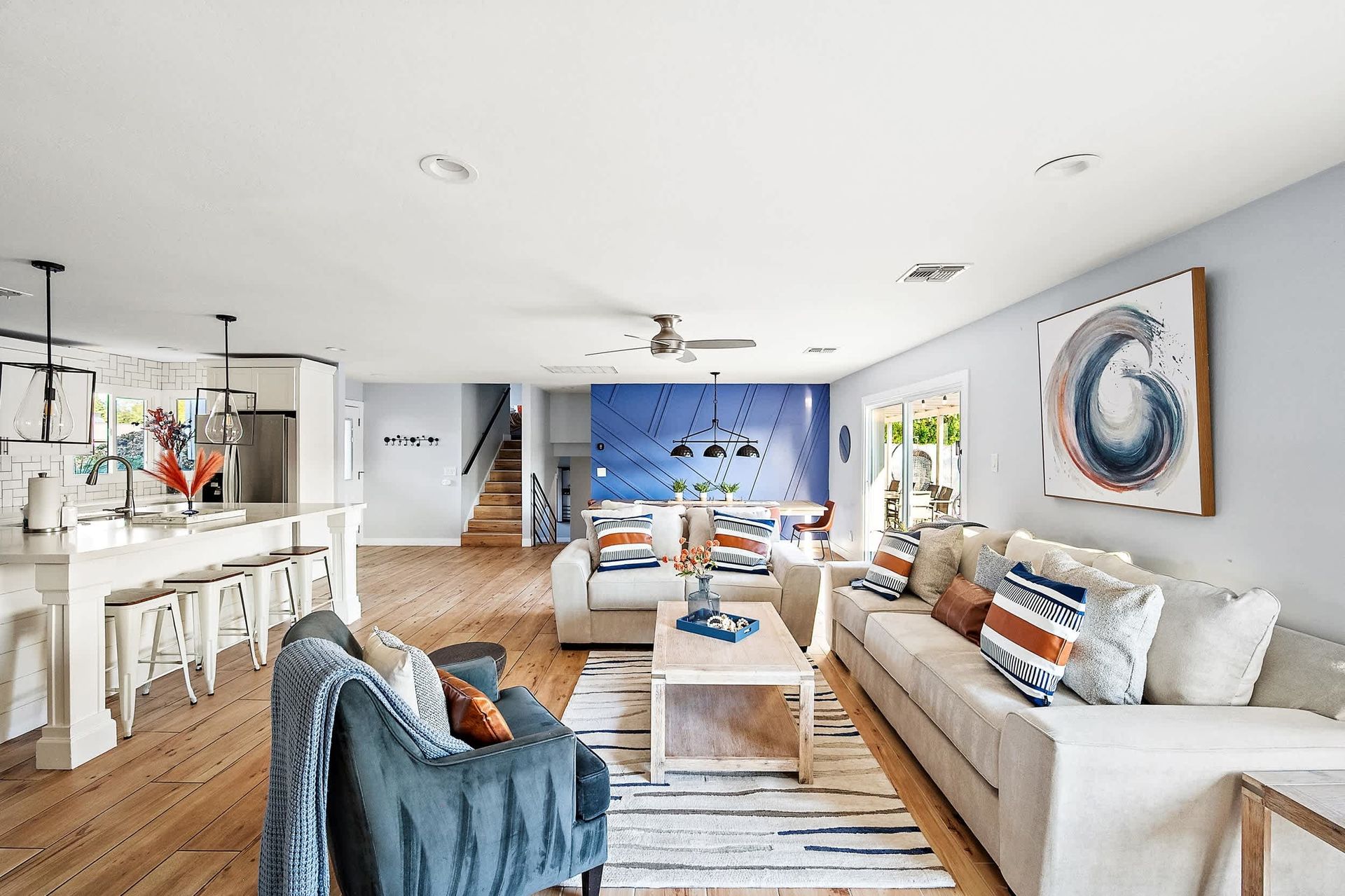
Today’s luxury travelers now evaluate hospitality through emotional and experiential quality. Guests are paying closer attention to atmosphere, comfort, privacy, convenience, personalization, and destination immersion. In many cases, the overall feeling of the experience matters more than traditional displays of luxury.
Modern luxury travelers often prioritize:
- emotional comfort
- seamless experiences
- privacy
- wellness
- atmosphere
- immersive design
- destination connection
- restorative environments
This shift is especially visible among younger affluent travelers who place greater value on intentional and meaningful experiences rather than status-driven consumption.
According to the Glion Institute of Higher Education, modern consumers “crave meaningful, memorable experiences” and seek immersive storytelling and genuine connection rather than simply high-end accommodations.
This evolution connects directly to the rise of experiential hospitality, where the goal is no longer simply delivering accommodations but creating emotionally memorable stays. One of the strongest expressions of this shift is destination-driven hospitality, where the experience itself becomes inseparable from the surrounding environment, culture, and atmosphere of a destination.
Travelers Remember How a Stay Felt
In many ways, modern luxury hospitality has become psychological rather than purely material.
Guests now evaluate hospitality experiences through emotional comfort, stress reduction, atmosphere, and experiential flow. A stay that feels calm, immersive, and effortless often creates stronger guest satisfaction than one that simply appears expensive.
Many travelers now remember:
- the atmosphere of a property
- the quality of outdoor gathering spaces
- the feeling of waking up to scenic views
- the emotional tone of the environment
- the ease of the guest experience
- the sense of privacy and exclusivity
far more vividly than luxury decor alone. This shift is one of the biggest reasons stay-type psychology has become important in luxury hospitality design, as different guest types often define emotional comfort in very different ways.
For example, wellness travelers may prioritize calmness and restorative design, while multigenerational family travelers may care more about gathering spaces and social flow. Similarly, remote workers and workcation travelers often prioritize quiet environments, seamless technology integration, and flexible living spaces that support longer stays.
Experiential Hospitality & Guest Expectations
Luxury travelers no longer want hospitality experiences that feel transactional or interchangeable. Many affluent guests are actively moving away from standardized hospitality environments in favor of stays that feel immersive, emotionally engaging, and intentionally designed around experience quality. This evolution is changing what travelers now expect from premium hospitality brands.
Modern luxury hospitality more and more revolves around:
- emotional resonance
- atmosphere
- memory creation
- immersive environments
- destination integration
- sensory experience
- personalization
This is one reason experiential hospitality has become one of the defining concepts shaping modern luxury travel.
One of the Strongest Expressions of Experiential Hospitality: Destination Immersion
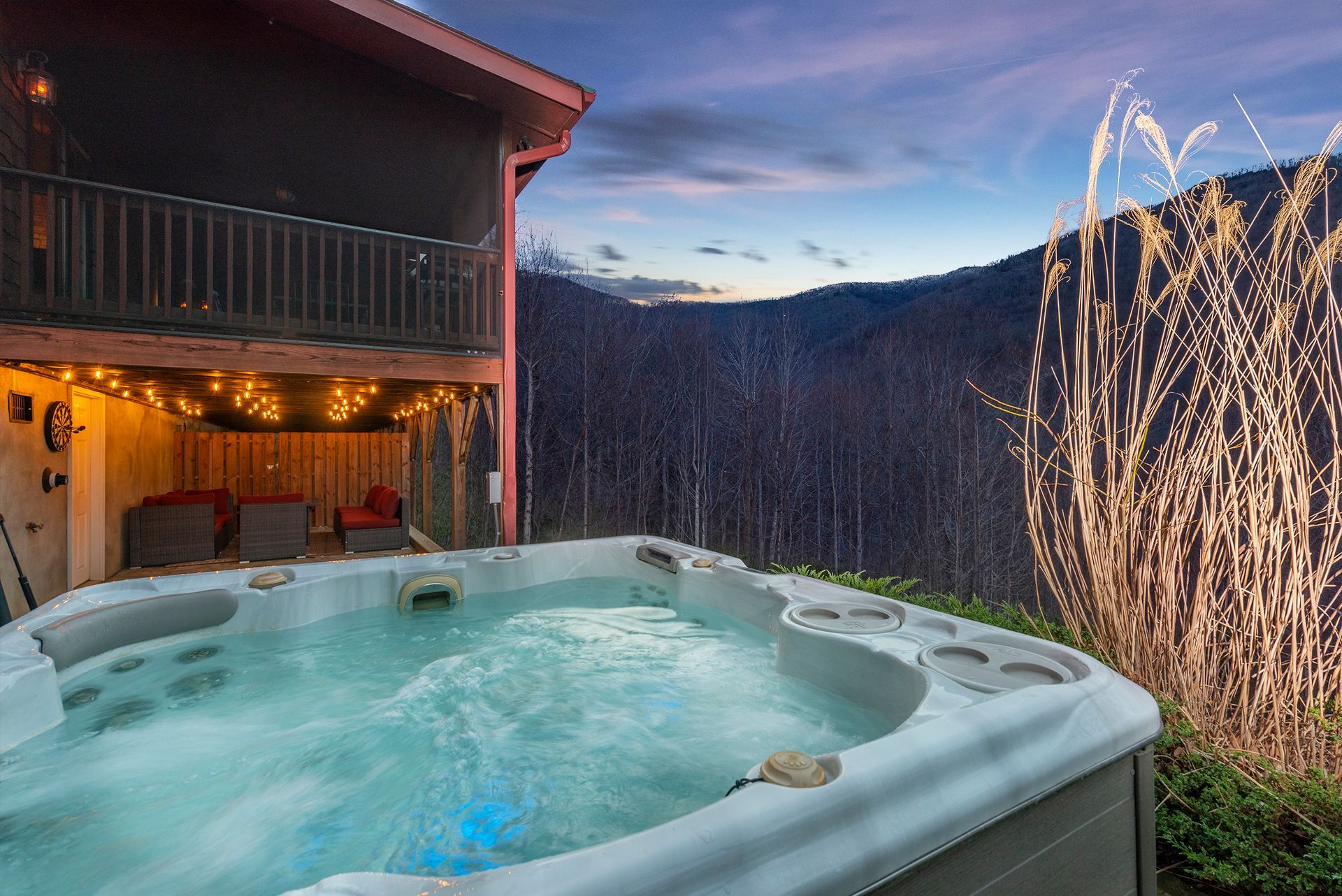
As luxury hospitality became more experience-driven, travelers also began expecting accommodations to feel more connected to the destinations themselves. Guests no longer simply wanted beautiful properties. They wanted hospitality environments that felt rooted in the culture, atmosphere, geography, and emotional identity of the place they were visiting.
This shift is one reason destination-driven hospitality has become more important within luxury travel. The strongest hospitality experiences now often feel inseparable from the destination itself.
Luxury Travelers Now Want Hospitality That Feels Connected to Place
Historically, many luxury hospitality environments prioritized consistency and standardization. Travelers expected luxury hotels to deliver similar experiences regardless of location. While operational consistency still matters, many affluent travelers today value experiences that feel locally immersive and emotionally distinct.
According to The Europe Hotel, affluent travelers prioritize authentic connections, cultural immersion, transformative journeys, and personalized adventures that connect them deeply with a destination.
Many guests now prioritize hospitality environments that feel connected to the destination through local architecture, immersive scenery, and culturally grounded design.
Destination-Driven Hospitality Extends Beyond Tourism
One of the biggest misconceptions about destination-driven hospitality is that it only relates to tourism activities or local recommendations. In reality, destination immersion now influences the entire emotional structure of a hospitality experience.
For example, a luxury mountain property may intentionally emphasize:
- scenic orientation
- outdoor gathering spaces
- nature integration
- slower pacing
- wellness-oriented atmosphere
while a luxury coastal property may prioritize:
- indoor-outdoor living
- open-air entertaining
- waterfront atmosphere
- relaxation-driven layouts
- social outdoor environments
In both cases, the hospitality experience itself becomes partially shaped by the emotional identity of the destination.
This overlap is one reason experiential and destination-driven hospitality are so closely interconnected. Destination immersion is often one of the primary mechanisms through which experiential hospitality becomes emotionally memorable.
Emotional Restoration & Wellness Have Become Embedded in Hospitality Design
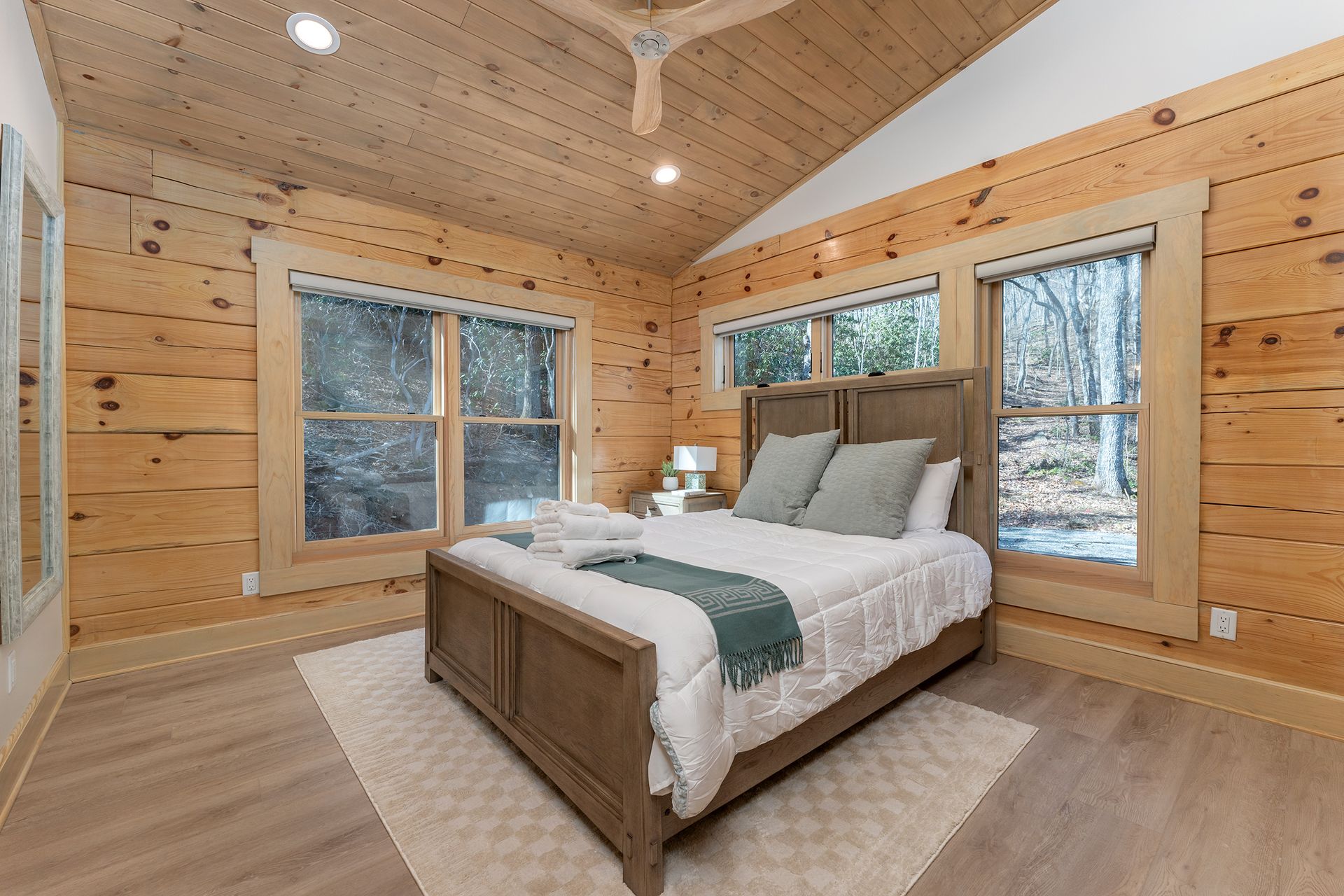
As luxury hospitality became more intentional and experience-oriented, traveler expectations also became more emotionally sophisticated. Guests no longer simply wanted memorable experiences. They want experiences that feel restorative, calming, immersive, and psychologically beneficial.
This evolution helped transform wellness from a niche hospitality category into one of the defining forces shaping modern luxury travel.
Wellness Is No Longer a Secondary Luxury Amenity
For many years, wellness in hospitality was often treated as a supplemental offering. Luxury properties differentiated themselves through spa services, fitness centers, or wellness packages, but wellness itself was rarely central to the overall hospitality experience.
Today, wellness influences:
- hospitality design
- atmosphere
- lighting
- outdoor environments
- sleep quality
- stress reduction
- privacy
- environmental flow
- emotional comfort
According to Forbes, 90% of high-end travelers now seek purposeful, health-focused experiences, while 84% expect wellness services tailored to their personal health goals.
This shift reflects a broader evolution in how affluent travelers define luxury itself.
Nature and Wellness
Modern wellness hospitality extends far beyond spa treatments or fitness amenities. Travelers now pay closer attention to whether the overall environment feels calming, restorative, comfortable, and supportive of how they want to relax and experience the stay.
Many luxury travelers now prioritize environments that feel:
- quieter
- slower
- less overstimulating
- more immersive
- emotionally restorative
- connected to nature
This evolution has dramatically increased the importance of:
- natural light
- scenic integration
- outdoor hospitality environments
- wellness-oriented architecture
- restorative spatial flow
- emotionally calming design
As a result, outdoor living can function as an extension of wellness-oriented hospitality design rather than simply serving as an amenity category on its own. In luxury vacation rentals and Airbnb properties, this often means designing outdoor spaces that help guests relax, gather, and enjoy the environment more naturally.
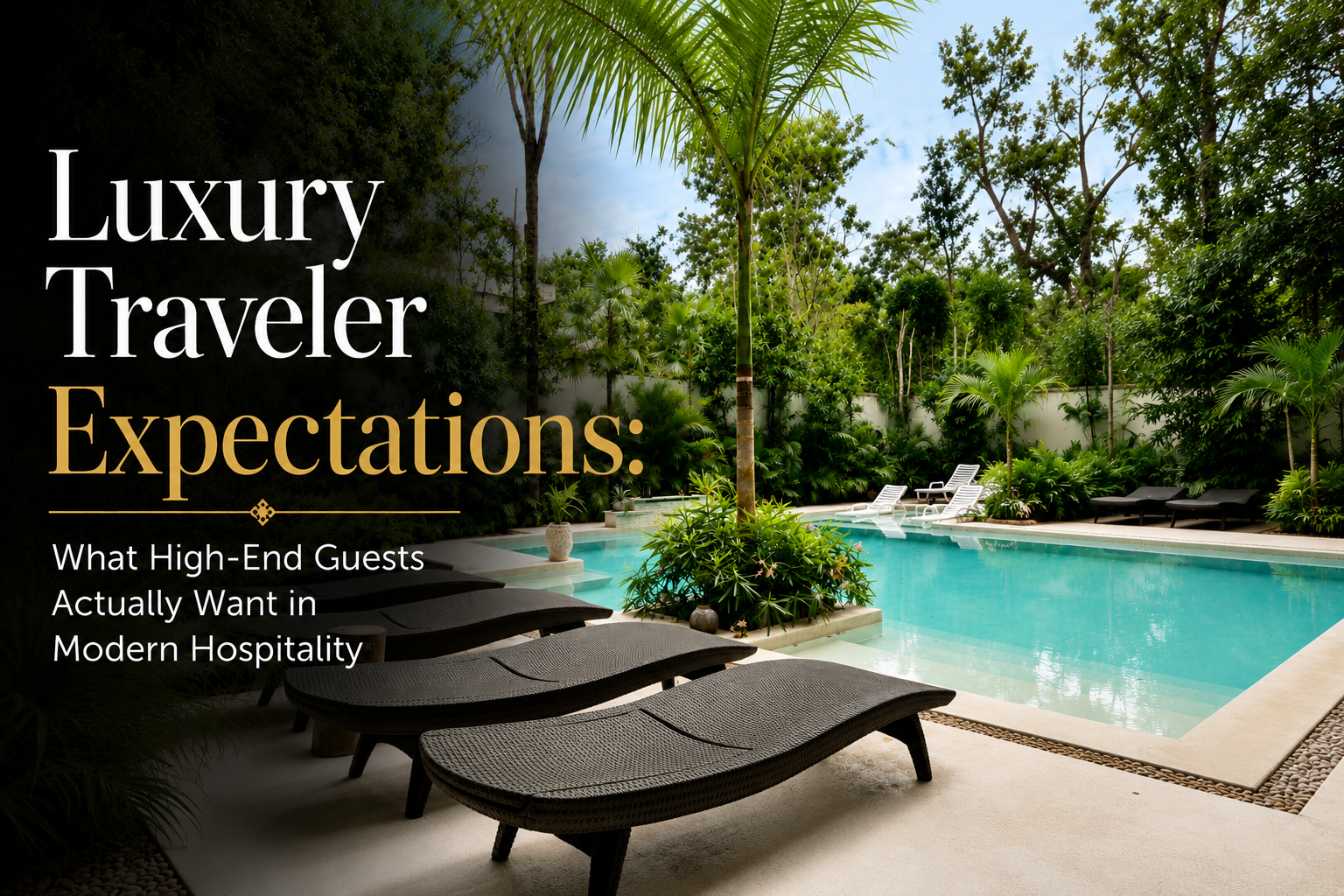
Features like resort-style pools, hot tubs, fire pits, outdoor kitchens, covered patios, lounge seating, dining areas, scenic decks, cold plunge pools, and indoor-outdoor layouts all help create a more calming, immersive, and experience-driven stay.
Wellness Tourism Is Reshaping Modern Luxury Hospitality
The growth of wellness tourism is also changing how hospitality operators design and position luxury experiences. Wellness is no longer viewed as a specialized segment of travel. It is becoming part of the baseline expectation structure surrounding modern luxury hospitality.
According to the Global Wellness Institute, wellness tourism grew 13.8% between 2023 and 2024, reaching $894 billion globally, with continued rapid growth projected over the coming years.
That growth is one of the clearest indicators that luxury hospitality is continuing to evolve toward:
- restorative travel
- slower travel experiences
- wellness-centered hospitality
- emotionally supportive environments
- intentional experience design
rather than purely transactional luxury accommodations.
Intentional Amenities Create Better Guest Experiences
Not all luxury amenities deliver the same value. While many vacation rentals offer attractive features, the highest-performing luxury properties tend to be intentional about which amenities they include and how those amenities support the overall guest experience.
Intentional amenities are selected because they align with how guests want to relax, gather, socialize, recover, or experience a destination. Rather than adding features simply because they appear luxurious, successful hospitality operators often choose amenities that reinforce the emotional outcome they want guests to experience during their stay.
Examples of intentional luxury amenities include:
- A hot tub positioned to maximize mountain views
- A fire pit designed around evening gathering and conversation
- A resort-style pool that becomes the center of outdoor living
- A pickleball court that encourages friendly competition and group interaction
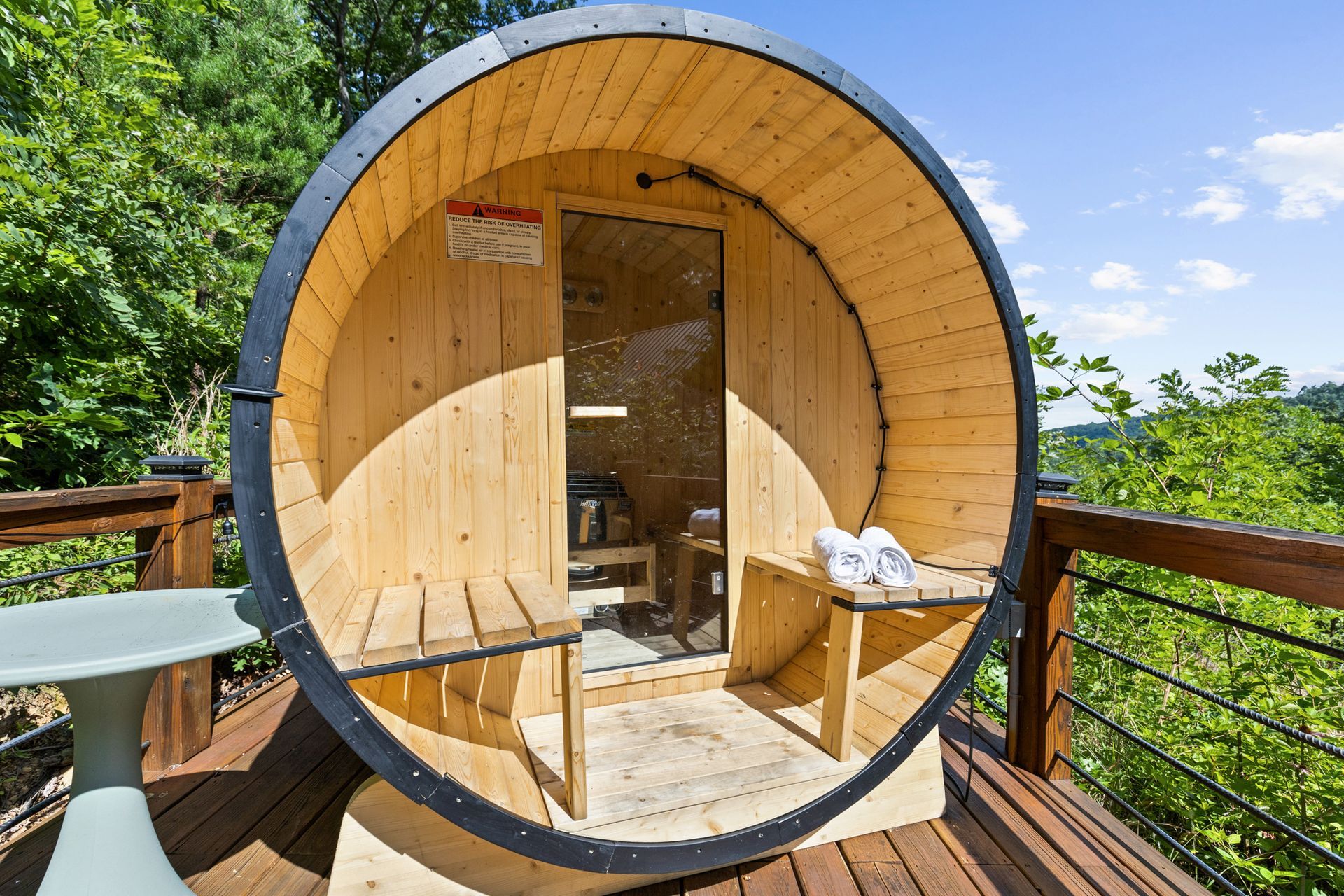
- A sauna or cold plunge that supports wellness-focused travel
- An outdoor kitchen that enhances family meals and entertaining
- A home gym that supports longer stays and wellness routines
- Smart home technology that reduces friction throughout the guest experience
The difference between ordinary amenities and intentional luxury amenities often comes down to integration. A property may offer the same physical features as competing rentals, yet create a completely different guest experience when those amenities are thoughtfully incorporated into the property's layout, atmosphere, destination, and hospitality strategy.
This philosophy closely aligns with experiential hospitality, where amenities are not viewed as isolated features but as tools that help shape memorable, immersive, and emotionally satisfying stays. In many luxury vacation rentals, the most successful amenities are not necessarily the most expensive—they are the ones that feel most connected to how guests want to experience their time away from home.
Luxury Design Expands Beyond Interior Spaces
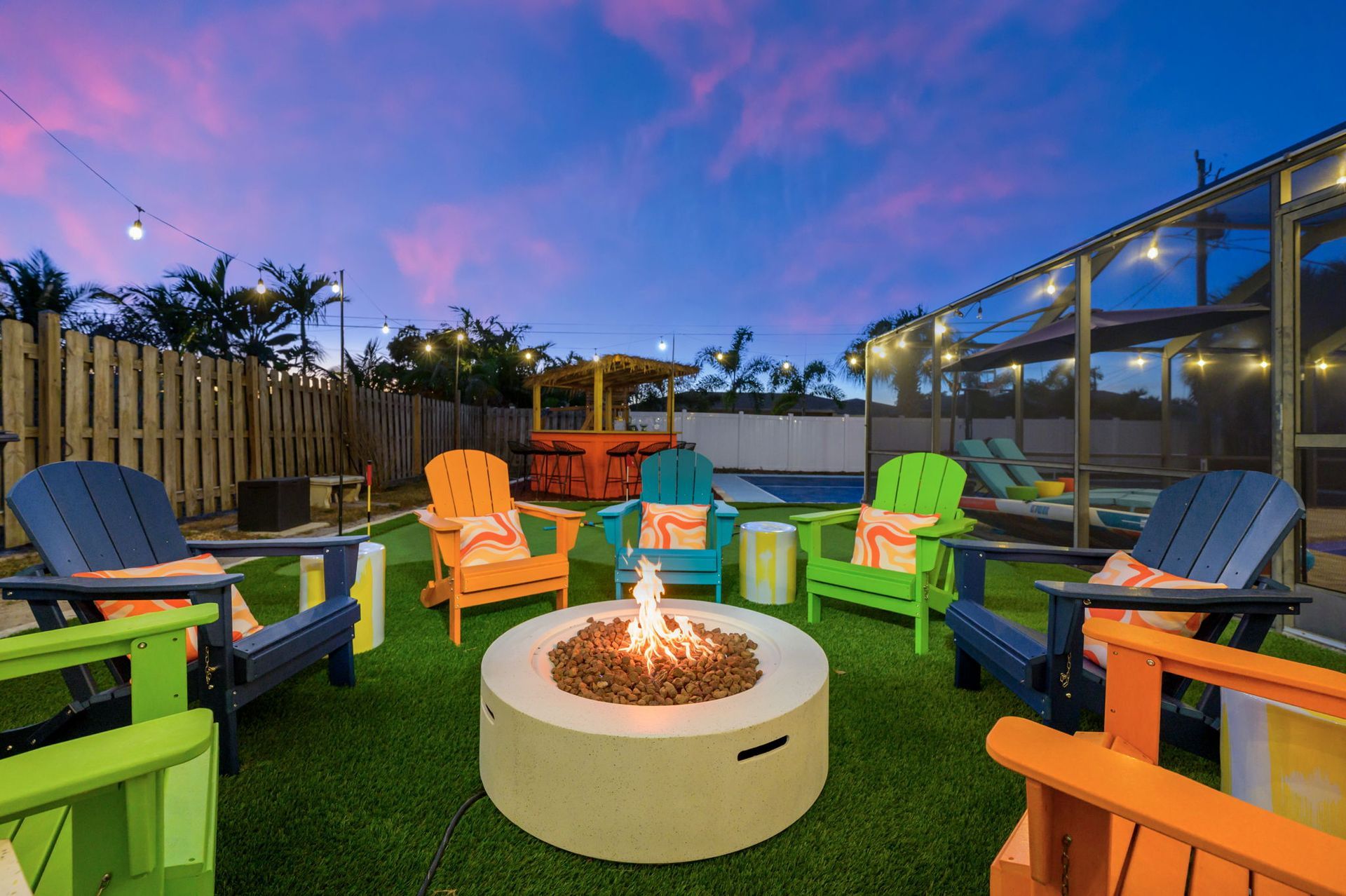
One of the most important consequences of experiential hospitality is that the guest experience no longer begins and ends indoors. As luxury travelers prioritize atmosphere, emotional comfort, and environmental immersion, outdoor environments have become far more central to hospitality design.
This shift helped transform outdoor living from a secondary amenity into one of the defining characteristics of modern luxury hospitality environments.
Outdoor Living Has Become Part of the Emotional Experience
Luxury travelers associate outdoor environments with some of the most memorable moments of a stay. In many cases, outdoor hospitality spaces now function as the emotional center of the guest experience rather than simply serving as supplementary gathering areas.
Many travelers now remember:
- fire pit conversations at night
- sunrise coffee on scenic patios
- outdoor dinners with family and friends
- poolside relaxation
- mountain or waterfront views
- quiet moments in nature-oriented environments
far more vividly than interior decor alone.
This evolution reflects a broader shift toward hospitality experiences that feel immersive, restorative, and emotionally intentional rather than purely luxurious in appearance.
Outdoor Living Space Becomes More Strategically Designed
As hospitality became more wellness-oriented and experience-driven, outdoor spaces also became more strategically designed around emotional flow and social interaction. Rather than simply throwing a fire pit in the backyard, luxury hospitality environments more and more use outdoor design to shape:
- atmosphere
- social connection
- privacy
- relaxation
- entertainment
- sensory experience
This is one reason many luxury hospitality properties now emphasize:
- resort-style outdoor lounges
- outdoor dining environments
- scenic gathering spaces
- wellness-oriented outdoor amenities
- indoor-outdoor architectural flow
- entertainment-focused exterior layouts
According to MarketResearch.com’s summary of the 2025 Outdoor Living Trends Report, features like fire pits, fire tables, and cold plunge pools are viewed as highly desirable outdoor amenities.
That shift reflects the growing overlap between wellness tourism and experiential hospitality.
Seamless Convenience Has Become a Luxury Standard
As hospitality evolved toward emotional comfort and more intentional experience design, convenience also became more important to luxury travelers. Guests no longer simply expected good service. They expected the entire hospitality
experience to feel smooth, intuitive, and easy from beginning to end.
In many ways, convenience itself has become a form of luxury.
Friction Reduction Is Becoming Central to Modern Hospitality
Today’s travelers want hospitality experiences that minimize:
- delays
- interruptions
- confusion
- logistical stress
- operational friction
Guests now value environments where the experience feels effortless rather than overly procedural or operationally rigid.
According to Attest’s 2025 hospitality trends report, travelers increasingly expect frictionless experiences, while contactless technology gives guests greater control over their stay.
This evolution is reshaping:
- booking systems
- guest communication
- check-in procedures
- hospitality operations
- concierge systems
- guest support workflows
Luxury hospitality is being evaluated by how easy the experience feels emotionally, rather than how formal the service appears operationally.
Smart Hospitality Technology Emerged as a Response to Friction-Oriented Travel Fatigue
As travelers became more overwhelmed by digital fatigue, crowded travel experiences, and logistical complexity, hospitality technology also evolved toward simplification and convenience. The goal of modern hospitality technology is no longer simply automation. It is now more focused on creating smoother, quieter, and more intuitive guest experiences.
This is one reason smart hospitality technology has become closely connected with seamless convenience.
Modern luxury hospitality now commonly incorporates:
- smart locks
- keyless entry
- automated check-in
- mobile communication
- smart room controls
- app-based guest systems
- intuitive environmental controls
According to EHL Insights, hospitality technology focuses on mobile convenience, digital guest journeys, and personalized smart room environments that allow guests to control lighting, temperature, entertainment, and services more intuitively.
The strongest luxury hospitality environments often make convenience feel invisible rather than technological.
Seamless Hospitality Is Ultimately About Emotional Comfort
One of the biggest misconceptions about convenience in hospitality is that it is purely operational. In reality, friction reduction has a major emotional impact on the guest experience. Travelers who encounter fewer logistical frustrations often feel:
- calmer
- more emotionally present
- less mentally fatigued
- more immersed in the destination
- more satisfied with the stay overall
As luxury hospitality becomes more intentional, many operators are designing experiences specifically around:
- emotional ease
- intuitive guest flow
- operational simplicity
- low-friction experiences
- stress reduction
- invisible hospitality systems
rather than traditional forms of visible luxury alone.
Stay-Type Psychology Naturally Emerged as Hospitality Became More Personalized
As luxury hospitality became more experience-driven and emotionally intentional, travelers also began expecting hospitality environments to adapt more closely to how they actually travel. Guests no longer wanted one standardized version of luxury. They wanted experiences that felt more aligned with their lifestyle, personal preferences, and travel goals.
This evolution is one reason stay-type psychology has become more important within modern hospitality strategy. Different traveler types often define comfort, luxury, convenience, and overall satisfaction in very different ways.
Modern Luxury Travelers No Longer Want the Same Experience
One of the biggest misconceptions in luxury hospitality is the assumption that affluent travelers all want similar environments. In reality, luxury expectations are often highly personal and shaped by the type of experience a traveler is seeking. The same property may feel deeply luxurious to one traveler and completely misaligned to another, depending on how well the environment supports their specific needs and travel goals.
For example:
- couples often prioritize intimacy and atmosphere
- wellness travelers often prioritize calmness and restoration
- families often prioritize functionality and gathering flow
- remote workers often prioritize flexibility and quiet environments
- social travelers often prioritize entertainment-oriented spaces
As hospitality became more intentional, operators began realizing that luxury is often less about universal prestige and more about creating experiences that feel aligned with how different travelers actually want to live, relax, and experience their stay.
Multigenerational Travel Is Reshaping Luxury Hospitality Design
One of the clearest examples of stay-type psychology influencing hospitality design is the rise of multigenerational luxury travel. Families travel together across multiple generations, creating demand for hospitality environments that support both social connection and personal privacy simultaneously.
According to McKinsey & Company, luxury travel demand is increasingly becoming family-focused and multigenerational, with travelers placing growing importance on shared experiences, flexible gathering spaces, and privacy-oriented accommodations.
This evolution is influencing demand for:
- larger luxury vacation rentals
- private suites
- gathering-oriented kitchens
- flexible common spaces
- indoor-outdoor social flow
- multiple entertainment zones
Rather than maximizing occupancy alone, many luxury hospitality environments are now designed around emotional interaction, guest comfort, and the overall quality of the shared experience.
Remote Work Has Expanded the Emotional Scope of Hospitality
As remote work became more normalized, hospitality environments also began absorbing functions traditionally associated with residential living and professional workspace. Many affluent travelers now blend:
- leisure travel
- remote work
- wellness travel
- extended stays
- lifestyle-oriented travel
into a single hospitality experience.
This evolution helped create a growing demand for:
- quiet work environments
- flexible layouts
- strong connectivity
- long-stay comfort
- emotionally balanced spaces
- hospitality environments that support both productivity and relaxation
According to EHL Insights, hospitality operators create hybrid hospitality environments with flexible workspaces and adaptable layouts designed around modern remote workers and workcation travelers.
This is one reason many luxury vacation rentals now function less like traditional accommodations and more like fully designed lifestyle environments built around how guests want to relax, work, gather, and experience travel.
Luxury Hospitality Is Becoming Defined by Intentionality
When viewed together, many of the trends shaping modern luxury hospitality point toward the same larger evolution.
Travelers now want hospitality experiences that feel emotionally intentional rather than overly standardized or transactional. They want environments that feel thoughtfully designed around how people actually relax, connect, recover, gather, and experience travel.
Luxury Travelers Want Hospitality That Feels Thoughtfully Designed
Many affluent travelers are no longer impressed by visible luxury alone. Instead, they now evaluate hospitality experiences through:
- emotional comfort
- atmosphere
- personalization
- experiential quality
- convenience
- wellness integration
- destination immersion
- social functionality
The strongest hospitality environments now often feel cohesive rather than excessive. Every part of the experience — from layout and lighting to outdoor spaces and guest flow — increasingly contributes to a larger emotional outcome.
This is one reason luxury hospitality has become more difficult to replicate through amenities alone. Two properties may offer similar physical features while creating completely different emotional experiences, depending on how intentionally those features are integrated into the stay.
The Future of Luxury Hospitality Is Experience-Led
As traveler expectations continue evolving, luxury hospitality will likely continue moving toward:
- emotionally supportive environments
- restorative travel experiences
- intentional design
- seamless operations
- personalized hospitality
- immersive destination integration
- psychologically informed hospitality strategy
In many ways, luxury hospitality is becoming less about visible extravagance and more about creating environments that feel emotionally aligned with the traveler’s ideal experience.
That evolution is fundamentally reshaping what luxury travelers now expect from modern hospitality.
What This Means for Luxury Vacation Rentals
Many of the trends reshaping luxury hospitality also align naturally with the strengths of luxury vacation rentals and professionally managed short-term rentals. As travelers place greater value on personalization, privacy, atmosphere, and immersive experiences, hospitality environments outside the traditional hotel model are becoming more attractive to affluent travelers.
This is one reason luxury vacation rentals are no longer viewed simply as alternative accommodations. In many markets, high-end vacation rentals and Airbnb properties now compete directly with boutique hotels and resorts by offering experiences that feel more flexible, personal, private, and emotionally comfortable.
Luxury Vacation Rentals Blend Hospitality With Residential Comfort
One of the biggest advantages luxury vacation rentals have within modern hospitality is their ability to combine hospitality with emotional familiarity. Many travelers increasingly prefer environments that feel:
- comfortable rather than formal
- immersive rather than transactional
- private rather than crowded
- flexible rather than rigidly structured
This evolution is especially important among:
- multigenerational travelers
- families
- wellness travelers
- long-stay guests
- workcation travelers
- group travelers
In many cases, luxury travelers increasingly want vacation rentals and high-end Airbnb stays that support how they naturally gather, relax, socialize, and experience travel rather than forcing them into highly standardized hospitality systems.
Emotional Comfort Is Becoming a Competitive Advantage
As luxury hospitality becomes more psychological and experience-driven, emotional comfort is also becoming one of the most important differentiators within the vacation rental industry. Travelers now evaluate hospitality experiences based on:
- ease
- atmosphere
- flow
- privacy
- restoration
- social comfort
- environmental quality
This is one reason intentional hospitality design has become so important within luxury vacation rentals. The strongest hospitality environments tend to feel cohesive from beginning to end rather than simply featuring expensive amenities placed together in the same property.
For example, travelers often respond more positively to environments where:
- outdoor spaces support social interaction naturally
- layouts feel intuitive and spacious
- lighting contributes to atmosphere
- technology reduces friction quietly
- wellness elements feel integrated into the experience
- the property reflects the emotional identity of the destination
These details collectively shape how the experience feels emotionally rather than simply how it appears visually.
The Strongest Hospitality Experiences Feel Cohesive Rather Than Excessive
One of the clearest shifts happening within modern luxury hospitality is the movement away from visible excess toward experiential cohesion. Travelers now place greater value on hospitality environments where every part of the stay feels intentionally connected to a larger emotional outcome.
This evolution is especially visible across luxury vacation rentals and professionally managed Airbnb properties, where travelers now expect the experience itself to feel immersive, seamless, and thoughtfully designed from beginning to end.
That is one reason so many modern hospitality concepts now overlap:
- experiential hospitality
- destination-driven hospitality
- wellness tourism
- outdoor living
- seamless convenience
- smart hospitality technology
- stay-type psychology
The future of luxury hospitality is likely not about creating the most extravagant environment possible. Instead, it is about creating environments that feel:
- emotionally intelligent
- psychologically comfortable
- experientially immersive
- operationally effortless
- intentionally designed
That evolution is fundamentally changing what luxury travelers now expect from modern hospitality experiences.
Luxury Hospitality Is Becoming More Human-Centered
At its core, modern luxury hospitality is becoming more centered around human experience rather than visible prestige alone. Travelers now want hospitality environments that support how they want to feel during travel rather than simply how impressive a property looks.
This shift is reshaping how hospitality environments are:
- designed
- operated
- personalized
- marketed
- experienced
Luxury travelers are no longer simply evaluating whether a property appears luxurious. Increasingly, they are evaluating whether the experience itself feels emotionally aligned with the purpose of their trip.
Intentional Hospitality Design Is Becoming More Important Than Visible Excess
As traveler expectations continue evolving, intentionality is becoming one of the defining characteristics separating average hospitality from exceptional hospitality. Guests increasingly notice when a hospitality environment feels thoughtfully designed around emotional flow, convenience, atmosphere, and guest behavior rather than simply assembled around expensive amenities.
This is one reason many of today’s strongest luxury hospitality environments feel:
- cohesive rather than excessive
- immersive rather than performative
- calming rather than overstimulating
- emotionally intuitive rather than operationally rigid
The strongest experiences often emerge when:
- design supports the atmosphere naturally
- Technology reduces friction quietly
- outdoor spaces encourage connection
- layouts support how guests actually gather
- Wellness feels integrated into the environment
- The property reflects the emotional tone of the destination
As luxury hospitality becomes increasingly experience-led, these elements begin to work together rather than function as isolated amenities.
Luxury Hospitality Is Becoming More Emotionally Intelligent
Many modern luxury travelers are highly experienced travelers who have already encountered traditional forms of visible luxury. Because of this, emotional sophistication often matters more than novelty alone.
Guests are becoming more aware of the difference between environments that simply look luxurious and environments that feel thoughtfully designed, comfortable, immersive, and emotionally intentional.
The Future of Luxury Hospitality Will Likely Be Defined by Experience Quality
As luxury hospitality continues to evolve, the properties that perform best will likely not be the ones with the most visible extravagance alone. Instead, the strongest hospitality environments will likely be the ones that most effectively combine:
- atmosphere
- personalization
- wellness
- seamless convenience
- destination immersion
- emotional comfort
- experiential quality
into experiences that feel cohesive from beginning to end.
This evolution creates a major opportunity for luxury vacation rentals, boutique hospitality environments, and professionally managed Airbnb properties that understand how modern travelers define luxury itself.
Because ultimately, modern luxury hospitality is becoming less about displaying wealth and more about creating experiences that feel emotionally meaningful, intentionally designed, and genuinely memorable.
Modern Luxury Hospitality Requires More Operational Sophistication
One of the biggest misconceptions in luxury Airbnb investing is the assumption that luxury performance is primarily driven by decor or amenities alone. In reality, many modern luxury travelers evaluate hospitality through operational quality and emotional ease just as much as visual presentation.
Guests notice:
- communication responsiveness
- check-in simplicity
- cleanliness consistency
- hospitality flow
- technology reliability
- atmosphere preparation
- maintenance responsiveness
- friction reduction
This is one reason professionally managed luxury vacation rentals often outperform poorly operated luxury properties, even when the amenities and design appear similar on paper.
As hospitality has become more intentional, operational execution has also become part of the guest experience itself. This is one reason concepts like seamless convenience, smart hospitality technology, and stay-type psychology now play a much larger role in luxury vacation rental operations.
The strongest luxury hospitality experiences often feel effortless to the guest precisely because the operational systems behind the experience are highly intentional.
For example, many high-performing luxury vacation rentals now engineer guest experiences around:
- simplified arrival and check-in flows
- intuitive lighting and climate controls
- pre-arrival atmosphere preparation
- seamless Wi-Fi onboarding
- curated outdoor gathering environments
- wellness-oriented amenities prepared before arrival
- low-friction communication systems
- maintenance systems designed to minimize guest interruption
- layouts intentionally designed around social flow and privacy
Rather than simply adding amenities, sophisticated hospitality operators now design experiences around emotional ease, environmental comfort, and how naturally the stay flows from beginning to end.
In many cases, the operational goal is no longer simply providing service. It is creating environments where guests rarely have to think about the operational side of the stay at all.
That shift is one reason invisible luxury is becoming more important within modern hospitality strategy. The strongest luxury hospitality experiences often feel calm, intuitive, immersive, and effortless to the guest precisely because so much intentional planning and operational coordination happens behind the scenes.
Home Team Luxury Rentals Understands What Modern Luxury Travelers Actually Want
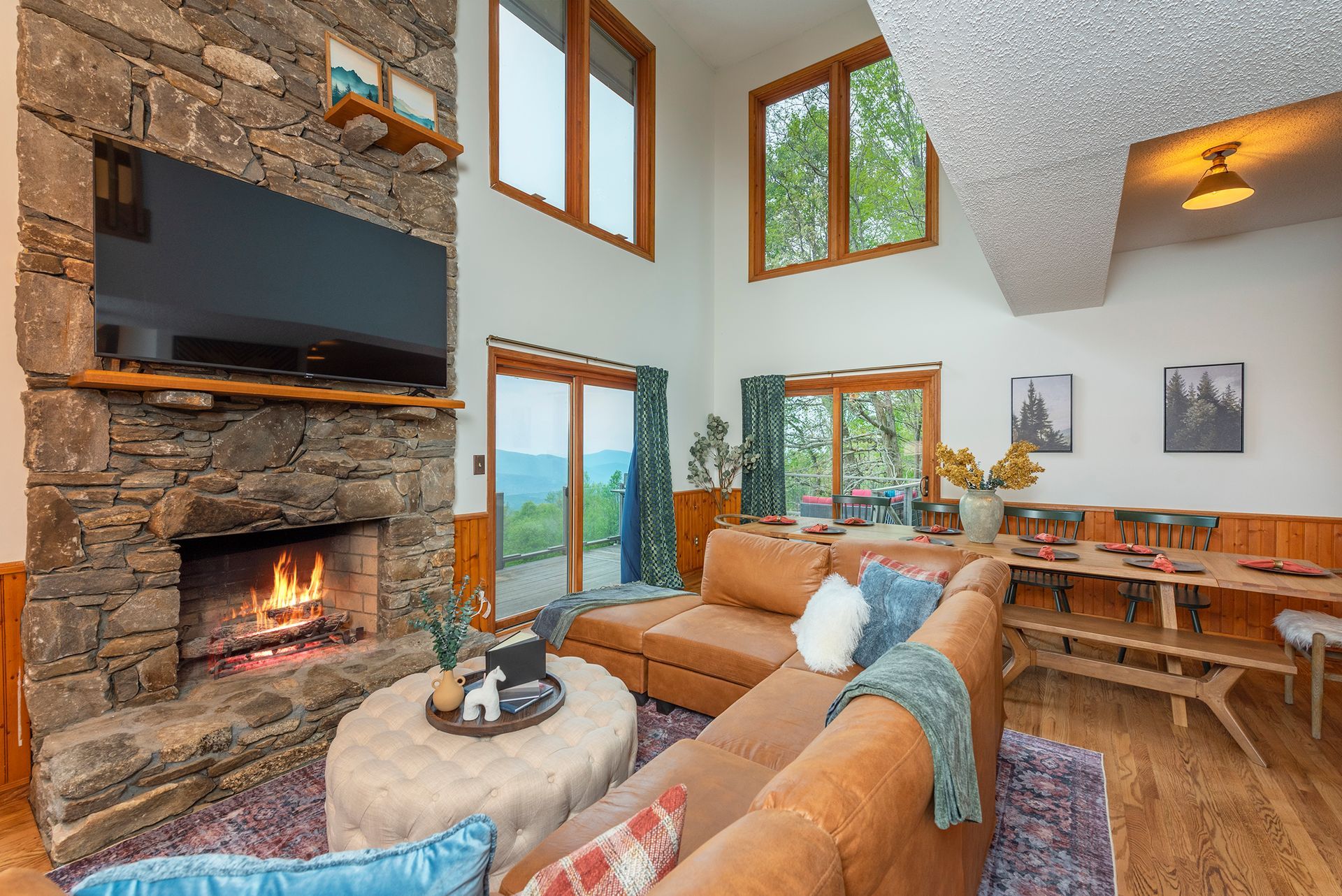
At Home Team Luxury Rentals, we understand that modern luxury hospitality is no longer simply about offering upscale accommodations. Today’s luxury travelers increasingly expect experiences that feel immersive, seamless, emotionally comfortable, and intentionally designed from beginning to end.
That philosophy shapes how we approach luxury hospitality across our nationwide Airbnb management services.
Rather than treating luxury vacation rentals as simple short-term rental listings, we approach each property as a hospitality environment designed around:
- guest psychology
- experiential quality
- atmosphere
- destination immersion
- operational seamlessness
- wellness-oriented hospitality
- emotional comfort
As luxury traveler expectations continue evolving, we believe the strongest luxury Airbnb and vacation rental experiences will increasingly come from hospitality environments that feel intentional, cohesive, and emotionally memorable rather than simply expensive.
Frequently Asked Questions
What do luxury travelers expect from modern hospitality experiences?
Modern luxury travelers increasingly expect hospitality experiences that feel:
- personalized
- immersive
- seamless
- restorative
- emotionally engaging
Rather than focusing solely on visible luxury, many affluent travelers now prioritize atmosphere, wellness, privacy, destination connection, and experiential quality. Luxury hospitality is increasingly becoming more experience-driven and emotionally intentional rather than purely transactional.
Why is experiential hospitality becoming more important in luxury travel?
Experiential hospitality has become more important because many travelers no longer want hospitality experiences that feel transactional or interchangeable. Guests increasingly want environments that create emotional memory, immersive experiences, and stronger connection to the destination itself.
This often includes:
- atmosphere-driven design
- outdoor gathering environments
- local immersion
- wellness-oriented hospitality
- intentional guest experiences
As a result, luxury hospitality is increasingly becoming experience-led rather than purely accommodation-led.
Why are wellness and restoration becoming so important to luxury travelers?
Many modern travelers increasingly view travel as an opportunity for recovery, stress reduction, and emotional restoration rather than simply entertainment. This shift has dramatically increased demand for:
- wellness-oriented hospitality
- restorative environments
- nature immersion
- slower travel experiences
- emotionally calming design
Wellness is increasingly influencing architecture, atmosphere, outdoor environments, hospitality flow, and overall guest experience quality within luxury hospitality.
Why are outdoor living spaces so important in luxury vacation rentals?
Outdoor living spaces increasingly function as part of the emotional experience itself rather than simply serving as supplemental amenities. Travelers often remember:
- fire pit conversations
- scenic patios
- outdoor dining
- poolside experiences
- mountain or waterfront views
more vividly than interior decor alone.
As luxury hospitality becomes more immersive and experience-driven, outdoor environments increasingly shape atmosphere, social interaction, relaxation quality, and emotional memory.
How are luxury traveler expectations changing Airbnb investing?
Luxury Airbnb investing is increasingly becoming more hospitality-focused and experience-driven. High-performing luxury vacation rentals are no longer competing solely on visible luxury amenities. Increasingly, performance is shaped by:
- atmosphere
- experiential quality
- operational seamlessness
- wellness integration
- destination immersion
- emotional comfort
This shift is changing how investors approach:
- property design
- amenity selection
- hospitality operations
- guest experience strategy
- revenue optimization
within the luxury short-term rental industry.
Share to social media
More posts